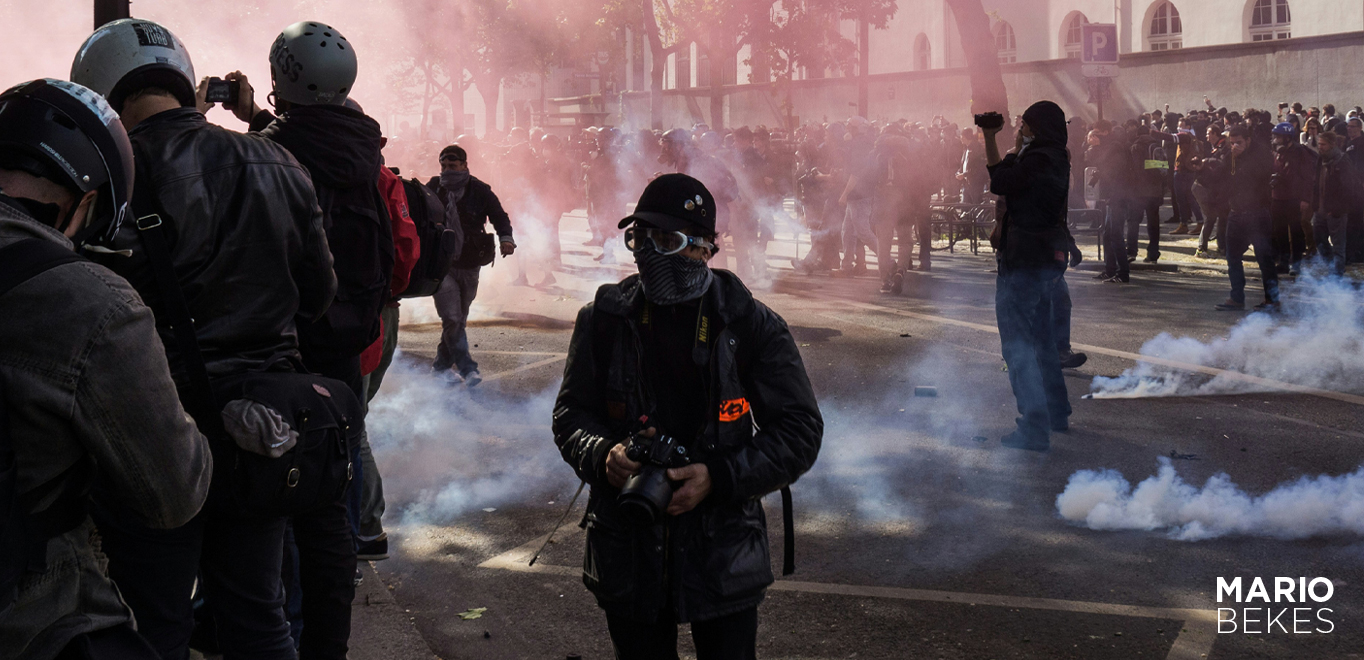
Scams involving cryptocurrency and five strategies con artists use to trick victims

Introduction:

In the social media age, con artists are still using the rising demand for digital assets to trick regular people and small-time investors. They frequently cause them to suffer catastrophic losses.

“Digital assets” refers to tokens, coins, and cryptocurrencies, including those sold in initial coin offerings (ICOs).

Investors may become less cautious or succumb to FOMO, or the fear of missing out, if an investment opportunity presents something innovative or cutting edge.

If you’re thinking about investing in digital assets, spend some time learning about the investment’s operation and evaluating its dangers.

Keep an eye out for indicators that it could be a fraud.

As I mentioned in previous articles, cryptocurrencies, coins, tokens, or crypto can all be considered crypto assets.

Scammers frequently exploit innovation and new technologies to perpetrate investment frauds.

Cryptocurrency investments were no exception.

It can be difficult to track down and collect monies from fraudsters, which makes recovering money from them problematic. Fraudsters, for instance, can use technology to conceal their identity or obfuscate the source of money when using cryptocurrency assets.

It can also be challenging to recover your money from a scam using cryptocurrency assets, as con artists have the ability to transfer your money quickly outside.

Scammers employ a range of strategies to persuade investors to part with their hard-earned cash.

Five strategies that con artists use to lure victims into cryptocurrency securities scams

Here are five things to be aware of in order to prevent losing money to cryptocurrency asset scams.

Social media: “pig-slaughter scams”

After establishing contact with you via social media or an ostensibly random text message, scammers try to win your trust.

Scammers may contact potential victims via spam text messages or social media platforms, such as meetups, professional networks, messaging websites, and apps.

They can pretend to be an old friend or claim to have accidentally gotten in touch with you.

The con artist may then form a romantic or platonic relationship to gain your trust and convince you to invest your money before it disappears.

Sometimes, the term “pig-slaughter scams” is used to describe these trust scams, which are as unsavoury as the scammers’ actions.

One way this kind of fraud works is that the con artist may tell you about profitable trading or investment options, including cryptocurrency asset investments, once they have built an online profile with you.

The con artist might even claim that a friend or family member of theirs is an “insider” or works for a financial company and can supply trade knowledge.

In an effort to further win your trust, the fraudster can lead you to a seemingly genuine (but phoney) website or a popular app that you can download from a reputable app store.

They may even allow you to withdraw a small portion of your “profit” via the app. The con artist may next ask you to make higher financial investments.

Scammers frequently come up with a reason why you can’t withdraw your money, or they could inform you upfront that you need to make additional payments to cover fees or taxes.

Paying extra usually results in a loss of money because there is often no way to recover your investment or make a profit.

For everyone with whom you’ve only interacted via the app or online,

Avoid allowing their advice or influence to shape your investment decisions.
Con artists may instruct you to obtain Bitcoin for your investment deposit at a Bitcoin ATM (or kiosk) or via a cryptocurrency platform, after which they will provide instructions on where to send the Bitcoin.

Be cautious if someone asks you to use cryptocurrency assets to pay for the investment.
Don’t tell them anything about your identity or personal finances.

Don’t give them anything like your date of birth, social security number, passport, driver’s licence, bank or brokerage account information, tax forms, credit card, or passport.

Artificial intelligence (AI)

Fraudsters are taking advantage of the excitement surrounding emerging technology, such as artificial intelligence.

Fraudsters can entice investors to purchase cryptocurrency assets by using the rising appeal of artificial intelligence.

Purchasing crypto assets tied to artificial intelligence may seem thrilling, but proceed with caution.

Con artists frequently use propaganda about cutting-edge technological advancements, including new AI technologies, to deceive investors.

Scammers may promise you large sums of money and use enticing language related to artificial intelligence, all in an attempt to defraud you of your money.

They may claim to have AI-powered bots that they use to identify the best cryptocurrency asset investments.

Fraudsters may also employ artificial intelligence to generate convincing websites or marketing materials that advertise investment frauds, particularly those involving cryptocurrency assets.

In a similar vein, they can produce “deep fakes” by cloning, manipulating, or spoofing voices, images, and videos in order to trick investors using artificial intelligence technology.

To win your trust or persuade you to contribute money, they might even make up false personas that mimic famous people, public servants, or your loved ones.

Fraudsters pretend to be trustworthy sources or exploit them

Note that official sources may appear in correspondence such as emails, letters, certificates, voicemails, texts, phone calls, and messages on social media.

The use of artificial intelligence technology has made it much simpler for con artists to pose as representatives of governmental bodies, businesses, and private citizens in order to trick investors.

Using artificial intelligence (AI) to produce deepfakes, scammers can even pose as your friends or relatives. Additionally, they can break into the social media accounts of your friends or family members and post or send messages purporting to be from them.

As an illustration, con artists can claim that a friend or member of your family has mastered cryptocurrency and invite other people to participate in trading or investing.

Even if you’re sure they’re the source, be wary that friends and family were duped into thinking an investment is real.

Scammers occasionally prey on communities or groups by enlisting leaders or other influential people to make investments on their behalf without disclosing to them that the “opportunity” is a scam.

Pump and dump schemes

Scammers may overvalue cryptocurrency assets, then sell them for a profit.

Scammers can carry out pump and dump schemes involving cryptocurrency assets, such as so-called “memecoins” that reference internet memes or popular culture.

Scammers, for example, might make a memecoin and then promote it on social media to entice people to purchase it and “inflate,” or raise, its value.

Then, before the excitement fades, the promoters and others who collaborate with them “dump” or sell, making money off of the increased price.

Typically, once the promoters sell and pocket their winnings, the price quickly drops and the other token buyers lose most of their money.

Never base an investment choice exclusively on data from applications or social media platforms.

Fraud involving advance fees

Fraudsters want more money—which they falsely claim will let you withdraw or recover your losses.

In investment scams, such as those involving cryptocurrency securities, con artists could ask you for extra money in the form of charges, fees, or taxes before allowing you to take money out of your account.

This is an example of an upfront charge scam, where the scammer asks potential investors to pay a false fee up front before they receive any benefits.

For example, con artists may pretend to inform you that a regulator has blocked your account or is looking into it. To unfreeze your account, you may be required to pay a sizable deposit, charge, or tax amount.

However, in the unlikely event that you make a payment, you will forfeit both the additional payment and the initial investment.

Scammers can even deceive you into paying additional fees by claiming to have “mistakenly” deposited money into your account and requesting that you reimburse them.

It is really a ruse to encourage you to pay them more money; they never really deposit money into your account.

If you have already lost money or cryptocurrency holdings as a result of fraud or bankruptcy, scammers may also target you. In an attempt to “help” you recover your losses, scammers may ask you to send them your private key, enabling them to access your cryptocurrency holdings or encourage you to invest more cash or cryptocurrency.

In real life, if you pay, you most likely won’t receive your money back and will instead fall victim to another scam.

The Jet Set Lie: How Fake Luxury of Influencers Ruins Actual Lives

According to Google and statistics, there are 64 million influencers worldwide, and 6 million influencer accounts are in Australia.

The distinction between fact and fiction is become hazier in the fast-paced social media environment.

One of the more shocking instances of this is the current trend whereby influencers rent false private planes to give the impression of an opulent existence.

Designed to increase likes, followers, and personal brand value, this habit begs major ethical concerns regarding the impact of “faking it until you make it” on the actual world.

The Deception of Luxury

Influencers have been pushed to get innovative with their material in a time when the worldwide epidemic has drastically limited travel internationally.

While some have chosen local travel and elegant staycations, others have followed a more dubious route by planning luxury events that never really materialised.

One classic example is the phenomena of influencers booking a set meant to seem like the inside of a private jet.

Complete with illuminated windows and designer couches, this set—which can be rented for photo sessions—mimics the soft interiors of a private plane.

The reality is significantly less glitzy; the jet is simply a cleverly built Los Angeles studio apartment. The illusion is so strong that it sometimes fools naive followers into thinking these celebrities are leading the great life.

The moral conundrum raised by “Fake It ‘til You Make It”

Not new is the idea of “fake it ’til you make it”.

This kind of thinking will assist you reach your objectives even if you haven’t quite yet since it implies projecting confidence and success.

Although this could be appropriate in some situations, the line is crossed when dishonesty is used as the instrument to pass for this front.

Presenting a jet-setting lifestyle might be enticing for influencers.

After all, luxury goods appeal. Still, the ethical consequences are really important. Influencers are misleading their audience when they upload pictures from these phoney planes, therefore enhancing their image.

Many of the followers could want comparable lifestyles, although they are stuck running after a fantasy. Among their followers, this dishonesty can cause skewed sense of self-worth, financial stress, and unreal aspirations.

The Impacts on Ordinary People

Deception of this nature has consequences much beyond the profile of the influencer.

Ordinary people who follow these celebrities could start comparing their own life to the impossible goals created by these manufactured events.

As followers try to match a lifestyle even the influencers themselves do not lead, frequent comparison can cause emotions of inadequacy, anxiety, and melancholy.

Furthermore, the belief that “faking it” is a valid road to success could skew the ideals of diligence, integrity, and sincerity. In a day when our perspective on the life of others usually comes from social media, the consequences of these lies might be significant.

To fit the supposed lives of others they respect online, people could feel under pressure to get into debt or act unethically.

The consequence of a false reality

The tendency of creating luxurious experiences—such as employing fake private planes—represents a more general problem in social media culture, one in which the search for success and affirmation frequently takes front stage over authenticity.

This starts a poisonous circle whereby followers are deceived into thinking that this degree of luxury is not only realistic but also required for happiness while influencers feel obliged to maintain their false image.

There can be major repercussions from this fictitious portrayal. People who build their self-worth on a created reality may find it difficult to function in actual life.

Instead of concentrating on reasonable goals that fit their actual values, they may spend time and money pursuing an unreachable lifestyle.

The never-ending chase of an illusion can impede personal growth and keep people from realising their own capacity.

In summary, authenticity is essential

Ultimately, the culture of “faking it” in the world of influencers is about the larger influence this dishonesty has on society, not only about producing a false image.

Though apparently benign, the false jet set lifestyle has the ability to skew reality for thousands of everyday consumers of this material.

Particularly in a digital environment where the boundaries between real and fake are so often confused, authenticity, transparency, and honesty should be the cornerstones of influence.

As influencers, we have an obligation to show a reality that inspires rather than lies; as followers, we must be cautious of the material we consume.

These misleading presentations inflict actual damage; only by embracing authenticity will we be able to create a better and more realistic social media scene.

“UNIT 29155” Russia Notorious Special Unit Secret Intelligence agencies, hacker attacks, GRU, Microsoft, and EU

Introduction

I assume most of you, like me, have seen or read about the discussion between the two contenders for President of the United States, Trump vs. Harris. It was a vigorous debate, with low and dirty punches below the belt, as the saying goes in boxing.

But one thing is certain, and it has not gone unnoticed: without secret and intelligence services engaged and operating at full capacity, such debates, particularly those involving the US presidential elections, cannot take place.

These days, one should anticipate cyber-attacks from all directions. Given the interest of all parties involved, it’s important to acknowledge that public domains often contain warnings about misinformation or disinformation.

Germany

A few days ago, the German domestic intelligence agency issued a warning regarding a cybernetic group that was part of the Russian military intelligence service’s unit 29155.

The group claimed to have conducted cyberattacks against nations that are members of NATO and the European Union.

Germany’s Federal Security Service (Bundesamt fur Verfassungsschutz) posted on Platform X that the FBI, the US Cybersecurity and Infrastructure Security Agency (CISA), the National Security Agency (NSA), and other international partners had issued a warning against the group known as UNC2589.

This warning comes at a time when worries about Russian hackers and spies’ operations are spreading throughout Europe and the rest of the world.

Cyber Attacks

Berlin had earlier this year accused Moscow of carrying out a string of hacking assaults against the ruling Social Democrats in Germany, as well as IT, defence, logistics, and aerospace firms.

The intelligence service warned that the organisation, also known as Ember Bear or Cadet Blizzard, engages in sabotage and espionage actions, frequently disclosing stolen material and vandalising websites.

He was a member of the GRU group, which came to light in 2018 when it was believed to have poisoned former Russian double agent Sergei Skripal and his daughter Yulia in the United Kingdom.

“Unit 29155“

Up until now, “Unit 29155” has been associated with sabotage and poisoning attacks.

According to reports from US officials and the German Office for the Protection of the Constitution, the force is also responsible for widespread hacking attacks.

Although the targets were very different, all evidence points to the same Russian secret service unit: following the poisoning of former Russian agent Sergei Skripal in the UK and the attempted assassination of Bulgarian arms manufacturer Emilian Gebre, it became evident that agents from “units 29155” were responsible.

It might also be the cause of the unsettling “Havana Syndrome.”

According to travel and telephone records, the research team found that members of GRU Unit 29155 were on the scene during many of the attacks that resulted in the “Havana Syndrome.” They could specifically use electromagnetic or acoustic weapons.

You can read or listen to the audio episode where I discuss “Havana syndrome” in one of my previous posts.

Established in 2009, the unit, a part of Russia’s GRU military intelligence arm, is considered Putin’s strike force. They accuse this unit of carrying out killings and explosive attacks to install terror and instability in the West.

Now, intelligence services have revealed that “Unit 29155” is also responsible for the cyber-attacks.

“Whisper Gate”

This means that the organisation is responsible for a significant wave of malware attacks on Ukrainian systems known as “WhisperGate.”

The FBI, NSA, and the US cyber security agency CISA released this report. The research compiles the results of multiple Western intelligence agencies.

The analysis also incorporates data from the German Federal Office for the Protection of the Constitution.

The USA simultaneously issued public indictments against five GRU members.

Their intention was to destabilise Ukraine in the run-up to the Russian invasion in 2022 by sabotaging computer systems.

Among other targets of the “WhisperGate” campaign were the computers of the Ukrainian Ministry of Foreign Affairs and the official digital services platform.

The hackers also stole private information from Ukrainian national patient records. Additionally, they uploaded a message.

According to recent disclosures from Western intelligence agencies, “Unit 29155” has been operational in the cyber domain since 2020, with a primary focus on critical infrastructure systems.

The team reportedly launched attacks against several NATO institutions, but it was initially unclear if the operations were successful.

APT28 Group

In January of last year, hackers targeted German SPD email accounts. The federal authorities “clearly” blamed Russia for this and promised penalties.

In June 2023, the SPD reported that a cyber attack in January targeted the SPD executive’s email accounts. A security hole in Microsoft’s software, undisclosed at the time of the attack, made this possible.

This attack was attributed to the APT28 group.

APT28 became well-known after the attack on the Bundestag.

The German Office for the Protection of the Constitution states that the APT28 group has been operating since at least 2004 on a global scale, mainly in the area of cyberespionage.

It was also “among the most active and dangerous cyber actors in the world,” having previously spearheaded disinformation and propaganda campaigns.

It is evident that APT28 is a product of the Russian military intelligence agency GRU.

The attack on the SPD was part of a larger operation in which the Office for the Protection of the Constitution, the Federal Intelligence Service, and the Military Counterintelligence Service—all of Germany’s secret services—were involved in federal government investigations.

According to current information, the SPD attack is part of the APT28 campaign, which targets government agencies and companies operating in the energy, IT, defense, or aerospace sectors across several European countries.

Break into Microsoft

Last year, cyber-security agencies overseen by the White House issued a series of criticisms and warnings against tech giant Microsoft, claiming that hackers linked to Moscow and Beijing were able to exploit flaws in the company’s systems, particularly those related to email, allowing them to steal documents and information from US officials.

An omission of this magnitude is a serious incident in and of itself, but the involvement of hackers, who, according to American cyberexperts, work for or with the cooperation of China and Russia, exacerbates the problem.

China, a previous ally, is now likely Washington’s biggest and most important rival in terms of technology, economics, and military might. Russia, on the other hand, is America’s “old” Cold War foe, with whom it has “warred” for decades in a variety of ways, including by stealing mutual data and in politics.

Given that millions of people worldwide, including numerous US departments, agencies, and services, rely on the technological behemoth’s services, it is understandable why the US agencies in charge of cyber-security were so forthright in their criticism.

Complexity is one of security’s main “enemies.”

Microsoft’s global partners and users may indicate security “holes” given its size and variety of services.

Partners with different levels of privilege may, willingly or unknowingly, serve as a “gateway” for hostile actors to “get” deeper into the system.

Furthermore, literally millions of users—including US government employees—use the company’s services, many of whom likely lack the necessary training for safe use. This increases the likelihood of infiltration.

While security and reputational damage are the primary concerns in the Microsoft hacking case, it is undeniable that these intrusions, if indeed executed by hackers with ties to Beijing and Moscow, signify a significant increase in the current state of international cyberwarfare.

These intrusions also impart valuable insights: if large corporations such as Microsoft, relying on millions of individuals and institutions worldwide for their security measures, succumb to such a severe cyberattack, it could lead to two potential outcomes.

  • One significant issue is that Microsoft’s standards are not as high as previously believed.
  • The second, and equally concerning, is that hackers possess the technological means and aptitude to breach the networks of one of the world’s wealthiest and safest corporations.

It is reasonable to assume that hackers will take inspiration from these types of operations and use that knowledge to launch ever riskier and more sophisticated assaults.

Given that cybersecurity incidents are getting more serious every day, businesses and agencies must recognise that cybersecurity is a never-ending battle and that they must continuously adapt and upgrade their defence systems to stay one step ahead of ever-increasing threats.

Who is a leader, and why do you want to be one?

Introduction:

The concepts of “leader” and “leadership” have become ubaiquitous in today’s world, capturing the attention of professionals and scholars alike.

There is no shortage of articles, white papers, and academic research on the subject.

A quick visit to LinkedIn reveals countless experts eager to coach and transform you into an exemplary leader.

Furthermore, Amazon lists a staggering 57,136 books with “leadership” in their titles, each author offering their own unique perspective on what it means to lead.

If you recall the 2011 film “Margin Call,” which came out just two years after the infamous Global Financial Crisis, you might remember the profound impact that event had on many, myself included.

The crisis served as a harsh reminder that, as an employee, cost savings and leadership preservation often reduce you to mere statistics.

In “Margin Call,” the character John Tuld, the CEO, delivers a powerful insight into the essence of leadership during a conversation with Peter Sullivan:

John Tuld: “Let me tell you something, Mr. Sullivan. Do you care to know why I’m in this chair with you all? I mean, why do I earn the big bucks?”

Peter Sullivan: “Yes.”

John Tuld: “I’m here for one reason and one reason alone. I’m here to guess what the music might do a week, a month, a year from now. That’s it. Nothing more. And standing here tonight, I’m afraid that I don’t hear – a – thing. Just… silence.”

In simple terms, leaders—often embodied by CEOs and C-suite executives—are those who navigate uncertainty and guide organizations through unpredictable times.

The Prophecy of Business Collapse

Fast forward to 2020-2021, when the world faced unprecedented challenges.

We all had to adapt, innovate, and respond to a new reality marked by lockdowns, remote work, and social distancing, all driven by the COVID-19 pandemic.

Never before had the world experienced such widespread isolation, not even during wartime.

As the situation unfolded, it became apparent, at least to me, that many businesses would struggle, some even collapsing entirely, while only a few would remain fully operational.

While it might be tempting to credit surviving companies’ leadership, I leave that conclusion to your judgment.

After all, I don’t recall any leaders penning books on “risk management during lockdowns,” though there are countless volumes on leadership.

A New Era of Leadership

We now live in an age of uncertainty, characterised by global conflicts and the emergence of new business models. Unfortunately, this era has also seen a rise in scams, crime, and fraud, a predictable consequence in times of instability.

In such times, I strongly advocate for businesses, regardless of size, to conduct “pre-mortem analyses” and rigorously test their capabilities.

This way, they can be better prepared to respond strategically and tactically to global crises like the one we experienced from 2020 to 2022.

Traditional leadership, as we once knew it, is long gone. While it’s still possible to learn various leadership skills, the challenges ahead require a different approach to leadership and risk management. At just 18 years old, I recall being required to lead during a war.

Despite my lack of knowledge in leadership, I received assurances of supervision and on-the-job training before, during, and after battles.

No one wanted the responsibility, not even me, because, in war, the stakes are as high as they get—human lives are on the line.

However, through that experience, I learned how to lead, be accountable, take responsibility, and, most importantly, own my mistakes.

“Something else was forming that day – leadership. We had commanding officers who didn’t walk around parading. They were checking in with everybody. “Here’s some ammunition.

How do you feel? Are you wounded?”

Leadership was taking care of everybody. Leadership was being built by taking responsibility and accountability for every soul under your command. I was impressed with my commanding
officers. Their first thought was to care for us – not to take their boots off and shout out orders to bring them water, food and other things. They checked in with everyone.”

Excerpt from book “Blood Soaked Soil” by Mario Bekes

The “How” Over the “Why”

When choosing a leadership style to implement in your organization or learning how to be an effective leader, it’s critical not to rely solely on theoretical knowledge from books.

Books provide theory, but they often lack practical application. Do not follow those who have never led or cannot demonstrate their leadership credentials, such as team size, goals, and capacities.

Instead, seek mentors who can show you through their own experiences how they led, how they navigated uncertainty, and how they instilled a fighting spirit within their organizations.

It’s essential to learn from leaders who have practiced what they preach, not just theorised about it. How did leaders achieve their results? Ask them how they led in practice, not just theory.

A true leader integrates all elements of leadership to build a remarkable organisation, instilling pride and enhancing market presence.

Above all, a genuine leader must lead by example and then teach others to do the same. If this approach does not resonate, one might as well continue reading books and attending seminars on leadership.

52 Years of Wisdom: Four Life Lessons Earned Through Blood, Tears, and Pain

I will be celebrating my 52nd birthday in a few days; at one point, I wasn’t sure I would ever reach that mark. I was eighteen years old when I discovered I was in the middle of a war, one that continued until I was twenty-four.

Those were long, horrific years, and the idea of surviving to become fifty-two seemed like a far-off fantasy.

Still, here I am—not just alive but very vibrant—and today I would like to share the knowledge I have gained over my time on this amazing blue planet.

First lesson: Happiness

For most of my life, I thought that great events or other people would provide happiness. It seemed to me something you were waiting for—a present that would finally arrive. I misjudged it.

As I have discovered, happiness is a decision we make on purpose every day. This lesson did not come easy; it was paid for in blood, sweat, and tears, in suffering and anguish I would not desire on anyone.

Not something presented on a silver platter is happiness.

Whether it’s your family, your hobbies, your job, or even following apparently unachievable dreams, you have to aggressively pursue what really makes you happy.

Human nature calls for people to try to discredit your happiness.

But after all I have gone through—bad relationships, war-related injuries, false promises—I have come to realise that nobody has the right to offer advice you on when or how to be happy. Your happiness is yours only; you choose it. Never ask anyone permission to be happy; never allow anyone remove that decision from your hand.

Second Lesson: Health

Among the most valuable currencies we possess is health.

You cannot fulfil your aspirations, help your loved ones, or simply enjoy the little pleasures of life without it.

I followed unattainable standards for years, attempting to fit into what I considered to be a healthy person should be, and copy others. I neglected the fundamental knowledge I acquired in childhood: hygiene is the foundation of health.

Hygiene was non-negotiable growing up, even in a house where baths were a weekly occurrence shared among the family.

Still, health goes much beyond simple hygiene. It relates to our consumption—mentally, emotionally, and physically. It’s about the surroundings we decide upon and the people we surround ourselves with.

Being a former combatant, I especially appreciate the inner voice that helped me negotiate the challenges of battle, therefore reducing the effects of injuries, cold, stress, and sadness.
Just as crucial as physical health is mental wellness.

We feel perfect when we are young; nevertheless, as we get older, we must be more conscious. The body runs on movement; I have found that the more active I am, the less I need doctors; I sleep better and my stress levels decrease.

Even boxing, a sport that keeps me feeling successful and energetic, I am more active than ever at 52.

Choose then to give your health first priority. Though start today, start with little steps.

Third Lesson: Wealth

Although wealth is often associated with money, money by itself will not purchase happiness or health.

Still, having a consistent income gives the stability needed to take care of people you love. Growing up, I thought of wealth as something one either inherited or came into. “You will inherit an apartment when I die,” my father once informed me.

Still, I never felt good about waiting for someone to pass away in order to guarantee my own future.

Living in army barracks seemed more like home than anywhere else for most of my life.

But I decided to buck convention by daring to launch my own company, a decision many discouraged me from doing.

They were correct—I had no idea how to manage a business.

Though I made lots of blunders and embarrassed myself more times than I can count, my clients always got the best outcomes I could produce.

Whether you manage your own company or a 9-to- 5 job, success really depends on how you apply information, skills, and experience.

No secret method or overnight road to millionaire status exists. But, as I have come to define it, money is about having the means to fulfil your dreams and support those you love.

For my part, I feel really rich since I will be able to leave my son a completely paid house.

Fourth Lesson: Wisdom

I used to consider the advice of elderly folks as pointless when a child.

They were indeed elderly, what could they possibly know about my life?

But sometimes life shows you the need of knowledge by means of the hard knocks.

I have come to pay attention to the people in my life and the events that transpire as well as the media or social media throughout time.

Wisdom stems from knowing you can accomplish anything you set your mind to and from believing in yourself.

It’s about resisting allowing someone else define your boundaries.

The most valuable lesson I have learned is to believe in yourself and not let anyone tell you what you are or cannot do.

I consider these lessons as continuing travels rather than as a destination as I get ready to mark my 52nd birthday.

By sharing them, maybe, I can encourage others to choose happiness, give health first priority, pursue actual prosperity, and welcome wisdom in their own life.

Spy Games: How much does spying cost?

Former adviser to the governor of New York has been accused of acting as an “agent” of the Chinese government.

Introduction:

Another espionage scandal in the United States surfaced in early September.

Linda Sun, a former aide to New York Governor Kathy Hochul, is the major actor in this affair.

But let’s go in order.

Governments worldwide face a persistent challenge in preventing foreign espionage within their own ranks, particularly when employing aides, consuls, and other trusted officials.

Despite advanced security measures, spies can infiltrate by exploiting personal vulnerabilities, financial incentives, or ideological differences.

A notable example is the case of Aldrich Ames, a former CIA officer, whose espionage activities for the Soviet Union went undetected for years due to inadequate internal oversight and poor communication between intelligence agencies.

This article explores why governments fail to safeguard against such infiltration and the critical steps needed to strengthen national security.

Linda Sun: Who is she?

Linda Sun was born in Nanjing in 1983.

She went to the United States from China with her parents when she was five years old, and she later became a naturalised citizen.

She earned a political science degree in 2006 and a master’s degree in education from Columbia University in 2009.

Career

In 2009, Sun started her career in public service in the New York State Legislature. She held a number of posts there, including chief of staff to the now-U.S. Representative Congresswoman Grace Meng.

In 2012, Governor Andrew Cuomo’s administration appointed Sun as Director of Asian American Affairs and Queens Regional Representative.

Following that, Empire State Development appointed her as director of external affairs, overseeing the state’s economic development.

She also had a brief stint as the New York State Department of Financial Services’ deputy chief of staff for administration before joining Governor Kathy Hochul’s staff.

After almost 15 months, she departed Hochul’s executive chamber to take a job with the New York Department of Labour in November 2022.

She worked as a campaign manager for Austin Cheng, a Democrat who unsuccessfully ran for Congress in New York’s 3rd Congressional District, after leaving the Hochul administration.

Linda Sun rose through the ranks to become the governor’s deputy chief of staff in approximately 14 years.

US officials, however, claim that Sun surreptitiously shared internal papers with Beijing and prevented Taiwanese diplomats from contacting the nation’s government by using her position to support Chinese officials.

The charges

The indictment accuses Linda Sun of both conspiring and violating the Foreign Agent Registration Act. The indictment also accuses her of visa fraud, alien smuggling, and money laundering conspiracy.

Her spouse, Christopher Hua, faces accusations of conspiring to commit bank fraud and money laundering in addition to identity theft.

In response to the allegations, federal agents raided and searched the couple’s Long Island residence.

“Letters of invitation without authorization.”

Based on official employment records and her LinkedIn page, Sun worked for the US state government for almost 15 years, first holding roles in Cuomo’s administration before moving on to become Hochul’s deputy chief of staff.

The US Attorney’s Office in New York claims that she participated in political activities to advance Chinese interests while working as an undisclosed agent of the People’s Republic of China and the Chinese Communist Party.

According to the accusation, Sun secured “unauthorised invitation letters” from the governor’s office to bring Chinese government officials to the United States to meet with New York state officials.

Several of her alleged offenses pertain to Taiwan and the COVID-19 pandemic, a period in which multiple US officials targeted China following the virus’s discovery in Wuhan.

Authorities claim that Sun changed both Governors Cuomo’s and Hochul’s “messaging regarding issues of importance” to the Chinese government and prevented members of the Taiwanese government from meeting with senior state officials in New York.

Following the pandemic, Sun blocked Taiwan’s attempt to receive public recognition for providing masks but also made sure that Governor Cuomo officially acknowledged Chinese government officials for delivering 1,000 ventilators and other medical supplies to the city.

“We’ve handled everything satisfactorily.”

Prosecutors claim that she was so blatant in her attempts that she once discreetly brought a Chinese official to a private state government call regarding the public health response to the illness.

I wonder how she managed to get away with it for so long.

Naturally, there will be an ongoing investigation into this, but it looks like Sun went to great lengths to evade detection, allegedly lying to the FBI, the New York State Office of the Inspector General, and other authorities when they questioned her, and taking other actions to conceal her involvement.

The indictment against Ms. Sun includes the top officials of the US government with whom she attempted to prevent Taiwanese delegates from meeting or speaking.

In a 2016 message to a Chinese consular officer, Sun is reported to have boasted, “It’s all been taken care of satisfactorily,” after successfully swaying a prominent New York lawmaker away from an event sponsored by Taiwan.

The island’s president even participated in a protest against pro-Beijing activists’ visit to New York City in 2019.

“The Uyghur situation”

She worked behind the scenes until January 2021 to remove references to Beijing’s imprisonment of Uyghurs, an ethnic minority in Xinjiang Province that is primarily Muslim.

Sun questioned the Chinese officials about their desired “talking points” when they asked Governor Hochul to create a video for the Lunar New Year.

Naturally, Su handled what was going to be stated right away, making sure that inappropriate things were spoken.

The Chinese officials wrote, “Mostly holiday wishes and hope for friendship and cooperation.” “Not overly political at all.”

Sun later informed a second Chinese official that she disagreed with Ms. Hochul’s speechwriter about the removal of a reference to the “Uyghur situation” from an earlier version of the governor’s address.

In 2023, as a labor department employee in New York, Sun gave a Chinese official a framed copy of Governor Kathy Hochul’s Lunar New Year proclamation.

Governor Hochul’s office did not approve the declaration or follow the correct procedures.

In addition, Sun composed fictitious invitations for Chinese politicians to visit the United States and penned an unauthorised employment letter to include a fellow citizen on the Asian American advisory board of the governor of New York.

Nanjing-style salted ducks

US officials claim that Sun and her spouse reaped significant benefits from the influence activities, both domestically and internationally.

Her husband’s Chinese-affiliated company entrusts her with arranging multimillion-dollar commercial transactions.

According to federal authorities, Sun and Hu allegedly used this money to purchase a number of high-end vehicles, such as:

  • 2024 Ferrari Roma,
  • 2024 Range Rover/L460, and
  • 2022 Mercedes GLB250W4),

The property also includes a condominium in Honolulu, valued between US$1.9 million and US$2.1 million, and a five-bedroom home in Manhasset, Long Island, valued between US$3.6 million and US$4.1 million.

However, she never registered as a foreign agent or reported the benefits she received from China, which is required of New York state government employees.

The presents also included:

  • Ms. Sun’s cousin has secured employment in China.
  • Tickets to premier performances, concerts, and athletic events are available.
  • All expenses-paid trips to China;
  • The personal chef of a Chinese government figure prepared salted ducks in the Nanjing style for home deliveries.

Can you imagine the depth of that arrogance?

The accusation claims that Ms. Sun received the duck delicacy at least sixteen times, including a direct delivery to her parents’ house.

Sun’s spouse, Chris Hu, faced accusations of conspiring to launder money, misusing identification, and committing bank fraud. He also had a wine shop and seafood business in Queens.

According to the indictment, Hu assisted in the transfer of millions of dollars in bribes for his own benefit, and Sun secretly promoted Chinese government and Chinese Communist Party programs among executives, endangering our nation’s national security.

Furthermore, it is said that Hu used the photo on the relative’s driver’s licence to register a bank account in the relative’s name in order to launder money unlawfully.

Nevertheless, Hu was the only user of these accounts.

Sun and Hu have filed not-guilty pleas to all allegations, which include conspiracy and violation of the Foreign Agents Registration Act, money laundering conspiracy, visa fraud, and alien smuggling.

Prosecutors seized their homes, vehicles, $210,000 in cash, and funds from several additional accounts that Hu was purportedly in charge of.

Hu was freed from detention on US$500,000 bail, and Sun was freed on US$1.5 million bail.

The Chinese consulate instructed the two not to communicate with them and forced them to surrender their passports. The Chinese consulate has set September 25, 2024, as their next court date.

In what ways are China and the US accusing one another?

The US and China have long denied any espionage or influence-peddling allegations against one another, claiming that the other has been attempting to obtain intelligence and sway decisions for many years.

In light of China’s expanding global influence and its emergence as a power that seeks to challenge Washington, the rhetoric has only gotten louder.

Both sides have been stepping up their arrests of alleged foreign government employees, and they are checking an increasing number of people for possible espionage activity in the military and technology sectors.

According to CIA Director William Burns, the spy organisation is putting a lot more effort into addressing geopolitical competition, especially with China.

In response, China’s Ministry of State Security said that Washington was “expanding the confrontation against China” by hiring and training more Mandarin speakers, and that the CIA had more than doubled the percentage of its overall budget aimed at China in the last two years alone.

We can only guess how many more espionage incidents we may never know about, even though the number is growing daily.

Colour Revolutions: The most sophisticated warfare method

Both the reality in which we live and the tools used in political conflict are changing on a daily basis.

Individuals no longer have the same willingness to die in the trenches as they once did, so gaining power through military means is somewhat outdated.

Traditional warfare is becoming less common in favour of more covert means of gaining territory. War is costly and time-consuming.

The coloured revolution is one of the most significant.

A coup d’etat, or the removal of an incompetent government, is actually taking place under the guise of a democratic revolt.

Outside forces typically sponsor, plan, coordinate, and carry out “revolutions”.

Colored revolutions are dependent on external causes and cannot occur in their absence.

Continuity of Colour Revolutions

Regime change has been a key aspect of American foreign policy for decades, beginning with the fall of the Syrian government in 1949.

Since then, it is estimated that the CIA has overthrown or attempted to overturn more than 50 countries, despite admitting to only seven of them.

Colour revolutions are a key component of American foreign policy, which seeks regime change in hostile countries.

In addition to the CIA, the State Department, the Pentagon, and numerous American and domestic non-governmental organizations are frequently involved.

In the past decade, a long list of countries with generally stable political systems have had colorful revolutions.

Egypt, Tunisia, Syria, Libya, Russia, Ukraine, Belarus, China, Iran, and Venezuela are among the places where they have had both greater and lesser success.

There are notable parallels among the regime change plans in each of these nations. It is not possible for the recurring patterns to be the result of coincidence.

An explanation of the phenomenon

Even today’s Western media observes that color revolutions, defined as the use of technology to export democracy through civil disobedience, have progressed to the point where their tactics have become norms for changing political regimes.

Initially, the colour revolution was defined as a peaceful overthrow of the government and a change in the political system.

With time, the term expanded to include the following: nearly all coups began as nonviolent rallies and marches, but only one in five concluded without casualties.

The true meaning of colour revolutions would be that they are methods of instigating political instability, using the youth protest movement as a tool for political blackmail, in order to overthrow the government and take control of the political climate in a target nation from abroad.

A coup d’etat, or the annexation and consolidation of power through force, is the aim of every colourful revolution.

Even though there are significant differences amongst the nations that experience revolutions (geopolitical, social, economic, and other), they all follow a similar pattern that involves starting a protest movement, turning it into a political movement, and then using the newly formed popular mass to overthrow the established government.

Colour Revolutions: Hard Power

Colour revolutions are not representative of a country’s soft power.

If this is true, the colour revolutions represent a significant step forward in the struggle against authoritarian regimes.

However, they are just as hazardous as local civil conflicts that began for legitimate local reasons.

Such revolutions are frequently the starting point for wars, as seen in Syria, Libya, and Ukraine. People frequently use color revolutions to destabilize democratic transitional regimes.

The purpose of a revolution is to establish government and bring about political change.

It is reasonable to claim that the Americans have not only developed a political model for export, but also specific tools for breaking down (un)democratic governments if necessary.

These are the means by which the color of the revolution is defined.

They constitute a powerful force, but gentler than battles (between states).

The emergence of color revolutions requires certain conditions

Without prepared conditions for their emergence, revolutions cannot succeed.

The first and most fundamental condition is political instability in the country, which is accompanied by a crisis in the current government.

Election fraud, the nation’s weak economy, the discontent of particular groups like farmers or artisans, teachers or medical professionals, etc., can all lead to political instability.

If political conditions stay stable, we need to induce artificial disruption.

Young dissident movements and political blackmail are two characteristics of revolutions.

Student discontent with issues such as excessive tuition costs, unsanitary canteens, and difficult-to-get-to and packed dorms typically sparks young dissident movements. Students plan demonstrations in the streets, which can quickly topple the government and inspire uprisings in other spheres of society.

Revolutions are caused by spontaneous and directed scenarios

There are two radically opposing explanations for why revolutions occur.

It is about spontaneous uprisings caused by societal disputes between different groups, which result in protests and rebellion, according to the first.

Proposals suggest non-democratic, poverty, religious, and ethnic divisions as causes. Indeed, social group inequalities exist in all countries, but they are not the sole cause of revolution. Rather, these divisions expedite and facilitate a colored revolution.

Another perspective asserts the meticulous orchestration and planning of revolutions. The same qualities and events occur in countries that have absolutely nothing in common.

Coloured revolutions may appear to be classical, but they are not.

Any resemblance is superficial.

Real revolutions are spontaneous and occur at some point in history, whereas painted revolutions are staged and well planned.

The Anglo-Saxon concept of democratization, which seeks to disseminate the democratic political model and democratic institutions throughout the world, serves as the foundation for the staged scenario of color revolutions.

Everything follows the same pattern. There is always a youth movement, revolutionary leaders are consistently similar, and revolutions lack content or revolutionary ideology.

It’s about people suddenly rebelling against “evil dictators,” and aside from basic appeals for democracy, everything else is missing or nonexistent.

This demonstrates that the foreign elements driving revolutions have little understanding of the local population’s culture and psychology.

There are three stages of color revolution

Coloured revolutions are governed by the notion that power structures (government) rely on their subjects (the people), implying that the people’s loyalty allows the rulers to rule the country.

If the subordinates refuse to submit to the authorities, the authorities will lose power in the state. Classic coloured revolutions have three phases.

The first stage

The first phase entails the formation of an “underground” movement of cells that together constitute a network of persons who are dissatisfied with the current administration. Strong slogans and calls to action serve as recruitment tools for members.

In response to a certain signal, a network of largely young, disillusioned individuals appears on the streets of major cities, breaking free from obscurity. The protests claim to be spontaneous, yet everything was planned ahead of time.

Most often, protests occur due to various reasons, including irregularities in elections (Serbia 2000, Georgia 2003, Ukraine 2004, Russia 2012), shocking and unexpected events such as the self-immolation of a seller in Tunisia in 2010, or Ukraine’s delay in implementing the EU 2013 Association Agreement.

Members of subterranean cells start the insurrection.

Protests, gatherings, marches, and the construction of fences will follow.

The people recognise that, while the government is lawful, it is illegitimate, and they establish an anti-government movement that becomes the driving force behind eventual revolutionary regime change.

Of course, the protest organizers put in a great deal of effort to gather the majority of people who genuinely believe in the stated goals.

People would not be as outspoken in the streets if they knew they were CIA or MI6 agents. A political throng develops, and protests last for days or weeks in the city’s main squares.

The Second stage

The second phase aims to discredit the defence, security, and law enforcement forces through strikes, civil disobedience, rioting, and sabotage.

Protesters have occupied municipal squares and streets, and they refuse to leave until their demands are met. The logistical network has organized the protests.

Demonstrators issue an ultimatum to the government, threatening major uprisings if their demands remain unmet. The government has two options: respond with force or accept the demands.

The Third stage

The third and final phase involves the “non-violent” overthrow of the government.

In actuality, it refers to open attacks on authorities, as well as the occupation of government buildings, institutions, and other government components or symbols.

There is a civil uprising against the current political system.

If the government uses force against the protestors, the media will accuse it of committing crimes and killing peaceful protesters. However, if the government makes concessions, it will quickly lose support because the protesters will not accept compromises.

Negative results

Even when revolutions succeed, they rarely result in progress, freedom, or democracy.

The much-lauded colour revolutions, such as the Pink Revolution in Georgia, the Orange Revolution in Ukraine, and the Tulip Revolution in Kyrgyzstan, have not improved democracy, freedom, or human rights.

The question is, why did the revolutions fail and not achieve their goals?

The rule of law, as far as I can see, never established itself.

Too often, governments elected through color revolutions acted above and beyond democratic principles, much like their undemocratic predecessors.

The new authorities frequently emphasized the “diseases” and defects of the previous administrations, despite their vow to uphold democracy and the rule of law.

The people who eventually permitted the revolutions to prevail made the critical mistake of viewing the uprisings as the peak of democracy and succumbing to complacency rather than demanding the establishment of solid institutions.

“History teaches us invaluable lessons, but it’s through the passage of time that we truly come to understand and internalize them, shaping a wiser and more resilient future.”

Espionage in the Shadows: From the Old Cold War to the New

Introduction

Undoubtedly, we are currently in the midst of a new Cold War. For those unfamiliar with the previous Cold War, this article will elucidate its methods and the ongoing rivalry between old rivals.

During my recent visit to Berlin, Germany, the epicentre of espionage and spies, I witnessed the ongoing, intensifying, and direct nature of the Cold War.

The Cold War’s enduring motif was espionage.

Throughout this period, stories of spies, agents, and assassins going into hiding and living double lives in order to infiltrate adversarial regimes or civilizations abound.

Despite the sometimes-overstated scope of espionage, both the United States and the Soviet Union undoubtedly spent a significant amount of money on hiring, preparing, and deploying spies and agents during the Cold War.

The reason behind espionage

During the Cold War, gathering intelligence and information about the enemy, particularly about their military and technological prowess, was the primary goal of espionage.

This information comes from a variety of sources, including paid informants, double agents, stolen documents, intercepted communications, “bugs” (eavesdropping devices), and other surveillance techniques.

Agents’ destructive operations included sabotage, as well as the kidnapping or murder of politicians or other hostile operatives.

Cold War spies typically lacked the flashy James Bond personas depicted in novels and films.

Their ability to appear and act like regular people in society was typically essential to the accomplishment of their tasks and, in fact, to their survival.

Agencies

There was at least one government organisation devoted to espionage and intelligence gathering in each of the main Cold War powers.

CIA

This was the duty of the Central Intelligence Agency (CIA) in the United States.

During World War II, the military arm known as the Office of Strategic Services (OSS) carried out clandestine operations and espionage before becoming the CIA.

In 1947, the OSS underwent restructuring and received a new name, the CIA. The Cold War impacted the CIA’s goals, structure, and operations.

An early directive in 1948 authorized the CIA to conduct covert activities “against hostile foreign states or groups or in support of friendly foreign states or groups” with the goal of “making the responsibility of the United States government therefor not apparent to unauthorised persons.”

Other departments of the US government also provided assistance to the CIA. Established in 1952, the National Security Agency (NSA) gathered data through signal and radio communication surveillance, interception, and decryption.

Espionage, sedition, and other acts of treason were among the domestic criminal activities that the Federal Bureau of Investigation (FBI, founded in 1908, was in charge of looking into.

During the Cold War, the CIA engaged in a variety of illicit operations, including killings and human experiments, in addition to conducting general surveillance on potential foreign agents and sending its own agents abroad.

Additionally, the CIA enhanced US foreign policy by arming, funding, and assisting anti-communist politicians and organisations overseas.

In 1948, one of the CIA’s first significant assignments was to assist non-communist political parties in Italy.

The CIA actively assisted in the execution of a number of Cold War coups and attempted coups, including the 1973 overthrow of Salvador Allende in Chile.

CIA operatives recruited and trained 1,500 Cuban exiles between 1959 and 1961. The group of Cubans planned to topple Fidel Castro by landing on his island, known as the Bay of Pigs Invasion, which took place in April 1961.

Over Soviet and Cuban territory, CIA pilots conducted U-2 flights to gather intelligence on military installations, armaments, and troop movements.

Project Azorian, a mission to retrieve nuclear technology and coded papers from a wrecked Soviet submarine submerged under 16,000 feet of water in the Pacific Ocean, cost the CIA more than $800 million in 1974.

The CIA occasionally collaborated with the Department of Defence to conduct research on nuclear, chemical, and biological weapons and their effects on humans.

Methods of interrogation and mental control

One of these research projects was Project MK-ULTRA, which received over $10 million in funding and ran from 1953 to the late 1960s.

MK-ULTRA was primarily interested in hypnosis and mind-altering substances, with the goal of utilizing them for Cold War objectives.

Many people have raised doubts about MK-ULTRA and the immoral nature of its study. Without their informed consent, hundreds of Americans—the majority of them military personnel—were the subjects of drug tests and experiments.

It is thought that the MK-ULTRA trials were involved in a number of deaths, including those of Frank Olson and Harold Blauer, who passed away in 1953 following a hallucinogenic chemical injection.

Other clandestine CIA initiatives include:

  • Project Resistance is responsible for collecting information about radical student organizations.
  • Operation Mockingbird (promoting positive media coverage);
  • Operation Chaos involves the dismantling of left-wing and anti-war American organisations.

The Stargate CIA experiment even investigated the possibility of using psychic skills for intelligence purposes.

FBI

The CIA was not allowed to conduct domestic operations by US law, yet this prohibition was frequently broken during the Cold War.

The FBI is in charge of looking into and punishing alleged spies inside US borders.

Edgar Hoover, a vicious political operator and fervent anti-communist, directed the FBI from 1935 until 1972.

In 1943, the FBI received an anonymous letter prompting them to start looking into Soviet espionage. The FBI more than doubled in size to roughly 13,000 agents in just two years.

Elizabeth Bentley, who was also feeding intelligence to Moscow, provided the FBI with a wealth of information regarding Soviet espionage in late 1945.

Bentley confessed to the FBI in a 112-page document, naming 80 individuals as paid informants or Moscow-affiliated spies.

Bentley’s defection fuelled the American Anti-Communist frenzy of the late 1940s and early 1950s.

Hoover approved the Counterintelligence Programme, or COINTELPRO, in 1956. COINTELPRO was a longer-term operation that targeted domestic political organisations.

FBI operatives infiltrated a wide range of organisations throughout a fifteen-year period, including labour unions, radical student organisations, civil rights groups, left-wing political parties, the anti-war movement, local militias, and hate groups based on race, including the Ku Klux Klan.

In addition to providing information to the FBI, these agents periodically intervened inside these groups to cause disruptions.

USSR

The Soviet Union has a far longer history of collecting intelligence and conducting espionage.

Beginning with the Okhrana in the late 1800s, the Russian secret police agencies included Stalin’s NKVD (1934–54), the OGPU (1922–34), and the Communist Cheka (1917–22).

Each employed clandestine techniques to obtain data on political opponents and possible “enemies of the state.”

KGB

Following Joseph Stalin’s death in 1953, the KGB (Komitet of Gosudarstvennoi Bezopasnosti, or “Committee for National Security”) replaced the NKVD.

The KGB’s purview included both international intelligence and internal security.

The Main Intelligence Directorate (GRU) was another institution that gathered intelligence for the Soviet military.

The Soviet Union possessed a definite “advantage” in this field due to its decades of espionage experience, as well as its agents and relationships in Western nations.

Moscow gave top priority to breaking into the United States’ nuclear weapons research programme, the Manhattan Project, during World War II.

It was remarkably simple for Soviet spies to gather and disseminate technical information, including blueprints, regarding this initiative.

Stalin was more informed than most American leaders about the catastrophic new weapon when the United States unleashed its first atomic bomb on Japan in August 1945.

The most well-known instance of Cold War espionage may have resulted from the sharing of US nuclear secrets.

FBI investigations in the late 1940s uncovered an organization of Soviet spies and paid informants operating inside US borders.

The Rosenberg case

I’ll summarize what I’ve already written about this case: the FBI started looking into Julius Rosenberg, a civilian engineer who had worked for the US Army, in 1950.

Rosenberg was detained in 1950 on suspicion of providing information to a Russian agent while he was affiliated with an American communist organization.

Following his refusal to confess or provide investigators with additional names, the FBI began pursuing his spouse, Ethel.

Eventually, both faced charges under the Espionage Act. In court, they refuted the accusations and declined to identify their companions or provide a statement.

In April 1951, a jury found the Rosenbergs guilty and sentenced them to death in the electric chair. This decision sparked incredulity and fury both domestically and abroad.

Some held the belief that the Rosenbergs were innocent, while others argued that their role as middlemen justified their execution. In June 1953, Julius and Ethel Rosenberg suffered an electrocution in New York.

During the Cold War, they were the only Americans put to death for espionage.

In the United States, the question of Soviet espionage became a national concern.
To uncover the Communists, legislative committees fought each other.

The executive branch aimed to remove government officials who were not loyal.

Courts struggled to strike a balance between social self-preservation and constitutional rights.

Most people agreed that American Communists supported the Soviet Union, that Soviet spying was a major problem, and that several prominent officials had betrayed the country.

Soviet spies not only penetrated the United States but also other Cold War nations.

The Soviet Union also conducted espionage against Britain, especially through the Cambridge Five spy network. I also wrote about the Cambridge Five in 1963.

Kim Philby, a British journalist, vanished from Lebanon. Philby served as a senior intelligence officer for the British Secret Intelligence Service (MI6) until resigning in 1951.

As a double agent, Philby had been providing Moscow with information since the middle of the 1930s. Guy Burgess and Donald Maclean, two of Philby’s coworkers, defected to the USSR and lived there until their deaths.

The 1963 revelation that cabinet member Donald Profumo had a mistress who was a known Soviet spy severely weakened the British administration.

Soviet diplomat and KGB colonel Vladimir Petrov fled to Australia in 1954. Petrov provided the Australian government with information about Soviet agents working there.

The Petrov Affair caused Australia and the USSR to cut diplomatic ties for five years.

Global surveillance techniques have evolved to reflect the changing context in which they are utilised, but the essence has stayed constant.

Even today, the world’s intelligence agencies spend a significant amount of time attempting to obtain other people’s secrets, preserving their own secrets, and engaging in clandestine actions, all of which rely heavily on technology.

The Queen of Ketamine

Introduction:

I do remember as a kid when someone mentioned the word “Hollywood.” It was not a forbidden word in communism, not at all.

On the contrary, we were told how Hollywood, apart from making movies, is the hub of people who are working day and night in creating perfect commercials to undermine communism.

A few decades later, when someone says the word “Hollywood,” we think about those amazing actors who, if they don’t act, appear on commercials for amazing white teeth, alcohol, food, body weight loss injections, and the list goes on.

When an actor struggles with alcoholism, drug abuse, or mental health issues, they understand that the next step is to secure a book deal, participate in TV shows, and podcasts.

These platforms allow them to share their journey of recovery, showcasing their journey to sobriety, health, and happiness, and encouraging others to purchase their story.

However, that is far from the truth.

I believe you’ve all seen at least one episode of the TV series “Friends.”

I admit that we are watching “Friends.”

We are all familiar with all the roles played by everyone, and we mourn the loss of one of them.

It was a sad day for everyone who appreciated this sitcom.

Chandler, the comedic character, is a well-known role for Matthew Perry.

Matthew Perry’s death is garnering attention once again these days, almost a year after his passing.

“Delete all our messages.”

When word of the actor’s death surfaced, Jasveen Sangha told her associate, “Delete all our messages.”

The terrible end of actor Matthew Perry, who died last October at the age of 54, took a new turn on Thursday (August 15), when it was announced that five persons, including Perry’s longtime personal assistant and two doctors, had been prosecuted in connection with his death.

On October 28, 2023, authorities discovered the actor, who had battled alcohol and drug addiction for years, dead at his Los Angeles home.

A coroner’s report revealing that the “Friends” star died from the “acute effects” of ketamine.

What is ketamine?

Ketamine, a dissociative anaesthetic with a hallucinatory effect, has long provided animal and human anaesthesia.

These days, doctors only treat depression under close supervision.

Because it produces a brief “out of body” experience and hallucinations, it has psychedelic properties that led to its popularity as a drug as early as the 1980s.

Matthew Perry

He has been transparent about his battles with alcohol and drug addiction.

At one point, he checked himself into rehab for amphetamine and Vicodin addiction, putting “Friends” production on hold.

He claimed that over his lifetime, he had more than a dozen stays in treatment and that he had spent up to $9 million attempting to get clean.

On October 28, 2023, authorities discovered Perry unconscious in a hot tub at his Los Angeles home.

An autopsy attributed Perry’s death to the effects of ketamine, while his system also contained the opioid buprenorphine, a treatment for opioid use disorder.

Perry began using ketamine for recreational purposes while receiving frequent infusion therapy for depression and anxiety before his death.

The Ketamine Queen: Who is she?

The suspected dealer, Jasveen Sangha, who holds both American and British citizenship, is well-known among elite affluent circles.

Sangha appeared in court, wearing a Nirvana T-shirt, and pleaded not guilty.

However, a judge denied her bail application, likely due to the risk of escape, and she will remain in detention until her appearance before a judge in October.

According to the accusation, she sold Perry ketamine on October 24, and he died four days later. Perry accused her of selling him about 50 ampoules of ketamine for $11,000.

In 2019, Sangha started dealing drugs.

At the press conference, prosecutor Martin Estrada claimed that Sangha’s North Hollywood residence was a true “centre of drug trafficking.”

A search of her home turned up more than 80 ketamine ampoules and hundreds of pills, including cocaine, methamphetamines, Xanax, and other prescription drugs.

She stored, packaged, and sold her materials outside of the house. She dealt only with celebrities and the wealthy.

The “queen of ketamine” was glad to flaunt her jet-setter lifestyle on social media because her illegal activities brought her a handsome income.

She socialised with the rich and famous; she attended the Oscars and the Golden Globes.

Two weeks after Perry’s passing, she shared an Instagram Story from Japan and then from Mexico.

Social media posts claim that just one day before her arrest became public, Sangha went to a hair salon and had her hair dyed purple.

Accusation

The prosecution claims that she began providing Perry with ketamine after co-defendant Dr. Salvador Plasencia disclosed the actor’s drug interests.

He had been treating his depression with ketamine.

Additionally, Dr. Plasencia bought ketamine from Mark Chavez, a different doctor who is also a defendant.

The two made roughly $55,000 off the actor, and they knew he was abusing ketamine to the point where his life was in jeopardy.

The prosecution claims that Plasencia instructed Kenneth Iwamasa, Perry’s personal assistant, on how to administer ketamine injections to the star.

According to Prosecutor Estrada, the defendants were more focused on their financial gain than Mr. Perry’s well-being, and Jasveen Sangha was the primary supplier of ketamine for all victims, not just the late actor.

During the investigation, US police discovered evidence linking her to another overdose fatality that occurred in 2019.

The documents state that she gave the ketamine to a man named Cody McLaury, who overdosed and died as a result.

“The ketamine you sold my brother killed him,” a family member texted her. The family member identified it as the cause of his death.

Days later, she searched the Internet for “Can ketamine be listed as a cause of death?”

If convicted, she faces a required minimum of ten years in federal prison and a maximum life term.

According to NBC, court documents suggest that Iwamasa gave the actor the deadly quantity of ketamine.

On his death day, he begged the assistant to inject him three times.

Perry begged Kenneth Iwamasa to give him “one big one,” referring to his third dose of ketamine that day, just before he died in the bathtub.

The actor was in the hot tub when the assistant obeyed him and went to conduct some errands.

When he came back, the actor had passed away.

Thus, “Give me a big dose” seems to have been his last words.

And maybe the best way to sum up Perry is to quote Chandler from Friends: “I’m hopeless, awkward, and desperate for love.”

“The Party’s Shield and Sword”

The role of the intelligence agency in protecting government and party ideals

Introduction

Recently, I travelled to Berlin, Germany. More specifically, I visited “East Berlin,” the capital of the GDR, also known in the West as the German Democratic Republic, or, for those of us who lived behind an iron curtain, as the DDR (Deutsche Demokratische Republik).

It goes without saying that exploring streets, places, and discussions with East Berliners brought some sense of melancholy, nostalgia, and missing old times before East and West Germany unified into one country.

Interviewing experts about the Cold War and one of the most successful intelligence agencies, STASI, made me wonder why some people seem to miss those bygone days of the ruthless and brutal police apparatus.

One thing I discovered, which is often overlooked, is that STASI is the first modern intelligence agency to cease operations with its activities intact. Yes, I acknowledge the destruction of a significant portion of archives, but STASI, as a modern intelligence agency, remained open for post-mortem analysis by NATO countries and their intelligence agencies.

It goes without saying that researchers study numerous operational procedures to comprehend the effectiveness and successes of STASI.

This article is based on my research and analysis while in Berlin in May 2024.

The German Democratic Republic’s (GDR) secret police and intelligence agency was known as the Stasi, or “Ministry of State Security” (also MfS).

In reality, though, the Stasi served as the Socialist Party of Germany’s (SED) spy network, monitoring GDR inhabitants and tracking down its political rivals.

The Stasi was also known as “the shield and sword of the party.”

The Stasi’s adversary was the GDR’s ideological foe, the class enemy.

Furthermore, what did “Class Enemy” stand for?

The term “class enemy” originated in communism and referred to anyone who disagreed with the SED’s socialist doctrine and the working class.

However, the Stasi used the word more frequently to describe anyone who posed a threat to the state.

Stasi: The head

Wilhelm Seisser was the first minister, or leader, of the Ministry of State Security. The Stasi’s failure to identify and put an early stop to the rebellion on June 17, 1953, forced him to hold the position until 1953.

As a result, the MfS briefly lost its ministerial rank and became a state secretariat between 1953 and 1955.

On November 24, 1955, the Stasi added the Intelligence Headquarters, which acted as the foreign intelligence service’s representative.

The early years of the GDR saw an exodus from the Republic, prompting the Stasi to first concentrate on stopping the refugees.

In particular, ideological divisions between the GDR and the Federal Republic of Germany, as well as between the East and West, ensured that the Stasi watched and prosecuted the secret services operating in the West.

Following the Berlin Wall’s erection, which restricted escape movements, the stasi’s primary responsibility was to avert any threat to the GDR’s stability.

Erich Milke assumed leadership of the SS in 1957 and stayed in that position until 1989.

Stasi: Work methods

As I mentioned earlier, the Stasi served as the GDR’s secret police. Their methods of operation included population oppression and surveillance.

With the SED providing guidance and backing, the Stasi took advantage of every freedom.

Included in the homework:

The investigations and cover-ups surrounding the deaths at the Berlin Wall; the regulation of anti-regime organisations and individuals; supervision of GDR citizens; maintenance of state security; education and the prevention of escape from the Republic are crucial.

oversight of other GDR bodies, including the People’s Police, ministries, enterprises, the transport system, etc.

Personal protection for party officials.

It is becoming increasingly clear that the state, including the GDR, willfully ignored civil rights and civil liberties.

On occasion, the Stasi ordered or participated in the killings of regime opponents, the majority of whom were foreign nationals.

Furthermore, the Stasi collaborated with the Reconnaissance Headquarters as a foreign intelligence service.

The Stasi carried out routine counterintelligence and espionage operations within her country. Additionally, in keeping with the SED, the Stasi foreign service specifically distributed material about the GDR overseas.

Stasi: Tasks and Organisation

The GDR’s administrative headquarters housed the Stasi in a hierarchical structure.

The Stasi office in Berlin-Lichtenberg served as the venue.

Following that, district departments were held accountable to district administrations. Additionally, there were property departments in charge of particular businesses.

Moreover, the Stasi and its divisions received specific assignments such as:phone monitoring, counterintelligence, and combating escape.

Stasi strategies

People view the Stasi’s tactics as controversial and particularly harsh.

Torture and forced confessions were not something the Stasi fled from.

Psychological techniques have also been employed to agitate victims or suspects until they no longer provide a threat and to get them to confess.

The Stasi mainly worked in secret as the GDR grew more and more dependent on outside recognition.

The Stasi used covert tactics that received little notice. The Stasi avoided criminal charges whenever possible, opting instead for so-called decompositions.

The Stasi employed a psychological technique called “zersetzung,” or “decomposition,” to discourage “hostile-negative people” from acting.

OIC and OP

Once, the Stasi distinguished between the OPK and the OV in terms of their opposition and political opponents, labelling them as “hostile-negative people.”

OIC

If it was believed that she had engaged in government-critical behaviour or committed a crime, an operational identity check, or OIC, was conducted.

We gathered information through various methods, such as accessing personal correspondence and professional files maintained by individuals and the German People’s Police.

The Stasi also employed wiretapping as a tactic.

If the OIC expressed doubt, we initiated the OP operational procedure.

OP

The OP prioritised “political-operational cooperation” with other authorities and “unofficial officials” (UO) through several “measure plans.”

The purpose of an operation is to deepen the investigation into a suspect.

We also examined the relationships between the friend group and the family.

The OP’s outcome dictated how the investigation would proceed moving forward.

In the event that the OP was unsuccessful, we put the probe on hold.

On the other hand, if the OP validates the suspect, the National Police may launch an official investigation.

Methods of torture

During the course of the investigation, the Stasi also employed torture techniques to obtain a confession.

This covered both psychological and physical forms of torture.

The suspects were isolated, constantly under pressure, and agitated.

It was common for people to confess to crimes they had not really committed.

However, a breakup occurred instead of official investigations.

Decommissioning began when it became clear that the suspect’s custody was not advantageous. This was the case, for instance, if the Stasi wanted to get additional incriminating information about the suspect or did not want to disrupt the suspect in their surroundings.

Exposing someone is a compromise

Since 1976, “Directive No. 1/76 on the Development and Processing of Operational Processes” has governed Zersetzung.

The covert decommissioning procedures essentially manipulated the “hostile-negative person” into being less of a threat.

Most of the time, the individual experienced psychological coercion without understanding that the Stasi was the source.

We kept the individual as far away from others as possible and prohibited him from carrying out any plans that would have been against him.

Through the use of real or fake evidence, the public image of a “hostile-negative person” was harmed until the evidence was proven incorrect.

Additionally, obstacles such as professional bans obstructed the individual’s path.

It was intended for someone to lose faith in himself through repeated failures.

She ought to lose motivation and turn against others in her immediate vicinity, accusing them of spreading untruths.

Zersetzung measures even made reference to psychological research from the MfS Faculty of Law’s “operational psychology” course.

The Stasi’s primary tactic was subtlety.

The goal was to gather as much information as possible about suspected individuals without drawing attention to themselves by avoiding public or governmental investigations.

Many of those impacted by the “collapse” were unaware that the state was controlling their lives until the GDR fell apart.

Employees of Stasi

Only permanent staff members officially made up the MfS. The Stasi always hired this specifically.

Before considering a person, the dictatorship checked their background to ensure their loyalty.

When they first started work, full-time employees were required to sign a statement of allegiance and take an oath of allegiance to the GDR and Stasi flags.

Officers, enlisted temporary soldiers, special assignment officers, civil servants, and full-time unofficial workers are all examples of Stasi personnel.

If they disregarded the proclamation, Stasi employees faced harsh consequences, including the death penalty.

There was one full-time Stasi employee for every 180 citizens, which is an extremely high employee density.

This made the Stasi the biggest secret police force in the world in terms of both personnel and citizens.

The Stasi Faculty of Law provided training for Stasi candidates.

Stasi: illegal employees

Unofficial employees (UE) were those who worked for the Stasi but weren’t formally employed, as the term implies.

They either obeyed Stasi directives to manipulate those around them or provided information to the Stasi, mainly from their surroundings. UE operated invisibly, evading detection.

On the other hand, UEs were originally known as GIs, or covert informants.

There are various methods for recruiting UEs. The SED classified someone as a UE either because they demonstrated their allegiance to the SED by possessing the appropriate ideological traits, or because they expressed a particular motivation in doing so or expected to personally benefit from it.

For UE, monetary reward was irrelevant.

An individual was required to demonstrate their devotion as an UE by disclosing personal information or secrets.

Sometimes, in an effort to track down additional opposition figures or groups, the Stasi would also attempt to appoint a suspected individual as an unofficial officer.

Typically, we used coercion to force the UE to cooperate.

The SED also classified numerous religious and artistic organizations as dissident organizations.

The GDR’s communist ideology excluded religion out of fear that a strong religious conviction might clash with it.

Because art serves as a platform for expressing criticism, people often perceive artists as “negative-hostile” individuals.

In other instances, the Stasi deliberately selected individuals as IMs to monitor “hostile-negative persons” within their personal circles.

Typically, the applicant for instant messaging would handwrite a statement guaranteeing anonymity, include a pseudonym, and sign it.

Up to 24% of people living in the GDR were occasionally active UEs.

Composing reports about his surroundings or particular people was one of UE’s responsibilities.

This implies that UE was also spying on his friends and family.

Categories of non-official employees:

To spread specific information, unofficial Special Assignment Officers mistreated and coerced powerful media.

Persons suspected of hostile activity or unofficial counterintelligence officers with enemy links were assigned to gather information on a particular subject they already had close contact with, such as part of the OV.

As the name suggests, special operations assigned non-official officers’ specific responsibilities, most of which involved observation and analysis within their work environment.

The responsibility for keeping an eye on internal security and spotting dangers fell to unofficial political-operational penetration and security areas of responsibility.

Up to five subordinate IMs received tasks from management UEs.

Those in managerial positions, such as business and administration, were known as social security workers. Even if they weren’t IMs per se, they were still information collectors, much like especially devoted workers.

Disintegration of Stasi

The Office for National Security replaced the NSA on November 18, 1989, to mark the end of the GDR.

Citizens who wished to stop the destruction of Stasi archives took over AfNS district offices in December.

The most well-known occupation took place during the Berlin Stasi headquarters attack, which you can learn more about in the article.

Afterwards, committees within the Civil Guard initiated the process of dissolving the AfNS, also known as the Stasi, and began addressing the crimes perpetrated by this group.

Several desperate attempts to combine the AfNS with the Federal Republic of Germany’s intelligence services were unsuccessful. The People’s Chamber of the GDR constituted a “special committee to control the dissolution of the Ministry of State Security” at the end of the regime.

Joachim Gauck became the special committee’s new leader.

Ultimately, practically every Stasi employee was let go by March 31, 1990. Afterwards, the “Federal Commissioner for Records of the State Security Service of the former German Democratic Republic” took over oversight of the Special Committee “Dissolving the Stasi.”.