
I remember a night in 1993, somewhere in a muddy trench, while the sky above the former Yugoslavia burned with metal and fear. I was in my twenties, the same age as my son is today.
But my world back then was reduced to biology and survival, as I struggled to find food and shelter amidst the chaos of war.
I looked at my hands. They were cracked and dry, with deep black ridges under my nails from the dirt I had dug to keep myself alive. They looked old. Worn.
Then I made a vow to myself, quieter than grenades:
If I survive this madness, I will never allow myself to be neglected like this again. I will care for my body and hands like a temple because they are all I have.
Today, I am 53 years old. I kept that promise. I am a well-groomed man who takes care of himself.
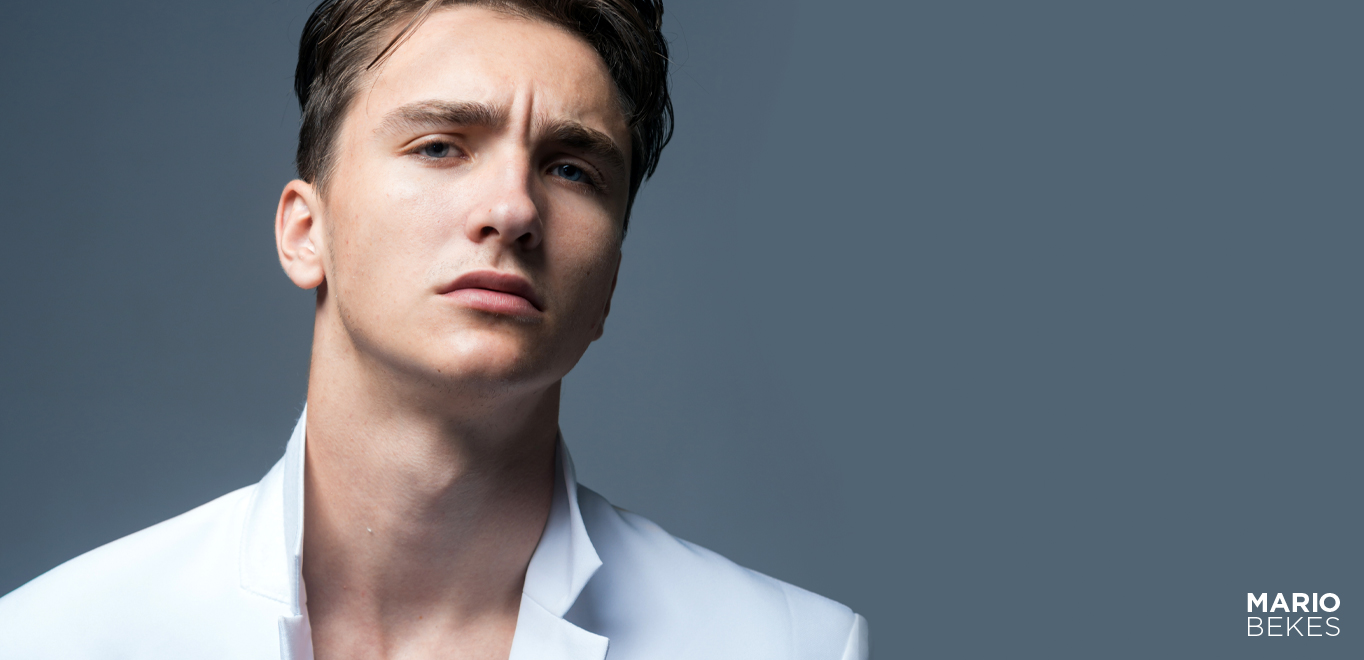
But as I watch my 23-year-old son and his generation scroll through hours of “looksmaxxing” videos, I realize something has shifted.
What was once a symbol of dignity and freedom has transformed into something entirely different.
Not all of it is wrong. Discipline, hygiene, and physical care are foundations of self-respect.
But what begins as control can quickly become obsession when guided by algorithms rather than values, leading individuals to prioritize appearance over genuine well-being and self-acceptance.
What was once self-care is now, increasingly, a prison.
“Looksmaxxing” is not just an internet term. It is an ideology.
It teaches young men that their value in life can be reduced to a calculation: jawline angles, eye symmetry, and body fat percentage.
On social media, figures like Braden Peters—known online as Clavicular—promote “ascendancy” as if it were a structured path to success. In its softer form, looksmaxxing appears reasonable: better skincare, improved grooming, a fit body, and attention to posture.
These are not inherently harmful. In fact, they reflect discipline.
That word—control—is key.
For many young men, looksmaxxing presents itself not as vanity but as a project. A system. A way to impose order in a world that increasingly feels uncertain.
It aligns perfectly with the broader culture of productivity, biohacking, and optimization that dominates male online spaces today.
But this is only one side of the spectrum.
On the other side lies what is increasingly visible across platforms like TikTok: “extreme maxxing.”
Here, the human face becomes a blueprint to be corrected.
Angles are measured. Symmetry is analysed. “Flaws” are identified with clinical precision.
And then comes the escalation.
Young men are encouraged to reshape themselves—sometimes literally. There are documented cases of individuals attempting to alter bone structure through force or turning to unregulated substances in pursuit of rapid physical change.
The boundary between self-improvement and self-harm is no longer clear.
What begins as a search for a better haircut can quickly become something pathological.
What young men don’t see is the machinery behind this content.
The more insecure you feel, the longer you stay.
The longer you stay, the more you consume.
And the more you consume, the more someone profits.
This is not accidental.
Digital platforms are designed to amplify content that triggers an emotional response—particularly dissatisfaction, which keeps users engaged and encourages them to consume more content. Insecurity is not a flaw in the system; it is a feature.
This is not self-improvement.
It is behavioural engineering.
Growing up in Yugoslavia in the 1970s and 1980s meant something very different.
Of course, we competed. There was always that one boy with “something”—maybe longer hair, maybe Levi’s jeans brought from Trieste, maybe a resemblance to Zdravko Čolić.
But beauty was never static.
It was demonstrated in movement. In strength. In presence. In how someone carried themselves, how they protected others, and how they made people laugh.
We did not measure our faces.
We lived in them.
Today, young men sit alone in their rooms, analyzing themselves through applications that tell them they are “suboptimal.”
That is not self-care.
That is the dissection of identity.
As a father, I have asked myself a difficult question:
Why do young men listen more to influencers than to their parents?
The answer is uncomfortable.
Influencers offer clarity in a chaotic world. They offer a formula: improve your face, improve your life.
In a time of economic instability, digital isolation, and shifting definitions of masculinity, this message is powerful.
But it is also misleading.
This message is misleading because it promises outcomes—such as respect, connection, and purpose—that it cannot deliver through purely external transformation.
This trend does not exist in isolation.
We have removed traditional pathways through which men once proved their worth—work, responsibility, resilience—and replaced them with something far narrower:
visual perfection.
Research into male body image disorders, including muscle dysmorphia (“bigorexia”), shows a growing number of young men experiencing chronic dissatisfaction with their appearance, despite objectively normal or even above-average physiques.
As a businessman, I see an industry.
As a man, I observe a lack of confidence among my peers.
My responsibility, as a father and as a man shaped by real conflict, is not to reject self-care.
It is to redefine it.
When my son sees me applying cream to my hands, I do not speak about aesthetics.
I speak about that trench.
I speak about dignity.
I teach him that the body is a tool, not just a display.
That strength is not measured in angles but in endurance. In character. In the ability to stand, to protect, to think.
Because true optimization is not just physical.
It is intellectual. Emotional. Moral.
A man who invests a thousand hours into his appearance and none into his mind or empathy may look complete but remains fundamentally empty.
To young men navigating this landscape:
Do not let anyone convince you that you are a product in need of constant correction.
Yes—take care of yourself. Train your body. Eat well. Maintain your hygiene.
But understand this:
Attractiveness is not symmetry. It is present. It is trust. It is how people feel around you.
Your face is not a problem to be solved.
It is a record of your life.
Do not destroy it in pursuit of an illusion.
Because at the end of the day—when the screens go dark and the filters disappear—what remains is real life.
The hands you hold. The people you love. The moments you share.
Let your hands be clean. Let them be strong. Let them be gentle.
But above all, let them be yours.
My hands survived the war so that they could hold my son today.
Not to measure angles.
Not to chase perfection.
But to hold something real—
in a world that increasingly isn’t.