
There is something slightly ridiculous about travelling thousands of kilometres to one of the world’s most beautiful holiday destinations and then deliberately making your days harder.
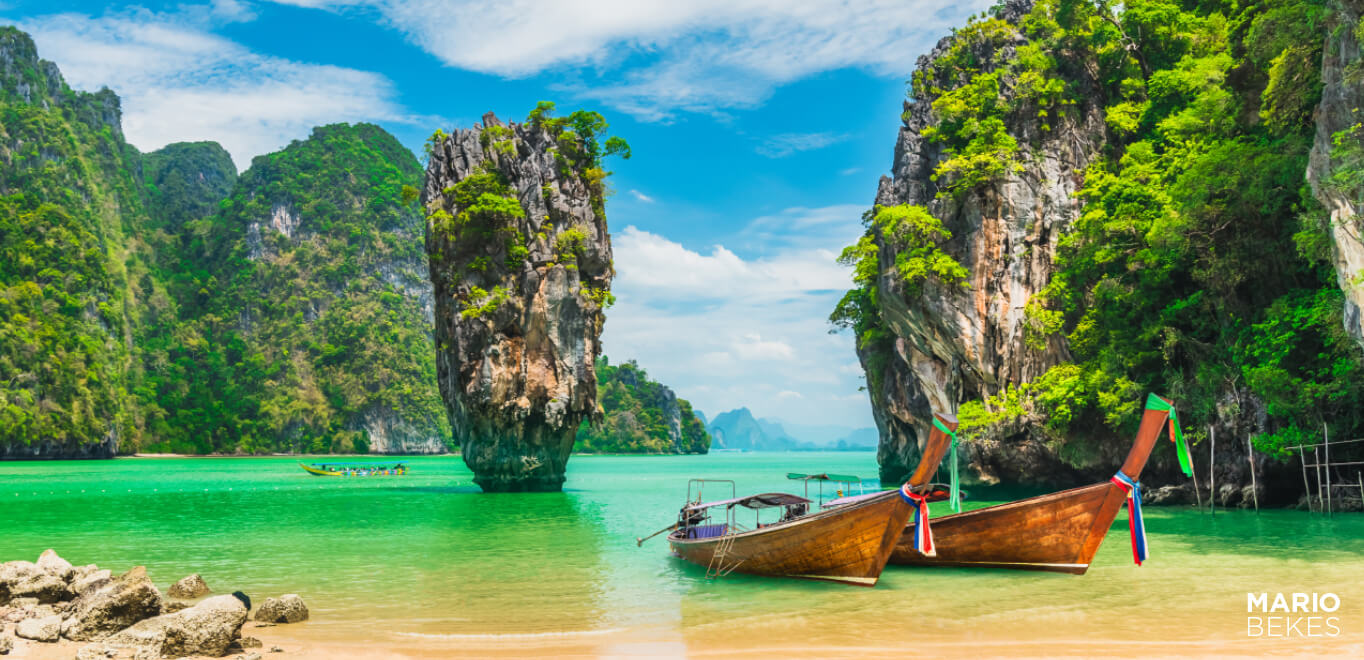
I’m in Phuket, Thailand. Outside my room there is everything you would expect from a place people travel across the world to enjoy: tropical heat, swimming pools, restaurants, beaches, excellent food and that unmistakable feeling that perhaps nothing particularly urgent needs to happen today.
It is also low season. The humidity can wrap around you before the day has properly begun, rain can arrive with little warning, and after training, even a short walk outside can feel considerably longer than it looked on the map.
I could spend 21 days enjoying all of these experiences from a very comfortable distance.
Instead, at 53, I came here to train at least twice a day and ask myself a question that has followed me through very different periods of my life: How do we know what we are capable of if we never genuinely test it?
Seven days into this experiment, I am beginning to understand that the answer has surprisingly little to do with physical strength.
There is a popular image of discipline that makes it look dramatic. Early mornings. Sweat. Boxing gloves. Exhaustion. Consider adding an inspirational quote beneath a photograph.
The reality is far less cinematic.
Sometimes discipline is simply lying in a perfectly comfortable bed in Thailand, hearing the rain outside and conducting a private negotiation with yourself about whether getting up is really necessary.
Nobody here is ordering me to train. There is no commanding officer waiting outside my door.
No competition depends on today’s performance, and nobody back home would know if I skipped a session.
I could easily explain it away as recovery, enjoy breakfast, sit beside the pool and start again tomorrow.
That freedom is what makes the experiment intriguing.
When there is no punishment for quitting, you discover how much your word means to you.
My life has given me unusual opportunities to learn about pressure. As a war veteran with a special-forces background, I encountered a version of it very young. Later came intelligence work, investigations, business, boxing and challenges I voluntarily chose rather than circumstances imposed upon me.
Earlier this year, one of those choices took me 321 kilometres along the Camino Primitivo in Spain.
I started that journey with expectations about what walking the Camino might teach me. Instead, damaged feet, pain, solitude and eventually walking much of the journey alone taught me something simpler: there are kilometres in life that nobody can walk for you.
People can encourage you. Coaches can guide you. Family can love you. Friends can believe in you. But eventually your foot has to take the next step.
Thailand is teaching me the same lesson in an entirely different language.
The first training sessions carry their own momentum. Everything is new: the gym, coaches, people, routines and environment. Curiosity provides you energy.
Then novelty disappears and your body begins sending invoices.
Muscles hurt. Fatigue accumulates. Heat and humidity become part of the workload. Recovery suddenly matters much more than it did when you were younger.
During my first week, I also became unwell. Vomiting and feeling depleted was an effective reminder that a 21-day plan written comfortably in Sydney doesn’t control what happens once you arrive.
That moment forced me to confront an important distinction.
There is a difference between stopping because your body genuinely needs recovery and stopping because your mind has found a convincing excuse.
Knowing that difference requires honesty.
At 53, I have no interest in proving toughness by damaging myself. Recovery isn’t surrender; it is part of performance. I am not trying to go back to being 23, but age is important to this experiment.
Age matters.
Our choices regarding how we age are also important.
I am keen to discover what my body can still achieve through training, consistency, recovery and effective coaching, without trying to manufacture some artificial version of youth.
The objective isn’t to defeat ageing. It is to stop automatically surrendering possibilities to it.
That distinction reaches far beyond fitness.
How many things do we silently deem impossible without ever subjecting them to a fair test?
We tell ourselves we’re too old to change careers, too busy to become healthy, too inexperienced to start something, too late to travel, too damaged to rebuild, or simply “not that kind of person”.
Eventually, you look behind you and realise that an assumption, repeated often enough, begins to sound like a fact.
But an assumption is not evidence.
One of the most intriguing things I’ve been observing here is confidence.
We often treat confidence as a personality trait. Some people apparently have it; others don’t.
I’m increasingly convinced that confidence is much more practical than that.
It is evidence accumulated over time.
You tell yourself you will get up and train, and you do. You complete one session and return for another. You have a difficult day, recover intelligently and come back. You discover that discomfort did not destroy you.
Each experience becomes a small piece of evidence that changes the next conversation you have with yourself.
Eventually, you stop needing to tell yourself, “I think I can do this.”
You have already done it.
This is one reason I have been journaling every day and recording daily vlogs throughout the experiment. I don’t want to remember only the successful moments. The difficult mornings, doubts, mistakes and adjustments are part of the evidence too.
A polished ending After an experience concludes, it’s easy to create a polished ending. after an experience is finished. Recording it while you are still inside it is different because you don’t yet know how the story ends.
I certainly don’t.
I still have another 14 days.
There is another lesson emerging from this first week, and it is the one I appreciate most.
Although responsibility is ultimately personal, progress rarely happens in complete isolation.
I have been fortunate to train with coaches who understand that leadership isn’t simply telling somebody what to do.
The best coaches demonstrate the standard themselves. They bring energy into a room when yours is disappearing, correct you when necessary and push without pretending that recovery or individual limitations don’t exist.
A good coach gives instructions. A great coach helps you discover something you didn’t realise you had.
But I am learning just as much from the people training beside me.
Every day I speak with people who have travelled here from different parts of the world. They have different ages, professions, financial circumstances and reasons for coming.
Some are here on tight budgets. Some saved specifically for the opportunity.
They have paid for flights, accommodation, food and training, taken time away from work or family, and exchanged comfort for a chance to improve themselves.
Not everybody wants the same outcome. One person may be rebuilding health. Another wants confidence.
Someone wants to lose weight, learn a new skill, become stronger or simply find out whether the person they used to be is still somewhere inside them.
I consider these conversations fascinating because they remove the glossy layer from transformation.
Most people aren’t chasing perfection.
They simply want progress.
And occasionally they have sacrificed considerably just for the opportunity to pursue it.
My professional background in investigations and human intelligence has probably influenced how I approach this experience more than I realise.
If I want to understand a situation, I want to speak with the people who live it.
Research matters. Data matters. Analysis matters. But numbers can tell us what happened without necessarily explaining why.
That is why I have been talking to people around me every day.
Why did you come?
What did you sacrifice?
What are you struggling with?
What keeps you going?
What did you believe before arriving, and has the experience changed it?
Those conversations have become as valuable to me as the training.
Whether we’re trying to understand an organisation, a market, a community or ourselves, there is enormous value in going to where life is actually happening, observing carefully and listening before reaching conclusions.
Human beings often do not fit neatly into spreadsheets.
Neither does resilience.
Seven days isn’t enough for me to make grand conclusions about this experiment, and I don’t want to.
I have 14 days remaining. My body may surprise me. It may humble me. There will almost certainly be mornings when the bed wins the popularity contest and training has very few votes.
That’s part of why I came.
But this first week has already changed one question for me.
Instead of asking whether something is impossible, we should first ask whether we have genuinely tested it.
You don’t need to fly to Thailand to do that.
Your version might be walking five kilometres after you’ve spent years doing little exercise.
It might be applying for the job you have convinced yourself you’re unqualified for, starting a business, returning to study, travelling alone, repairing a relationship, asking for help, or finally confronting something you’ve postponed because beginning feels uncomfortable.
Turning impossible into possible rarely arrives as one heroic moment.
More often, it happens quietly.
A decision is made. Then the decision is tested. There is discomfort, doubt and occasionally failure. You adjust, recover, learn and make another decision.
Eventually you look behind you and realise the thing that once appeared impossible has become something you are already doing.
That happened to me somewhere along the 321 kilometres of the Camino.
Now I’m testing it again in the heat and humidity of Thailand.
Not because I have anything to prove to the world, and certainly not because everyone should follow the same path.
Quite the opposite.
I am increasingly convinced that each of us has our own version of this question waiting somewhere:
Seven days down.
Fourteen to go.
I don’t know what the next part of this journey will teach me.
And for once, not knowing is exactly where I want to be.
Life on the Battlefield — Be Seen. Be Heard. Be Known.