Why do Military Parades and Armed Forces demonstrate actual economic, industrial, and military power?
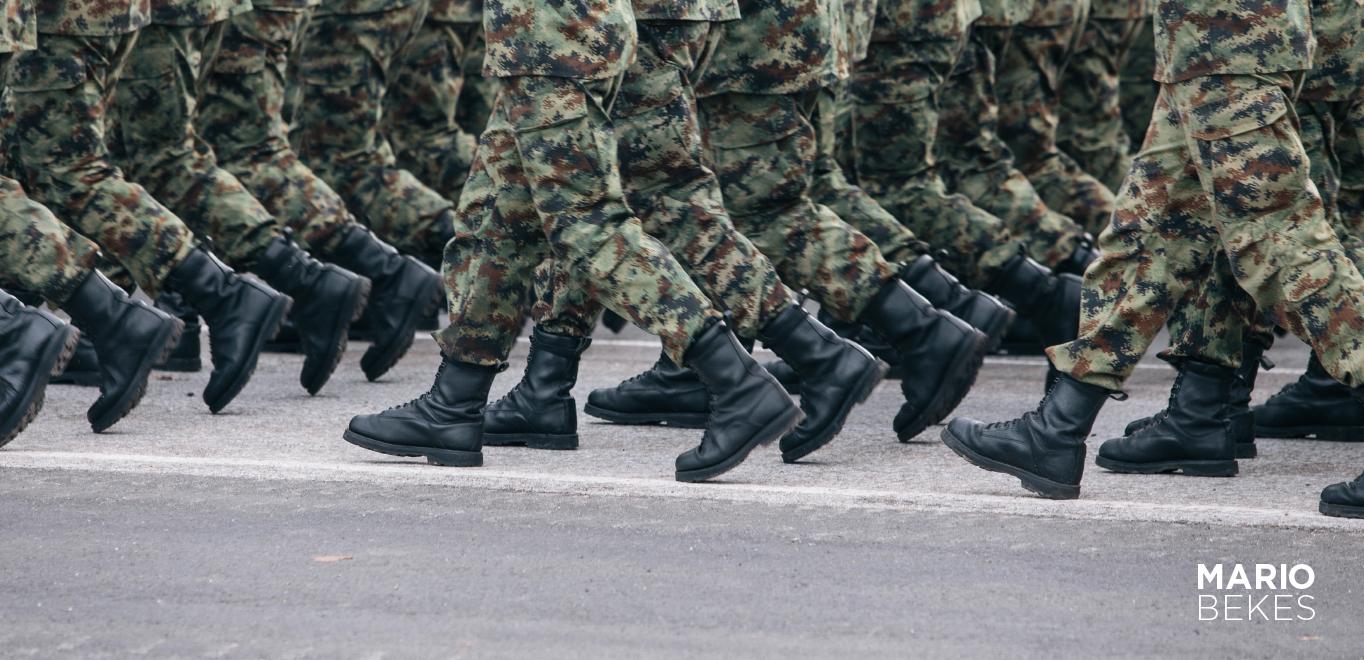
I recall watching military parades on TV as a youngster and knowing that I wasn’t the only kid who wanted to be a soldier, and a decade later I wasn’t just a soldier, but a combatant in one of the bloodiest conflicts of the twentieth century.

As a result, be careful what you want for since dreams do come true, and now let’s look at why Western society dislikes large military parades but some do, and what makes them so unique.

Because I participated in multiple military parades, allow me to approach this topic more professionally and objectively.

Countries such as Russia (USSR), China, and, at one point, Warsaw Pact countries such as North Korea held military parades not just to demonstrate the force of their weaponry, but also to provide civilians with peace of mind.

Citizens could readily see where their money was going by exhibiting and parading firearms, or so we were informed.

Second, exhibiting armament and weapons openly communicated to foreign and domestic adversaries what armaments were available.

Third, after a military parade, I was approached by a “journalist” who asked me a lot of questions about the RT 20 domestic made weapon, or better known as the hand cannon 20 mm. My boss advised me to give all facts since he was from a three-letter agency and was claiming to be a journalist, which he clearly wasn’t, but he was capturing a lot of details so the military parade could be used as an open source of intelligence.

Last but not least, when a military parade takes place, two things are important: first, it is something called “citizen pride,” and second, the military parade symbolises the country’s standing (economic, social, etc.).

A military parade pits East and West against each other

When we talk military parades nowadays, most people think of Russia, China, and North Korea… Individuals who appreciate military parades as well as those who do not share their excitement for them share this association.

But first, let’s journey back in time, throughout history where Kings have projected their power by deeds of strength and awe since the dawn of human civilisation.

Mesopotamia

Friezes depicting heroic conquests were used by ancient Mesopotamian emperors to decorate their palaces and citadels. These pictures typically depicted a massive potentate striding in front of his army and crushing on his opponents’ skulls.
As a result, a monarch’s stature and political power were elevated.

Rome’s Antiquity

The honourable triumphs of antiquity were one of the most important rites of the Roman Empire. Generals and emperors who had won battles would march from the Field of Mars into Rome’s massive Temple of Jupiter, through temples and thousands of adoring peasants.

Everyone wore laurel wreaths and sacrificed bulls. Conquered nations’ looted possessions were conveyed in chariots, and abducted barbarians were dragged along in chains. Some slaves were encouraged to murmur “Memento mori” (Remember you are mortal) to their captors as part of a drama meant to connect the Roman public to its leaders.

For many years, these Roman rituals left an indelible mark on Europe.

Europe

Every Easter, battalions of soldiers, dignitaries, and clergy would march past the city’s renowned Basilica of San Marco and towards the ports to watch the Doge (Duke) of Venice board a ship, sail into the harbour, and cast a gold ring into the waves. Venice was the centre of a powerful Mediterranean empire at the time. This highly public act symbolised Venice’s divine union with the Adriatic Sea, which served as the foundation for the Doge’s wealth and power.

As empires disintegrated into nation-states and adopted a more open tone of hostility, these exhibitions of might lost their mystique.

The Prussian army’s elite unit, noted for its rigid lockstep discipline, modernised the military parade. Armies from throughout the world copied the salutes and drills employed by the German kingdom.

Some of the strict constraints enforced on troops marching into Beijing may be traced back to Prussian tactical directions, such as the precise distance between an infantryman’s nose and that of his colleagues on either side.

Another legacy handed to the world by the Prussians was the infamous goose step, which was first performed by pompous officers in the 17th century. The sheer scale of the iconography—massive Nazi rallies were staged across entire zeppelin fields, ostensibly representing the physical manifestation of the party’s ideology—made it even more potent.

Similar patterns arose for other authoritarian countries, such as the Soviet Union (Russia), which paraded phalanxes of tanks and advanced missiles past the Kremlin every May.

The intricately planned competitions known as Mass Games, which involve many dancers and volunteers, are a distinctive communist heritage. These events continue to take place on a regular basis in North Korea, where tens of thousands of people undergo months of training and mechanically perform strange tableaux praising the opaque leadership of the isolated rogue regime.

Nowadays, victory marches are performed by the majority of nations, including many democracies, to demonstrate their military superiority and to honour prior sacrifices.

Let us now return to the present, to the current military parades.

In actuality, military parades have become identified with Russia due to their loyalty to the military and the weapons that represent their nation’s pride.

Every year on May 9, the country commemorates Victory over Fascism Day, and the main events on Moscow’s Red Square are capped off with a traditional military parade.

Russia proudly shows its military’s highest levels, as well as a variety of armaments ranging from artillery to aeroplanes. Such manifestations have been widespread during the Cold War, and it is thought that the Russian state leadership is doing so to draw attention to its trump cards among its rivals.

The United States of America, which is by many metrics the world’s most powerful nation and whose weaponry are equivalent to or even greater to those of Russia and are held in Moscow practically annually, does not appear to prioritise self-promotion.

To commemorate Independence Day in 2019, former US President Donald Trump ordered armed forces from the Pentagon to the streets of Washington. The “rest of the world” expected to see an incredible display of American military capability accompanied by a variety of military acrobatics.

Despite the fact that it is widely known how Americans feel about military parades, optimists predicted that they would be happy as well. Particularly if they are conducted by one of the most disliked American presidents in recent history, who wanted to organise a parade of military forces and the entirety of the war potential in 2018, prompting considerable public outrage.

The 2019 Independence Day parade “succeeded” and was the first large military celebration held in Washington since 1991, when the Gulf War’s victory was celebrated.

From honouring historic wars to Lincoln’s death to presidential inaugurations, there is something for everyone.

Prior to 1991, there were only six other important military parades in American history. The year 1865 marked the first formally documented military parade in the United States. In an effort to boost morale in the grieving country, President Andrew Johnson’s successor organised a procession identical to this one month after President Abraham Lincoln was slain.

Johnson declared the Civil War to be over and requested a Grand Military Review to honour the American forces that saw the conflict through to a successful conclusion.

The second great parade was held a year after the end of the First World War, in 1919. In New York, a parade of over 25,000 soldiers carrying various weapons and military equipment took place. A week later, the same thing happened on Washington’s streets.

In 1942, New York hosted an unprecedented military parade. On that occasion, civilians and government representatives marched for 11 hours in support of American soldiers who had volunteered to fight in World War II.

When fascism was finally defeated four years later, a parade of 13,000 paratroopers from the 82nd Airborne Brigade marched through New York in front of roughly four million spectators to commemorate the end of fascism.

Before the aforementioned 1991, two other military parades were staged in the United States, both of which marked the president’s inauguration. Soldiers marched through the streets of Washington during both John F. Kennedy’s and Dwight Eisenhower’s inaugurations in 1961.

Can I ask you a question?

Why is it that the United States of America, whose military power is “side by side” with Russia’s, does not organise regular military parades, while the “babies” prefer to boast about their military resources?

The Russian procession conveys a Kremlin message.

Military parades are a public image associated with Moscow and the Russian military force, and the practise of organising them is as old as organised military units. The parade on Red Square, with its display of sophisticated heavy weaponry, is symbolic of the Cold War era, when it was an opportunity to introduce new things from the Soviet military industry.

It was typical for new equipment to be closely guarded until the parade, which was an opportunity to show off some of the Soviet Army’s new assets to the world. It was estimated in the political milieu of so-called Kremlinologists who was where on the stage for the guests of honour in connection to the current leader, and who was out of favour. The Kremlin sends a strong statement with military parades in Moscow.

The Cold War value system and images were restored in numerous parades in recent years, which is why the march on Red Square is regarded as a key occasion to observe the top of the state’s words, according to tradition.

Modern Russia holds parades in the old way, with heavy equipment echelons, but also “revived history” tanks and self-propelled guns from WWII, as well as people dressed in Eastern Front uniforms.

While Moscow hosts the largest parade, Russians often hold parades in smaller cities on Victory Day and other events.

Chinese parades seem similar to Russian parades. Our interlocutor explained us that the model was inspired by communism, which is why the Chinese like to display echelons of tanks and ballistic missiles.

Americans are vehemently opposed to power consolidation.

In the United States, parades are more focused on people, particularly civilians who frequently participate in activities alongside military formations. Military equipment is shown on a smaller scale, but it depicts a different cultural pattern of the military’s involvement in society.

Although the United States does not stage large parades, it is not far behind Russia in terms of organising other military celebrations and activities. Hundreds of such military displays take place in the United States each year, but they are local events, as opposed to Russia’s method of a centralised state and a centralised display of power in Moscow, followed by direct TV transmission in large towns.

Citizens in the United States, as well as numerous historical organisations that organise public reenactments of major wars, played an important part in nurturing military traditions and organising the march. The American Civil War and World War II are the most popular subjects. Tanks are a simplified illustration.

The Russians placed the T-34 in a battalion of professional military personnel who are paid by the state to show historical military equipment, but in the United States, the owners of the tanks and other combat equipment on display are private individuals.

Instead of a parade like Victory Day (May 9 according to the “Russian” calendar), D-Day is remembered with a series of commemoration events and parades. A replica of the June 1944 parachute landing with the original twin-engine C-47 is routinely organised on “round” anniversaries.

“Parades are expensive and unnecessary; money could be spent more wisely.”

Former President Donald Trump was so impressed with how the French organised and conducted their parade on the Champs-Élysées in 2017, that he advocated doing something similar in 2018. Few people agreed with him, and the general public was the most outspoken opponent of holding a military parade.

Citizens in the United States believed that such manifestations had no effect or benefit, that they served only to promote Trump, that they were too expensive, and that all of that money, which came mostly from taxpayers, might have been spent on far more productive activities. Despite strong opposition, the parade was held in 2019.

Propaganda and war films

In contrast to praising military parades, Americans express their superiority in other, and many would argue far more effective, ways, such as through propaganda reflected in films and glorifying US military feats, which creates the impression that US war operations around the world are justified. This type of propaganda has been perfected to near perfection.

The Americans have a powerful propaganda machine, and they have created a strong image of their global domination and importance through war films and other kinds of mass culture. Even among their adversaries, who frequently develop an image based on American films, American military iconography is dominant.

The global recognition of Anglo-Saxon military history, which affirmed through films even minor wars that were not very significant in world history, such as punitive measures against Indians or the defence of the Alamo Fort, is indirect evidence of propaganda’s strength. Even in science fiction films, American military symbolism is crucial.

I’ll let you determine whether parades are necessary, for whom, and why.

We’ll see what all of this means for regular people and people.

Who is The Liver King – Truth and Myth

A story about a boy who was bullied and then discovered how to be successful, strong, loved, and treasured while earning millions of dollars.

How much do people believe what they see and read on social media nowadays?

Are we conscious of all that is provided to us on a daily basis?

Do we reject them or accept and believe them?

These are the issues I’ve been discussing with my pals over the last few days.

What happened to all of us, and where did critical thinking, enquiry, and deeper thought go?

Social networks have caught us in their web, which they weave more of every day, and we are becoming further entangled in it.

I’ve already talked about influencers, who they are, what they do, how much influence they have and how they use it, the positive and negative aspects, but there’s always the question of how thin the line between a charlatan and an influencer is.

The King of the Liver

Do you know who the King of the Liver is? I believe you’ve seen photos of a strong bearded man eating raw meat somewhere on social media.

Who is the Liver King?

Brian Johnson, often known as Liver King on social media, is a fitness social media figure and entrepreneur from the United States. He is well-known for promoting a “ancestral lifestyle,” which includes consuming raw, unprocessed organs and meat on a daily basis, as well as liver. As a result, he earned the title “Liver King.”

In the year 1978, Brian was born.

According to Liver King, his goal is to return to a more basic way of existence. How practical is this, and how prepared are we?

The plot is right in front of us.

Brian Johnson, Liver King, looked substantially different three decades ago. The influencer grew to prominence as a result of his unique lifestyle. He takes cold baths, weighs himself with his teeth, and eats half a kilogramme of raw beef liver every day.

Despite the fact that he was moulded 30 years ago, many people were ignorant of his terrible past, which he revealed on Instagram.

“Adolescence was the most difficult period of my life.” I was too small. I appeared ridiculous. I lacked both company and a sense of self-worth. I was kicked and punched on a daily basis. I had to find a way out of the anguish of my life without my father, and I did. I started working. “I became stronger,” he wrote.

Johnson states that the bullying drove him to change his life and gain confidence.

30 years later, I’m in the best shape of my life. If you ask me what has changed, I’ll tell you that I’ve begun to restore what the modern world has left behind.

And how did that occur? Johnson worked as a supporter of his wife’s dental office before embarking on his influencer job.

My Son’s Allergies

Brian was living the “American dream” before adopting this lifestyle, as he puts it. His life had been so simple until his sons became ill.

– My sons’ allergies became more acute and dangerous as they interacted with the contemporary society. After being outside for a bit, terrifying rashes formed. Even playing with our family dog caused runny noses, watery eyes, and shortness of breath. The genuine wake-up call was the cessation of my sons’ respiration. We were quite fortunate. Brian stated that we arrived at the hospital on time.

He claims that he and his wife made the decision to face the matter.

We tried everything, as any reasonable parent would. And that’s where our journey began, he continued, explaining that they then restricted their diet to raw meat and locally farmed fruit.

To begin, we avoided processed foods.

We began reintroducing things that our forefathers ate: seasonal fruits and vegetables, complete, nutrient-dense animals. So, the liver. In barely two weeks, our boys’ behaviour changed dramatically. Likewise in ours. Even after twenty years, Brian still consumes half a kilogramme of liver every day.

Brian’s nine ancestral principles are as follows:

Brian adheres to the nine life ideals listed below, which he also communicates on his social media channels:

1. Sleep

The primary ancient tenet is that sleep is more vital than anything else. This is a time to detox, recharge, rebuild, and restore both the body and the mind.

It’s all about getting the most out of your sleep, having your last meal of the day a couple hours before bed, and staying away from phone distractions.

2. Move

Physical activity in the present world and in our old environment are unrelated. This is almost as big of a mistake as dieting.

Brian sticks to this routine by going for thirty-minute walks every day, rain or shine. According to him, “well-being built from well-balanced movement eliminates the need for consumption-based pleasures.”

3. Protection Shield because we need to prevent dangers much like our ancestors did, but instead of running from lions, we run from seed oils, excessive WiFi, EMFS, and man-made poisons.

A product based on personal defence against all of the modern world’s supposed threats.”Dangers like these gradually accumulate and, with an additive effect, gradually disrupt our hormones, metabolism, and capacity for deep sleep,” he continued.

4. Eat Eat because we evolved to eat the whole animal.

Brian Johnson advises staying away from processed foods high in fat, sugar, liquid calories, and seed oils.

5. The sun

The sun is necessary for the natural generation of vitamin D. This helps to prevent tooth decay, boosts immunity, and improves general health.

Brian usually attempts to get as much vitamin D as he can during the day, claiming that it supplements the fat-melting vitamins A and K found in the liver and bone marrow.

6. The flu

Comfort is harmful to the body.
According to him, spending extended periods of time in cold baths, rivers, and lakes exposes one to the natural elements, which is vital. This, he claims, boosts circulation, which strengthens the body’s defence mechanisms.

7. Attempt

This element of his beliefs is less about disputes and more about the idea that we should always hold ourselves to high standards.

8. Connect 24 hours a day, 365 days a year; our forefathers were in continual contact with the planet.

Brian states that taking off his shoes and going on long walks reconnects him with the soil and Mother Nature. This has a really relaxing effect on him, keeping his blood pressure and sleep quality in perfect balance.

9. Social relationships

Put aside your phones and spend time with friends and family. Brian Johnson stated, “We will always be social beings in need of others.”

With the exception of the one regarding raw liver, I must say that I follow the majority of Brian’s nine rules, but can we obtain Brian’s body by following these recommendations and eating all of these foods?

How did Liver King make money?

Liver King and his wife, Barbara Johnson, founded and eventually sold a vertically integrated dentistry practise. The Johnsons left their successful dentistry practise to work full-time as influencers and nutritional supplement sellers.

At the time, the Liver King’s wife supported his rural lifestyle, allowing him to begin the Liver King adventure as a ripped, shirtless influencer.

These enterprises are founded on a philosophy known as “Ancestral Living,” which refers to a style of life influenced by our forebears’ activities. This includes a paleo diet of raw meat, bone marrow, and animal liver, which pushes the limits of the human body.

The majority of Brian Johnson’s income comes from social media endorsements. Johnson rose to prominence as a social media influencer in the United States in 2022, with millions of followers on his many platforms.

Johnson is gaining popularity by revealing her diet and exercise regimen. The Liver King’s fortune is mostly derived from his ancestors’ lifestyle supplement business.

As a bodybuilder, he also makes money from sponsorship partnerships and brand promotions, which he advertises on social media. Johnson’s fortune has grown dramatically in recent years.

How does Liver King put his money to work?

The Liver King may be an infamous caveman who eats liver and walks about shirtless, but he knows how to invest his money.

If Brain Johnson owns his real estate outright, his nett worth is estimated to be around $12 million, according to public records.

Startups

Each of Liver King’s supplement brands generates over $1 million in annual revenue. He also claims to have between ten and twelve unreleased projects.

Before Liver King and his wife invested completely in companies and influenced supplements, they both worked at Dentik Dentistry in Texas. They started the company with a $500,000 investment split 50-50, then sold it for an undisclosed sum. They went on to other projects after selling Dentik in 2010.

Supplements for Ancestors

Under the Ancestral Lifestyle brand, Johnson’s major line of business is the marketing of supplements produced from animal organs, especially protein powders. Some argue that the modern diet prevents us from living the full lives we were meant to. According to public estimates, the annual revenue from ancestral supplements ranges between $1 million and $10 million.

With 175,000 monthly unique visitors, an average order size of $80 (the cost of two supplements), and a 2% conversion rate, the website earns approximately $3 to $4 million in annual revenue. Amazon orders might produce an additional $24 million in revenue per year.

Liver King, who claims to be the company’s founder, appears to be the company’s major shareholder. If the average profit margin for supplements is 38%, the corporation is likely to make between $380,000 and $3 million in profit.
Other Liver King businesses

Liver King also has stakes in the dietary supplement companies Heart and Soil, The Fittest, and Medicine Man. Heart and Soil, a weight loss supplement company, makes around $5 million in revenue, whereas The Fittest, a strength supplement company, makes less than $5 million.

Medicine Man is a mushroom-based supplement that generated approximately $1 million in revenue in its first year of business with joint venture partner Mark Vorderbruggen. Because Liver King is likely to be a minority shareholder in these companies, its capital is expected to be significantly less valuable than Ancestral’s.

Property investment

Brian Johnson and his family live in an 8,300-square-foot Spanish-style mansion in Austin, Texas. Each of these mansions is supposedly valued $7 million. It is uncertain whether he owns the house or how much money he paid for it out of his own pocket. The house has a sauna, a steam room, and a pool.

The Liver Ranch in and around Austin, Texas, contains a pool, pond, and an area where cows and poultry can be found. On this site, Liver King maintains a ranch with at least three cows, two homes, and a garage.

The Liver King Ranch will most likely be six to ten acres in size, as we estimate that everyone requires about an acre. Properties that fit this criteria are often priced between $500,000 and $1 million.

How did Liver King’s investing portfolio perform? The majority of the Liver King’s assets are held by private corporations, along with a few individual houses, although their exact value is difficult to quantify.

Although Liver King is not your normal investor, he does understand how to make more money doing what he enjoys.

Quotes About Liver King Investing

Liver King is a firm believer in all things organic. If you can’t go all in, don’t go at all, he says. According to Liver King, “live naturally, vibrantly, and own every link in the supply chain.”

The most prudent financial decisions are those that have been thoroughly and thoughtfully studied. You can’t invest half-heartedly, so send everything in at once and try again if you don’t succeed the first time.
Quotes

„I am a business builder. I am a hunter of evolution. “I am that guy who left the fucking safety of the cave to take a real fucking risk.”

„Whatever the gain, it must be proportionate to the risk. So have some balls and take some God damn fucking chances.”

“So this is how I make my money…I own the companies downstream and upstream of (each other).”

Should I, like Liver King, invest, or should you?

Not everyone is cut out to enter the highly competitive world of business right away.

Any individual, however, can invest in a startup. One certain interpretation from the Liver King’s story is that he invested in businesses in which he believed. This makes it easy for him to endorse these companies’ products just by being himself.

But what if we really want to acquire a house? There’s nothing wrong with that. Investing in real estate is a possibility. It is, without a question, a wise investment.

In any case,The Liver King drew a lot of attention because of his life, attitudes, and, most importantly, his appearance. He drew the attention of guys, who make up the majority of his social media followers, as well as celebrities.

But, as my colleague podcaster Joe Rogan put it, “not everyone agrees that the Liver King’s physique is solely the result of raw food and consistent exercise.” Rogan dismissed The Liver King’s claims about the superiority of liver as a “gimmick,” adding, “He has an ass filled with steroids, is what that guy’s got.”

Is Liver King on STEROIDS? Is it all big fat LIE?

Johnson described his serious self-esteem issues, which motivated him to use steroids and other medications to enhance his body, in a video titled “Confessions of the Liver King…I Lied” that he posted to his YouTube profile.

According to fitness and self-improvement websites, this comes after hacked emails revealed Johnson was taking Omnitrope growth hormone, which costs around $11,000 per month.

Liver King previously denied using steroids because he was concerned that it would harm his business, which has nearly five million followers across TikTok, Instagram, and YouTube. Johnson’s reputation for sustaining a traditional way of life is jeopardised by his use of steroids. It’s unknown how the revelation has affected the Liver King’s fortune.

So, how about you?

Do you believe the King Liver legend?

What are your thoughts on everything?

El Chapo’s Wife: “The Beauty Queen’s Rise and Fall”

The world’s “most dangerous” lady is back on the loose!

The wife of Mexican drug lord El Chapo has been released from prison after serving two years.

Emma Coronel Aispuro, who is she?

Emma Coronel Aispuro, the wife of notorious Mexican drug lord Joaquin ‘El Chapo’ Guzman, was released from a US prison in Los Angeles after serving two years for supporting her husband in the trafficking of billions of dollars in drugs and money laundering.

Guzmán supervised Mexico’s drug trade and smuggling for 25 years as the boss of the notorious Sinaloa cartel. He also put together a squad of people who were prepared to assassinate, abduct, and torture him.

The lovely 34-year-old wife and mother of two children is now ready to start a new life without him, and many people are wondering who she is and how she became the world’s most notorious drug lord’s closest friend and ally.

The newly freed inmate was born in 1989 into a ranching family near San Francisco and grew up in the rural Mexican village of Durango La Angostura. She won the beauty pageant as part of the 2007 Guava Coffee Festival in Mexico when she was 17 years old.

This attractive woman with dual citizenship is not the first in her family to be associated with drug gangs. Before El Chapo’s arrest in 2013, her father, Inés Coronel Barreras, was one of his closest confidantes.

How did she find ‘El Chapo’?

Emma met the drug lord when she was 17 years old at a party in Mexico, and he invited her to dance.

“He offered me a seductive smile. “After a while, someone approached her and said, ‘That man is asking if you want to dance with him,’ and I said Okay,” she claimed in one of her few interviews with the Los Angeles Times.

In 2006, Emma met Joaquin “El Chapo” Guzmán at a party, and their love affair began. A year later, the two wedded in a magnificent display of love and power. Their relationship was nothing short of spectacular, given El Chapo’s status as Mexico’s most wanted drug lord. When Emma gave birth to their twin children in 2011, their love became even deeper.

What role did she play in the well-known drug empire?

The FBI detained her in February 2021 at Dulles International Airport in Washington, D.C., on drug trafficking charges.

Prosecutors allege that between 2014 and 2017, Emma assisted in the operation of her husband’s drug empire and collaborated closely with the Sinaloa cartel’s command and control apparatus. She was suspected of smuggling large quantities of illegal substances into the United States.

Emma became his third wife after a simple dance escalated into a stormy affair. They married when she was 18 years old. El Chapo is 32 years her senior, and their two daughters are the rumoured youngest of his nineteen children.

Coronel Aispuro helped her husband escape from Mexico’s most secure prison in 2015 by acquiring the land used to dig the subterranean path that led to his release. Prosecutors alleged she also passed a GPS watch as food through prison security. According to the prosecutor’s office at the time, the drug boss, known as El Chapa, also used his wife as a ‘messenger,’ delivering messages between him and other cartel members while he was in prison.

In 2021, Emma Coronel Aispuro pled guilty to assisting in the importation of almost 450,000 kilogrammes of cocaine, 90,000 kilogrammes of heroin, 45,000 kilogrammes of methamphetamine, and around 90,000 kilogrammes of marijuana. She also participated in two conspiracies to release her husband, El Chapa. It’s about a successful escape in 2015 and an attempted escape a year later while awaiting extradition to the US.

Coronel Aispuro, who faced a maximum penalty of ten years, received a relatively light sentence since she had no criminal history and was not involved in the Guzman cartel’s more violent acts. As part of her plea agreement, she also turned over $1.5 million in cocaine revenue. After 27 months in prison, she was released.

Assistance throughout the trial

Coronel Aispuro’s wife, a devoted supporter, attended her husband’s trial every day. She wore designer clothes and large sunglasses, and despite the fact that Spanish is her native language, she wore headphones and listened to the translation throughout the trial.

During El Chapo’s trial, the former beauty queen used her now-defunct Instagram account to offer inspiring love and dedication quotes. She was notorious for avoiding interviews, but she made an exception in this case, giving a rare interview in which she depicted El Chapo as a loving father and husband.

El Chapo returned his sight to his wife and kissed her after the decision was read. While fighting back tears, she smiled at him and gave him a thumbs up.

El Chapo was sentenced to life in prison and will spend the rest of his days in a facility that has been described as a “high-tech version of hell.”

What about their children?

Coronel Aispuro gave birth to twins Emaly and Maria Joaquina at Antelope Valley Hospital in Lancaster, California.

Guzmán’s name was omitted from their children’s birth certificates since the US State Department had offered a $5 million reward for his apprehension at the time of their birth.

Emma, the drug queen, pleaded with the judge not to let her daughters “grow up without a mother’s presence” during her trial, so she is expected to take advantage of her newfound freedom and return to her daughters’ arms.

The adventure of Emma Coronel Aispuro has been nothing short of fascinating. Her life has been a complicated web of highs and lows, from beauty queen pageants to marrying a drug lord and then facing the government’s wrath. Only time will tell what her next chapter will bring.

Who is Misha, “THE MAN WITHOUT A FACE”

Have you ever wondered why Western intelligence agencies never took advantage of the fact that Warsaw Pact countries collapsed like a house of cards and that the CIA, MI6, and others suddenly had access to thousands of intelligence agents who made their lives miserable throughout the cold war?

Perhaps the reason is because the STASI Eastern Germany Intelligence Agency was more successful than its equivalents such as the CIA?

In this essay, we will look at how STASI used secrecy and social engineering to collect intelligence and infiltrate the cabinet of Western Germany’s chancellor, using him to make decisions in favour of Warsaw Pact countries.

Without a doubt, Vladimir Putin was the counterintelligence operative who collaborated with Misha and the STASI international intelligence section.

How the Stasi leader drove all intelligence agencies insane: He was the mastermind behind the activities, although he was oblivious that the Berlin Wall was being built.

The Israeli tabloid “Jerusalem Post” referred to him as “the best espionage chief in the world.”

In the West, he was labelled “The Man Without a Face” for a long time.

Until 1979, Western intelligence services had no idea who their main foe looked like, who was bothering them and asking them questions.

During his tour to Sweden, which was filmed on tape by a local news organisation, he paid a visit to the grave of Kurt Tucholsky, a prominent German satirist who committed himself after believing Hitler had won the war.

The weekly “Spiegel” immediately published Wolff’s photograph.

Wolf-Misha, Markus

Markus was born on January 19, 1923 in Weimar, Germany. His childhood was spent in Stuttgart. Father Friedrich was a doctor as well as a writer. His mother, Elsa Wolff, was a teacher.

The Wolffs were compelled to leave Germany in 1933, ten years after Marcus was born, because being a Jew and a member of the German Communist Party was not an ideal combination.

They lived in France and Switzerland before relocating to the Soviet Union in 1934.

Markus attended elite Moscow schools and received Soviet papers at the age of 13 in 1936. He studied at the Moscow Aviation Institute in aeronautical studies in 1940 before joining the Comintern in 1942, when he was transported to the Bashkortostan region and trained for espionage activities behind enemy lines at a school.

After getting entirely Russified, his moniker became Misha. This nickname remained with him for the rest of his life. From 1943 to 1945, after the fall of the Comintern, he worked on the radio in Moscow, on the German people’s channel.

After returning to Germany, he began working for the secret service.

In 1945, he was one of the first Germans to return from the Second World War, to the Soviet sector of Germany. He did so under the alias Michael Storm and worked as a journalist for Radio Berlin in Berlin. He discusses a number of subjects, including the Nuremberg Trials. He despised Nazism and wished that such tragedies would never happen again.

He returned to Moscow in 1949 and served as the East German embassy’s first consul there until 1951.

Wolff was afterwards questioned about how he remained anonymous and “faceless” for so long. He remarked that it was “just proof of the stupidity of the Western agencies” because he never concealed and always sat on the platform during May Day parades dressed as a commander. He further stated that it is not his fault nor his credit that he was never discovered.

From no prior espionage experience to becoming the greatest secret spy ever

Markus Wolf began his career as a journalist after living in the Soviet Union and Switzerland for several years. He worked as a special reporter for the major war criminals’ trials at Nuremberg. Walter Ulbricht brought him to his office in 1952 and appointed him head of the intelligence service, which had only recently begun to be built. Wolff, 29, understood nothing about espionage other from his study at Kushnarenko’s. He announced his resignation in 1987.

He claims that he disagreed with East Germany’s political direction, that it was time for him to retire and focus on writing, and that he had conflicts with his supervisor, Minister Mielke. Milke, like many old communists, was puritanical and reprimanded Wolf for his very liberal love life. Wolff also observed at the time that finding someone who could survive such a scenario for so long would be difficult.

While saving the West German chancellor, he accidentally knocked him down.

The political rise and collapse of West Germany’s chancellor Willy Brandt acted as a reminder of his time working for the Stasi.

In particular, in 1972, the CDU attempted to depose then-Chancellor Brandt by proposing that the Bundestag vote against him. The social-liberal alliance held a narrow majority, and every vote affected the outcome of the election. Then he revealed that Wolff was also involved in the case.

In other words, Brandt eventually won a confidence vote with a two-vote majority, and one of those votes came from Julius Steiner, who had been bribed 50,000 marks by the Stasi to support Brandt, whose ongoing control suited the Easterners. Chancellor Brandt, however, was forced to resign two years later as a result of his assistant Günter Guyom, a clandestine Stasi spy.

In 1990, 16 years after his departure, Wolff addressed him an apology letter in which he expressed his deep regret for the conduct that had led to his resignation.

People are the key to espionage

In an interview, Marcus stated that he has always preferred agents.

– It is difficult to generalise about a big service with a history of noteworthy failures and accomplishments. I feel that the CIA places too much emphasis on the technical aspects of espionage because they assume that sophisticated technology will ensure their success. In contrast, they undervalue human espionage, but I have always supported agents and their work. I said that the human aspect, not military strength, might be used to destroy terrorism. “The army primarily kills people,” he stated at the time.

His admission, which he wrote about in one of his books, that he had no idea the Berlin Wall would be built, stunned everyone.

I realise the whole thing seems ridiculous, but I honestly had no idea our people were starting to build a wall. It was a big problem for us since the spies had no difficulties going between different parts of Berlin up until that moment, but as the wall rose, it got increasingly difficult. I asked the interior minister how the head of the intelligence service could have been kept in the dark about such a serious incident. We eventually succeeded, although it was more difficult than before the Berlin Wall was created, he noted at the time.

Markus Wolf, the team’s chief of STASI’s Main Reconnaissance Division (HVA),

His Main Reconnaissance Department (HVA) made a substantial contribution to STASI’s national and international success. At its peak, the HVA employed 4,000 permanent staff members, accounting for just around 5% of all STASI workers. Other STASI workers looked up to them since they had access to possibilities for worldwide travel and advanced study.

As a result, the HVA had unparalleled effectiveness. Markus Wolf, the team’s leader, and his group, which focused mostly on West Germany, both contributed to the team’s success.

Despite having only 4,000 members compared to the STASI’s 100,000, this organisation attracted the most attention from the Western media. The HVA was successful partly because it had access to West German intelligence circles, but it was also successful because Western intelligence services were never able to pry into the HVA’s ranks.

Wolf had a reputation to maintain. Wolf’s inability to be physically identified by the West for even 25 years demonstrates the HVA’s exceptional security. Wolf became known as “the man without a face” due to the legend that arose as a result of his lack of information.

As a result, the HVA was the most distinguished division of the STASI. For two reasons, the hiring requirements were extremely stringent. If HVA officials wanted to work abroad, they had to be completely trustworthy first.

Second, the HVA’s growing mission included technological and scientific espionage. Only knowledgeable officials could comprehend and assess the value of information in this environment. The primary source of candidates was the Free German Youth movement.

It was critical that the recruits had no contact with any relatives in the West. As the task became increasingly difficult, an increasing number of recruits came from the families of high-ranking party officials. As an added assurance of loyalty, salaries in the HVA were higher than those in the STASI’s internal security branch. Given that there was not a single instance of desertion in the HVA, the effectiveness of those security measures has been shown.

HVA Organisation/Departments

“Department I” dealt with the “main target,” West Germany’s chancellor, his staff, and important ministries.

The “Department II” that worked with major political parties, labour organisations, and the Church was responsible for Brandt’s resignation in the Guillaume incident.

With the exception of the United States and Mexico, “Department III” was supposed to encompass the rest of the world, but in practise, it only included a small number of countries where East Germany had embassies.

“Department IV” focused on military espionage.

The counter-intelligence service in command of the attacks, “Department IX,” carried out many infiltrations into West German intelligence institutions.

By the end of the 1970s, the HVA’s research and technology efforts had surpassed those of the KGB throughout the Eastern Bloc.

Wolf himself stated that “other Warsaw Pact countries’ intelligence services do not gather information on science and technology to the same extent as the HVA.” The HVA’s organisational structure is another indicator of the importance they placed on science and technology.

In 1966, “Department X” was established within the HVA. On both sides of the Iron Curtain, he was entrusted with propagating false information, which was regarded as an essential component of alternative warfare.

Wolf’s “Department X” comrades further up their onslaught against West Germany. They attempted to sow discord and mistrust between West Germany and its allies by disclosing that West Germany’s top officials were former Nazis and war criminals.

Romeo-spies

He also mentioned the Cold War era, specifically that conditions were extremely tight and that the situation peaked in 1962 during the Cuban crisis, when war nearly broke out.

Tensions escalated during the Vietnam War, he added, because American generals frequently attempted to unleash an atomic bomb on Vietnam on occasion.

Marcus Wolff’s go-to approach, according to the revealed secret, was to recruit attractive secret agents—both male and female—into the adversary’s official ranks.

I understand that James Bond-style espionage stories are popular, but they only represent one component of the intelligence work. Because all sorts of intelligence work rely on personal interactions, Romeo situations occur frequently. The problem is that a great agent might be destroyed by a great love, which is something you don’t want to happen.

In one interview, Markus stated that women offered some of the most important knowledge to his service in a number of ways. Because the majority of ministerial or military secretaries are women, knowledge that most civil employees or other government officials lack passes via their hands. He stated they were our most trusted top-secret confidantes.

Renate Lutze (secretary of the Director of the Ministry of Defense’s Department of Social Affairs), her husband Lothar, and Jürgen Wiegel were arrested in June 1976 on suspicion of transmitting confidential material to the STASI, startling Bonn with yet another security controversy. According to the investigation, the trio’s espionage was the worst in West German history, and their arrest resulted in the detention of sixteen more East German spies.

By the late 1970s, the renowned “Romeo” method had been uncovered, in which an undercover agent seeks to seduce a lady (typically a Secret Service employee) who has access to classified material. However, because more males were working in secret organisations in the West, the tactic was less successful than expected.

The East German and Yugoslavian services did not cooperate.

In interviews, he also indicated that, to the best of his knowledge and at the time he served the Stasi, no one from his service worked with Yugoslav service personnel. Despite the influence of the Soviet KGB service initially being strong and having their own people in its service, the Stasi, in his opinion, has been an independent and independent service since 1960 that has had a great deal of cooperation with the Soviet older brother, all with the aim of fighting against the enemies of the time. Vladimir Putin, Russia’s current president, once claimed that the meeting never took place because he was serving in Dresden, East Germany, at the time.

When he retired in 1986, he left the Stasi and began writing books.

Marcus Wolff’s literary work, or more specifically, his writing as a writer, was notable because his forums and promotions were consistently well-attended. He added that the circumstances were particularly unpleasant, given how negatively people viewed East Germany at the time.

Years of writing and judging books

He states in his memoirs that after Germany was reunited, he turned down the CIA’s offer to reveal KGB agents in exchange for a green card and a happy life in America.

After discovering that a warrant had been issued for his arrest, he escaped to Austria and then the USSR, but a year later he turned himself into German authorities. On that particular occasion, he was detained for a short period of time before being released.

In the 1990s, he was tried for high treason, corruption, serious assault, and kidnapping. In 1993, he was sentenced to six years in prison, but in 1995, he was declared innocent. At the second trial in 1997, he was sentenced to two years in prison for his role in four murders; however, this punishment was eventually reduced to two years with a suspended sentence.

Markus “Misha” Wolff—also known as “The Man Without a Face”—died at the age of 83 on November 9, 2006, the anniversary of the fall of the Berlin Wall.

He left behind his wife, eleven grandchildren, and three great-grandchildren.

He was laid to rest alongside his own brother and the famed East German filmmaker Konard Wolff in the section of Berlin’s Central Cemetery reserved for leftists.

Attraction – Seduction and Destruction are the hallmarks of Social Engineering

No matter how much time, money, tools, and passwords you put in place to protect information, no one can avoid an accidental chat in a shop, coffee shop, aeroplane, or gym, and by that point, I can confidently assure you that all your secrets are gone.

Forever.

I never witnessed social engineering fail in my humble professional experience as a part of human intelligence operations.
Now, let us delve a little deeper and remind you of a recent social engineering performance in the heart of the United States, in which the principal player was Anna Chapman.

Those who don’t’ remember or don’t know there is certain individual and her name is Anna Chapman, a Russian national, was part of a group of Russian sleeper agents who were operating in the United States under deep cover.
She was known for her socialite lifestyle and her use of online platforms like LinkedIn and Facebook to connect with influential individuals.

Chapman is believed to have used her charm and conversation skills to engage with high-profile individuals in various industries, including finance and politics.

By leveraging her attractive appearance, she managed to gain access to events and circles that provided her opportunities to gather information.

Her interactions were part of a broader effort to develop connections with influential people who could potentially provide her with sensitive information or facilitate her access to valuable networks.

While the full extent of her activities remains largely unknown, the case of Anna Chapman showcases how social engineering and the art of conversation can be employed by spies to establish trust, gather information, and further intelligence objectives.

Information is the Commodity

Information has value, which can be tangible or intangible. 

Whether its complex data sets stored in the cloud or a partially formed idea that has yet to be seen or heard by anyone else, all information can be traced to the same means of production: Humans.

All the information we take for granted exists (directly or indirectly) because of individuals, not hardware or software. 

Social Engineering, as it applies in human intelligence and cyber security, is the art of using manipulation as well as strategic deception and coercion to extract information from a target.

Corporate entities and globalised society have embraced the ‘network society’ and assume that networking is a must for success. 

However, most businesses do not have risk management processes capable of preventing social engineering attacks, which have grown in sophistication and popularity with the rise of today’s hyperconnected world.

The COVID-19 crisis has altered the structure of society to favour social engineers, who have changed tactics in response to the decline of physical meetings and centralised work forces to instead prey on far more vulnerable targets: People working from home. 

Social engineering has long been an element of tradecraft across the field of human intelligence, but for the last forty years, social engineering conducted in cyberspace has become a major part of the intelligence and counterintelligence cycle.

Today, navigating social engineering is an indispensable organisational KIN (key intelligence need).

Information – The Importance and Value of Information/ Sources of Information

Information has value; it can be tangible or intangible. Information can be stored or simply be an idea, but all information has a source.

The root source of that information is typically a person, not a piece of hardware or software.

Note: Data is now the most valuable commodity in the world. 

Information, in its purest form, is raw, unrefined material, and remains so until it has been distributed orally, verbally, written, or stored. 

Raw information will sooner or later become part of the intelligence cycle. Without information, intelligence of any kind would not exist.

Our identity and construction of self as individuals, members of communities and/or social groups is dependent on information. 

Our exposure to the information ecosystem commences the moment you open your eyes – this illustrate that information is not only about passwords and documents, but the subjective interpretation of reality, what we perceive and think about what we perceive, as individuals 24/7. 

In terms of Social Engineering, it is important to understand that identifying a Person of Interest (POI) is part of a social engineer’s research process, and is an objective based on the analysis of previously identified information and decision-making processes.

Types of Information Sources:

  • Open Sources – social media, newspapers, radio, electoral office, TV, chat, social and business networking.
    Controlling our ever-expanding digital footprints.
  • Close Sources – all sources restricted to the public, including material categorised as classified, and is usually stored in a (ostensibly) safe place, sometimes also guarded or protected by technical, mechanical, human or legal countermeasures in order to restrict access. Unauthorised access to this kind of information is illegal.
  • This is the social engineer’s cornucopia, and it is typically this kind of information that cyber threats will seek to elicit either directly or indirectly (i.e., access credentials) from their targets.
  • Off The Record Information – This kind of information does not have a clear legal definition, and there is no such thing as “off the record”. Hence, information provided in conversation is open to interpretation, exploitation, and if necessary, can be used in a court of law as evidence. 

Anything posted online is there forever – in cyberspace, anything ‘said’ is rarely ephemeral, and this is particularly important to recall given that we now rely so heavily on CMC instead of face-to-face meetings. 

What is Social Engineering?

“Failure to protect secrets has widespread ramifications and the perils posed must be addressed”

Industrial espionage has been in the news again recently with various reports about Huawei’s activities. At a time when businesses are investing billions in data protection, are they overlooking some of the most basic forms of intelligence gathering devices – humans?

One way or another, people are often responsible for a loss, often inadvertently. Military intelligence has long used activities, often termed ‘social engineering’, to capture sources of information.

With the shift to the network society and our increasing dependence on networked technologies, social engineering is conducted with staggering frequency online, and is usually one of the first steps in the “cyber kill chain”.

Social engineering, in cybersecurity, refers to “tactics used to trick people into revealing sensitive information or taking unsafe actions”.

Social engineering is therefore fundamentally about coercion, deception, manipulation and decision-making.

Social Engineering has designed to have outcome prior commencing any activities so for successful social engineering we must have the good story. Sometimes called a ‘legend’ in human intelligence, or a ‘narrative’ in information and narrative warfare.

Story must start with “one upon a time” then continuing with unicorns and princess. Not.

Story is required without doubt. Story is embedded into human society and regardless how short or long story is, require capturing the interest from opposite party. 

That can only be achieved if story is based on some facts (facts are determined when Target Profile is created) only then deceiver will be successful. 

Story must have ‘reader response’ after all and after involving Target or POI into story, communication will lead into more detailed and planned conversation. 

What POI can discover that deceiver is lying thus planning for “the story” must be immaculate, well versed and deceiver will be trained and accountable for results. 

Understanding the enemy – Intrinsic V. Extrinsic motivations, hackers, cyber criminals (and their business models), insider threats, APTs and human error.

Understanding the problem: BYOD policies, home-work lifeworld boundary collapse, changes in behaviour (including maladaptation such as substance abuse) as a result of WFH.

Key Intelligence Needs – in the social engineering key intelligence needs represent two factors.

  1. Need to Know (more intelligence about product, country, military, police, software’s etc) 
  2. How to Know (identifying the target profile, POI – person of interest)

Both requirements are part of the below cycles which clearly identifies as a first step “need” and “how.”

Target Profile

A target can be individual, group, company, organisation, and each of those targets can be named differently for the purpose of social engineering or misleading and deceiving third parties. 

Elements for Target Profile can be adjusted as per requirement however as mentioned before it is important for social engineering to work that “the story” be filled with facts.

The limitations of cyber threat intelligence and the realities of individualisation.

Groups have completely different factors that inform their behaviour to individuals – understanding if your adversary is a target or targets is critical.

When Target Profile file has been created it is important to have the following key parts and based on the key parts story be designed and rehearsed.

After all, it is critical to remember that social engineering is virtually never detected until there is reasonable doubt that counterintelligence measures are required, so think before you start chatting with someone new. 

Communication is one of the five factors essential to win in battle, war, business, or life

That was something I learnt early in my military academy education, which I later implemented in combat during war and translated into my corporate environment.

Communication is essential, and if there is no communication, a lack of communication, or misunderstanding, it is the responsibility of the LEADERS, not the employees or peers.

Sun Tzu’s “The Art of War” contains invaluable advice for leaders and strategists, especially regarding how to interact with their troops – in your case with peers – employees.

He emphasises the need of being given explicit instructions and following them. Sun Tzu argues that if orders are unclear, it is the commander’s problem.

However, subordinates are at blame if they are given explicit instructions and still fail to carry them out. The ramifications of this idea for contemporary leadership are far-reaching, touching on areas as diverse as the workplace, the sports arena, the home, and even public policy.

The value of well-defined goals cannot be emphasised in the business world.

Leaders need to make sure their teams are on the same page by communicating their expectations in detail through regular team meetings, one-on-one chats, and digital channels.

When goals aren’t accomplished, leaders should check to see if their instructions were comprehensible before assigning blame. This method promotes an atmosphere of trust and open communication, two qualities vital to the success of any group.

In a similar vein, it is the leader responsibility to make sure his or her team fully grasps the game plan and methods. This usually entails plenty of time spent practising to the point where habits and methods become second nature, leaving less room for error in competition.

Reviewing past games is useful because it can reveal whether or whether a loss was the result of muddled tactics or poor execution, providing insight into where to focus improving efforts.

Sun Tzu’s teachings can also improve family interactions.

Conflicts can be greatly reduced if clear standards for tasks, responsibilities, and behaviour are established.

Having regular family meetings can help everyone in the family better appreciate their part in the whole.

When people don’t play by the rules, having an open conversation about what went wrong can help bring everyone closer together and improve future compliance.

The value of transparent discourse cannot be overstated in the realm of public policy and government. If governments want people to follow the rules, they should make those rules as clear as possible.

To do this successfully, it is common to employ various forms of media and online forums. When it’s obvious that people understand the rules and regulations, it’s time to put in place mechanisms to hold them to those rules and regulations.
Sun Tzu’s insights are more important than ever in today’s ever-evolving world.

By investing in leadership training that stresses the need of clear communication, modern leaders can greatly benefit from his ideas.

Leaders can use feedback mechanisms to learn whether subpar results were the result of ambiguous instructions or lax adherence, and then adjust and improve their methods accordingly.

Leaders in any field can benefit from internalising and using Sun Tzu’s concepts through building stronger, more cohesive, and more accountable teams.

The Most Dangerous Man on the Internet

You must have “caught” the name Andrew Tate out of the corner of your eye if you’ve recently used social media or read portals or newspapers online, which I’m sure you have because it’s tough to live and work without them these days.

If you use TikTok, even if it’s just to “tease and spy” on your children, you know that everything on it is fast, not always full of meaning, and radical.

Yes, Andrew Tate, a bald guy in fine suits standing next to expensive cars, at war with “the fraud of political correctness” and the “corrupt and decadent Western value system,” as he sees it.

What precisely is Andrew Tate’s name?

Andrew is a former kickboxer who was a millionaire (he discovered a way to get money on the internet), a “misogynist” (according to his opponents), and a “womaniser” (according to him).

In any case, here are a few Tate facts:

He was born in the United Kingdom 36 years ago and has dual citizenship in both the United Kingdom and the United States.

Following a successful career in kickboxing, he transitioned to influencer marketing, primarily dealing with male-female relationships, and many women see his statements as blatant misogyny and humiliation. As a result of all of this, Twitter banned him, but that’s not all.

He makes a lot of money by selling online training to people who believe his way of thinking would transform them into “real men” who are “not slaves to the decadence of Western civilisation.”

He is also accused of human trafficking and rape in Romania, where he is awaiting prosecution.

Romania

Tate lives in Romania for the following reasons: “I want to live in a country where I can pay the cop 50 euros when I break the law; I want to live in a country where we all have the right to corruption, not in the West, where that right is reserved only for the rich.”

Tate has been a committed kickboxer and martial artist since 2005, when he won the ISKA (International Sports Karate Federation) Championship in Derby and was ranked first in Europe in his weight class.

He defeated Jean-Luc Benoit to become world champion in the ISKA version of the light heavyweight division, and he went on to win the title a few more times.

The Hustler Academy

Tate used his social media profiles to direct visitors to his websites, where he promised them the chance to become wealthy and popular among women. He operates a studio where his girlfriends work, and he and his brother Tristan are accused of “selling fake girlfriend stories” to unsuspecting customers via webcams for millions of dollars.

Andrew Tate has created an ingenious pyramid scheme with his online “academy” Hustler University.

The Observer reports that Tate’s “followers” are tasked with flooding social media with his videos, selecting the most controversial footage to gain the most views.

Thousands of members of Tate’s secret online academy “Hustler University” do this every day in order to game TikTok’s algorithm and artificially enhance the popularity of his videos. They were a success.

In less than three months, he’s amassed a sizable online following and possibly millions of pounds. Tate’s 127,000 members pay £39 to become members of ‘Hustler University,’ and many of them are boys.

Customers were also paid a commision for each new customer they brought on board, and they promoted themselves by flooding social media with snippets from Tate’s most contentious films. The same as a pyramid scam.

Big Brother, Depression, and the #MeToo Movement

When he was evicted from the Big Brother house in 2016 for assaulting a woman with a belt, his public career appeared to be over. Soon after, a second video surfaced in which he orders the woman to keep track of the injuries he allegedly caused her. Both Andrew Tate and the actresses in the films have denied any misconduct.

Then homophobic and racial remarks and insults were revealed on his Twitter profile. In September 2017, mental health organisations chastised him for implying sadness was “not real.” During the height of the #MeToo movement, his Twitter account was blocked the next month. Then he wrote that women should “bear part of the responsibility” for rape, and he went on to build his career on the same premise.

One of the most often asked questions about Andrew Tate, who bills himself as a skilled businessman who can help others become wealthy, is how he made his money.

WebCam

The Fresh and Fit podcast producers asked Tate how he got started in business after his fighting career ended. Tate, a self-described entrepreneur, revealed that he began researching banks and financial institutions in general. Then he began compiling an inventory of his possessions, which included automobiles, real estate, and so on.

He emphasised that he initiated relationships with women from all around the world throughout his career. So, he reasoned that his girlfriends could have some money resources that he might use.

“I could open a strip joint, but that costs money, and paying utilities costs money,” he said on the show. “How can I use these women to make money?” he wondered. He then began working in the WebCam market, where he made his money. In translation, it became a macro, but on the Internet, it became something akin to a web macro.

During the height of my WebCam pimping, I thought I was the king of the universe, but the problem is that the first two girls worked for me because they loved me, but as the business evolved, you started hiring girls who didn’t love me but did it for the money.”

Tate alleges that the first girls were not compensated and instead “sold their bodies” to him out of love. He moved from the United Kingdom to Romania immediately after founding WebCam.

According to the Daily Mirror, Tate and his brother Tristan ran a web studio where women “sold sad stories” to unknown males who paid four dollars per minute to talk to them (the brothers took most of the money).

Master Tate

Tate, as previously indicated, is not a little individual lurking in some obscure corner of the dark web. He is a well-known TikTok character, with over 15 billion views on his videos. He rose to prominence in 2022 precisely because of his contentious views on male-female interactions.

Guru Tate, who teaches his mostly male devotees how to get money, acquire females, and “escape from the matrix,” went from almost unknown to the most talked about man in the world in a matter of months.

His name was more commonly searched on Google in July 2022 than Donald Trump’s or Kim Kardashian’s.

You need around 60-70% fans and 30-40% haters to be successful.

You will need an online war or conflict.

Controversy is usually explosive, especially when it involves sex and money.
Tate is a money and sex player. He photographs images with flashy cars and beautiful women and provides content for feminists, knowing that his nasty statements about women will enrage them. It is also intended for all men who feel threatened by women.

Unfortunately, I have seen comments from guys on LinkedIn claiming that Tate is “finally putting feminists in their place.” LinkedIn is ostensibly a professional network.

In short, Andrew Tate employed the following tactics to become famous and wealthy:
Developed an online school for £39 per month that promises to teach members about business, cryptocurrency, and other issues.

Developed an affiliate programme for rapid growth (one of the growth marketing approaches is to create a tool for each user to publicise the business to their friends in exchange for something in return).

Tate has promised a 50% discount on the monthly subscription fee to anyone who refers a new Hustler University member.

He produced a significant number of videos in which he tackles sensitive themes and made these materials freely available to his pupils for promotional purposes.

Thousands of people have formed separate TikTok profiles where they post these films in the aim of convincing others to sign up for Tate’s course, thereby flooding TikTok with free Tate promotion.

People watch such video clips because of the disputed material; therefore, TikTok’s algorithm assumes that people love such content and progressively promotes Tate’s other clips to them.

People go to the Tate website to sign up for a course or one of the “special programmes,” one of which costs around £5,000 and the “elite programme,” which costs around £7,000.

They eventually become Tat’s internet advocates, and the circle is complete.

Regardless, Tate worked out where the good money was, exploited the male population’s demand for quick cash and hatred for the #metoo movement, and built a well-structured business. I wouldn’t put my hand in the flames unless it was completely legal, however….
Another difficulty is that I, like the majority of people, despise what he does for a livelihood.

Arrest, Prison and Justice?

Andrew Tate, a controversial influencer, has been charged in Romania with rape, human trafficking, and the establishment of an organised criminal network for the sexual exploitation of women.

Tristan, his brother, and two accomplices have all been charged. They all refuted the allegations.

The Tate brothers were caught in their Bucharest house in 2022.

On March 31, they were transferred from detention to home arrest as a result of a Romanian judge’s decision.

According to the complaint filed in Bucharest, in 2021, the four defendants formed an organised criminal gang for human smuggling in Romania as well as other countries such as the United States and the United Kingdom.

In contrast, the Tate brothers have rejected all of the claims levelled against them.
The Tates’ lawyers are expected to contest the prosecution’s evidence during a pretrial hearing.

Prosecutors will also try to piece together a picture of controlling behaviour and strict boundaries, mostly through witness testimonies and texts reportedly exchanged between different individuals.

Financial transfers are also noted in the prosecution files, including £4 million deposited by Andrew Tate to an online bank account under the name ‘Rev Only Fans’.

Prosecutors state in their report that the Tate brothers do not appear to have income “from legitimate activities,” but that they have acquired “numerous properties,” “15 of the rarest and most expensive cars,” jewellery, and $400,000 in cryptocurrency since 2018.

Prosecutors believe that monthly membership fees to their online groups, War Room, and Hustler’s University, nett the brothers about $5 million.

Romania is ready to go to trial in this case, which will be widely observed throughout the world. Its Department for Combating Organised Crime stated earlier this year that it is still looking into possible juvenile trafficking and money laundering charges in connection with this case. Nobody has been named officially as a suspect.

The trial itself might go years before a verdict is made.

Prosecutors said that films of Andrew Tate outlining how to recruit, manipulate, and exploit women match the evidence.

It remains to be seen how strong Romanian justice will be in dealing with this case, which will receive a great deal of media attention.

Will Andrew Tate’s motivation for travelling to Romania be realised?

What is constant is that Andrew and Tristan continue to make a lot of money.

LinkedIn Is Transforming Into the New Tinder and More?

Have you been actively using LinkedIn, the main professional networking platform?

LinkedIn serves as both a digital CV and a business card for many people, including myself. It’s a platform for businesses to exhibit themselves, interact with people from all around the world, and facilitate the sharing of industry knowledge.

LinkedIn has long been a source of information on industry trends, entrepreneurial endeavours, employer branding, and technical breakthroughs.

We’ve celebrated successes, talked about business intricacies, and shared prospects.

Recent patterns, however, indicate that the platform is evolving, and not always in the intended ways:

Personal Blogs on the Rise:

An increasing number of users are treating their articles as personal diaries.

While sharing personal journeys has significance, one wonders if LinkedIn is becoming more of a daily diary, similar to Facebook or Instagram.

The increase of LinkedIn influencers promoting the “rise at 5 a.m. for productivity” credo indicates a shift in content approach. To be sure, there are certain posts that truly inspire and instruct.

From socialising to… dating?

Surprisingly, LinkedIn appears to be used as a dating platform by some. Many people, particularly women, report unwelcome approaches on the network. Is LinkedIn evolving into a sort of Tinder? The statistics point to an ominous trend.

Though LinkedIn has about 900 million members who use it for business purposes, a segment appears to be more engaged in personal hobbies. Disturbingly, some women have left the platform because they are fed up with the tendency.

A Haven for Fraud and Identity Theft? :

Identity theft and fraud on LinkedIn have become a growing concern by the end of 2021. The platform’s flaws were frequently highlighted by cybersecurity specialists. According to one analysis “LinkedIn has become the platform of choice for Phishing attacks.”

LinkedIn profiles contain a wealth of information that makes it appealing for fraudsters to concoct convincing scams or even assume someone’s professional identity.

Anecdotal data dating back to 2012 shows that LinkedIn has always had a subset of members with non-professional purposes. As the lines between social networks blur and the natural human yearning for friendship endures, we see platforms merge in unexpected ways.

Tinder’s motto, “Match, Chat, Date,” is straightforward. However, when applied to a platform such as LinkedIn, the ramifications are far-reaching. Is it now possible to find a “professional” match on LinkedIn just to discover they’ve been catfished?

It begs the question: as digital environments change, are we experiencing a shift in how we seek both professional and personal connections?

Finally, any platform’s evolution is a reflection of its user base. It is up to us to decide what we will accept and what we will reject.

Information – most valuable commodity

Information is the most valuable commodity in life and business, but how do we gather it?

How do you assess the information source and information reliability?

How do we conduct our own research and production?

Do you go to Google first, or do you believe what other people tell you?

Imagine getting all of your information from a single source: web platforms, internet and social media platforms.

Doesn’t it sound enticing and convenient?

Working with people is an important element of what I do, and information and knowledge are the lifeblood of everything especially when it comes to corporate decisions, takeovers, strategic and tactical operations on the ground, and so on.

If you have the appropriate information at the right time from the right source, you will have an advantage.

When information is received in a certain context, it is a set of data with a defined meaning and a core communication element that broadens the recipient’s knowledge.

Knowledge can be gained by experience, education, or information.

Information, one of the essential principles and the foundation of all growth, has evolved during the last 50 years as a critical tool for the advancement of civilisation as a whole.

People make key decisions, direct their actions, carry out everyday responsibilities, plan for the future, develop mutual relationships, achieve agreements, and problem-solving using information as an aid.

Quality Analysis of information

The process of analysing data and contextualising it results in the development of information.

Quality information has characteristics such as correctness, completeness, relevance, and timeliness.

If information accurately portrays the current situation, it is accurate. When accessing a new information source, we should be sceptical until we confirm the offered information and ensure that it is true.

Completeness:

  1. Information is complete when it accurately depicts the current situation and there is nothing left to exclude. It is also objective information because complete information does not ignore negative facts.
  2. Comparing information from many sources allows one to establish whether the information is complete.
  3. Information is appropriate (relevant) if it is appropriate for the situation and the person receiving it.
  4. Information is considered timely if it is obtained on time.

Web of Deception

Before the Internet, there were only a few options for disseminating information.

Books and magazines had a finite shelf life, whilst radio and newspapers could only be heard in a limited geographic area.

Due to contemporary technologies, the Internet makes information available to everyone.

The internet is a tremendous source of information.

It’s also referred to as the Web of Deception. It has become highly common to disseminate false information using Internet communication channels.

With the advent of social media, every user is suddenly a self-publisher, with no editing, fact-checking, or accountability. For millions of people, seeing the facts on their computer screen proves that the information is correct, even if it is presented without authority.

Social media has changed the world. These tools are being widely and swiftly adopted, which is changing the way we organise to demand political change, find partners, and get news.

Who makes use of social media?

Everybody.

When did social media become popular, and how has that number changed over time?

Social media serves many distinct functions, yet they all work towards the same goal. The major goal and way of life of social media is sharing. Individuals can share information and thoughts.

Nobody is forced to read anything on social media since each user has complete control over what they view.

The user of social media has control over what information they see, what information they click on to learn more about, what information they believe, who they accept messages from, and whether or not their profile remains active.

Social media is used to disseminate information.

Depending on who is delivering the information, it could be true, false, or from the author’s point of view. Although determining the accuracy of content might be difficult, most local and national news profiles does contain factual information.

It is the obligation of major news organisations to ensure that the information they publish is correct and reliable.

False information can spread accidently or on purpose.

Thousands of social media users accidentally published erroneous information as well. Users of social media can disseminate information or share news that appears in their news feeds without checking its authenticity and veracity.

According to recent research, 59 percent of social media users share articles simply based on the title of the piece rather than reading the content.

Social media has the potential to positively impact society. Millions of people now have a voice and the capacity to share information they believe is essential and relevant thanks to social media.

Giving so many individuals a voice has had the unintended consequence of spreading incorrect information while appearing to be accurate. Social media information has the capacity to change someone’s or a group’s worldview.

Social media has had a tremendous impact on how the younger generation of society obtains newsworthy information from reliable and slanted sources.

The days of waiting for a news item to come on television or in the daily newspaper are long gone. Information is available on social media 365 days a year, 24 hours a day.

We understand how important it is to stay in touch and informed in today’s environment. Because the information is beneficial to whoever obtains it.

However, the speed provides us with the dependability and validity of that information.

Even though I am an ardent user of social networks and use them in my daily business and life, the information I received in person has always been the most reliable information for me.

This is because people’s nonverbal communication considerably aids in recognising little indicators of truth and deception.

The Yevgeny Prigozhin, Death and Urban Legend? Fact and myth must be separated

In the year 2019, a transport An-72 aircraft collided in the Democratic Republic of the Congo.

The Russian embassy announced that two Russians, Wagner’s commanders, were on board. The news of Prigozhin’s passing spread rapidly. He debuted in public three days later.

This case provides ample material for numerous conspiracy theories.

As is common knowledge, Wagner’s business jet crashed north of Moscow on Wednesday, August 23, this year, in an accident that most Western observers view as a political assassination, raising doubts or, more precisely, a reluctance to declare unequivocally that Prigozhin passed away.

Even Vladimir Putin avoided explicitly admitting that the businessman who worked for the Kremlin “until yesterday” is no longer alive in his first public response to the plane crash.

Yevgeny Prigozhin is believed to have perished in a private plane accident near Moscow on Wednesday. Prigozhin was the bombastic commander of the Wagner military organisation, which attempted a failed rebellion against the Russian military ministry earlier this summer.

Security officials and observers from the USSR/Russia blame Putin for his demise.

Even though his name appears on the passenger manifest, it is uncertain if Prigozhin was on the doomed flight.

Citing the Russian Air Transport Agency, TASS later reported the deaths of Prigozhin and his senior assistant Dmitry Utkin.

Wagner asserted that Prigozhin perished in the plane crash and attributed his death to “Russian traitors.” The Russian Ministry of Defence has not issued any statements regarding this matter.

Even after the dust settles and official pronouncements are made, it is unlikely that the public will ever fully comprehend the backstory due to the pervasiveness of Russian propaganda.

Obviously, a plane crash is possible, but I find it difficult to imagine a rebel war commander stabbing his political opponent.

The rearmost benefactor was slain in an accident.

Let us attempt to propose three potential explanations for what occurred to Prigozhin based on the available information:

The first possible explanation for the plane’s destruction is an assassination on Vladimir Putin’s instructions.

In June, when the mercenary commander attempted a coup against the Russian Ministry of Defence, Putin had every reason to wish Prigozhin dead, given his reputation for ruthlessness. Even though the uprising was suppressed, it was the most significant challenge to Putin’s rule in the previous two decades.

Experts and international authorities predicted that Prigozhin would pass away in the months following the thwarted uprising.

According to CIA Director Bill Burns, Prigogine’s term ended last month.

“Putin is someone who believes that revenge is best served cold,” Burns remarked at the time. “In my experience, Prigozhin is a big fan of vengeance, so I’d be surprised if he didn’t face additional consequences for his actions.”

Putin and Prigozhin appeared to have reached an uneasy truce after the uprising. Allegedly exiled to Belarus, Prigozhin appeared to have spent considerable time in St. Petersburg and Moscow, as well as travelling to Africa to meet his men.

Shortly after the news of Prigozhin’s exile became public, the president of Belarus, Alexander Lukashenko, took responsibility for Putin’s failure to “resolve” Prigozhin promptly following the uprising.

After the plane disaster, a Putin interview began to circulate on social media, demonstrating that the Russian leader does not tolerate disloyalty, such as Prigozhin’s rebellion, which Putin termed “treason.”

The journalist in the video questions Putin, “Do you know how to forgive?”

“Yes, but not all,” the president responded.

“What specifically cannot be forgiven?”

Putin stated categorically, “treason.”

Even Kremlin insiders were not surprised by the news of the plane catastrophe. Unnamed insider told the Russian news source Meduza, “We feared the rebellion would not have a happy ending.”

Such conduct is not tolerated within the Kremlin.

Another possibility is that the assassination of Prigozhin was commanded by someone else.

Prior to the catastrophic uprising, Prigozhin was an ardent Putin supporter.

The mercenary commander was only concerned with the Russian Ministry of Defence, and not with Vladimir Putin.

It is not “inconceivable” that disgraced soldiers could act against Wagner’s commander without Putin’s approval.

According to British intelligence sources, Prigozhin’s plane was likely shot down by Russian intelligence to bolster the positions of Russian military leaders, including Defence Minister Sergei Shoigu and Chief of General Staff Valery Gerasimov, whom Prigozhin has publicly criticised.

Although some Wagner-affiliated social media groups have alleged that the plane was shot down, the cause of the plane’s crash remains unknown.

The military has access to the resources required to execute the command; a senior member of the Russian military hierarchy is unnecessary.

Considering that his insurrection resulted in the deaths of some Russian military personnel, it is probable that the military felt this was unacceptable and decided to “take matters into their own hands.”

Prigozhin “enjoyed” two months of independence after the failed uprising.

The military has access to the instruments required to execute this directive.

Numerous pieces of evidence indicate that the Russian government is dysfunctional. Russia terminated General Sergei Surovikin this week, weeks after the New York Times reported that Surovikin had advanced knowledge of Prigozhin’s plans.

This raises the question of whether the mercenary commander had assistance from within the organisation.

One must wonder if anyone in Putin’s army will operate without the express permission of the president?

Option three indicates that Prigozhin is still alive.

The notion that Prigozhin is not actually deceased most closely resembles a conspiracy theory. Despite how absurd it may sound; it is plausible given how much the Wagner gang’s leader enjoys donning disguises and posing as someone else.

In the early hours following the aircraft crash, social media users began to spread allegations that Prigozhin staged his own death, perhaps by boarding the plane with a double.

Even officials from the Kremlin are sceptical. Before rejecting the hypothesis, some of them referred to Prigozhin as a “fraudster” and a “troll,” telling the Russian news outlet Meduza that additional information is required.

The likelihood that Prigozhin survived the plane accident decreases as time passes. As additional evidence becomes available, the focus gradually but consistently shifts to Putin as the most likely culprit.

What was Yevgeny Prigozhin’s identity?

After the Russian invasion of Ukraine in February 2022, Yevgeny Prigozhin rose to prominence when his soldiers—including hundreds of prisoners he recruited from prisons—led the Russian assault on the city of Bakhmut in the war’s longest and bloodiest combat.

Prigogine clashed with the military establishment, accusing him of incompetence and even treason, while boasting on social media about Wagner’s accomplishments.

In June of this year, Wagner’s forces captured the southern city of Rostov-on-Don, and as they advanced towards Moscow, they fired down and killed the pilots of four military helicopters. According to President Vladimir Putin, treason would be punished severely.

A deal in which the Kremlin agreed that Prigozhin and some of his warriors would travel to Belarus to end the slaughter and that charges against him for armed rebellion would be withdrawn contributed to putting an end to the uprising.

The execution of the agreement and Prigogine’s future were both shrouded in uncertainty.

Five days after the insurgency began, the Kremlin claimed to have met with Putin. On July 5, state television aired footage of cash, passports, firearms, and other alleged items found during a search of one of his residences, alleging that the investigation into him was ongoing.

However, Prigozhin was captured on camera in St. Petersburg at the end of July, during a conference between Russia and Africa. This week, he appeared in a film that he claimed was filmed in Africa, where Wagner has operations in multiple nations.

Prigozhin, who was born on June 1 in St. Petersburg, spent nine years in a Soviet prison for offences including robbery and fraud. In 1990, as the Soviet Union disintegrated, he began working in his birthplace as a caterer and restaurateur. Putin, who was the senior assistant to the mayor of St. Petersburg at the time, is believed to have met him.

Prigozhin earned the moniker “Putin’s chef” after coordinating events in the Kremlin and leveraging his political connections to secure lucrative federal contracts.

Previously, he quipped that “Putin’s Butcher” would be a more appropriate moniker.

Wagner is a private military organisation whose personnel are stationed in Syria, Libya, and the Central African Republic to support Moscow’s allies. Wagner was founded by Prigozhin. The United States imposed sanctions and criminal charges against him, which he vehemently denied.

Mr. Vladimir Utkin

Dmitry Utkin, also known as Wagner and the inspiration for the paramilitary group, was one of the passengers aboard the plane that crashed in Russia on Wednesday.

In recent years, Utkin, Prigozhin’s rumoured right-hand man, was in charge of central command and combat training.

There are few photographs of Utkin, but one selfie that has gone viral depicts him covered in neo-Nazi tattoos.

Utkin worked for the GRU, Russia’s military intelligence agency, from 1988 to 2008. After Wagner joined pro-Russian separatists in eastern Ukraine in 2014, Utkin, who had previously worked in military intelligence, assumed command.

He may have participated in the group’s activities in Africa and Syria.