Dark Side of Bitcoin

Human kind has explored and conquered almost every meter of this planet and we witnessed the expansion of humanity, science, literacy, music and so many elements of our daily life that we almost exhausted the frontiers of exploration.

Needless to say, that humanity is turning toward space and it looks like a natural path of human kind to reach other planets. Once again we become pioneers in conquering wasteness of space.

However, with the exploration of our planet we are witnessing how parallelly crime, scams and fraud are expanding their horizons.

One of those explorations literally boomed during lockdowns, mainly because we had a new phenomena and that is “working from home” where we literally made the Earth flat.

Flat in terms that we are all connected by the internet, from point A to point B via a direct line.

Working from home has forced us to communicate with loved ones, peers, friends via boxes; our mobile phone, our computer screen and it was expected that this phenomenon working from home will be exploited by fraudsters. They use this direct line to communicate, offering either love, romance, salvation, cure and most importantly the thirst for human addiction of being secure. Secure by getting rich.

So what the fraudsters realised is that uncertainity, fear or loss of income or job and isolation are drivers which can be explored (don’t forget fraudsters are quiet imaginative) and that moment created a perfect exploration ground for fraudsters.

That perfect exploration or hunting ground for fraudsters is our limitation to complete due diligence on the person on the other side of the internet line.

In recent months I witnessed so many calls and attended so many meetings with people who have fallen into this trap of being rich. That trap is called Bitcoin, and after all numbers don’t lie. You can invest amounts of money for a return of almost 130 %. Who would refuse, right?

The danger of dealing with someone overseas who represents a Bitcoin or Cryptocurrency company and offers you lucrative earnings for which no one knows, not including the tax man. This is something you need to sit and think about it.

If something is too good to be true, often it is and you should be suspicious, that is quite important when it comes to Bitcoin.

According to ACCC, there 10,412 reports about cryptocurrency scams in 2021, with losses of about $129 million for the year 2021.

Those figures are tremendously high, particularly when we are talking about people life savings, people who borrowed money from regular banks, friends, loved ones or sold homes just to invest money.


How to get money back if you are victim of scam?

I like to point out that even if you consider investigating a bitcoin scam, most likely you will never get your money back or bring to justice the person who did it this to you for one simple reason. In the digital age and lockdowns, fraudsters have already created vast elaborate networks of deception, hiding their true identity and the list goes on.

In case you identify the fraudster and take them to court, as well, the question is if you will get your money back.


How to prevent being a victim of fraud?

The first line of detection, protection and response is the firewall, the Human Firewall.

In today’s commercial and political environment, correctly using intelligence methods is vital to making plans; and predicting, understanding, and isolating threats, especially under the shadow of the COVID-19 pandemic.

Understandably, a vast amount of money is poured into the IT sector in order to safeguard intellectual property, however, corporations quiet often disregard or oversee the human factor.

We focus on digital threats, and become ignorant to this human factor.

The COVID-19 crisis transformed the workplace into “working from home” spaces, virtually overnight.

This represents one of the weakest links for any organisation’s information and cyber security.

For many businesses, working from home has opened a new frontier for the loss of data and classified information, as well as workplace injuries, fraud and economic espionage.

That being said, you are your own human firewall and you should question everything like Socrates did. Most importantly you need to deal with institutions, organisations and financial outlets you know like banks, insurance companies who have real people, real call centres, regulated by government Regulations, Acts etc.

The most important piece of advice is don’t deal online with anyone regarding your life savings, pension and future, it is not worth it.

After all fraudsters educate themselves with information and literature we all using online. They are skilled in deception, falsification and avoiding you once you transfer money to them.


What if Russia gains control over Ukraine?

There is no historical evidence that an invading force can control a country and its citizens. The reason is very simple, no one likes to be invaded or to do what they are told, how to behave, live and work by invading forces.

I know this first-hand from my time fighting the communist Yugoslavia forces in the Croatian War of Independence in the 1990s.

Every military has its own modus operandi, tactics and methods on how to win the war. What they can’t fully predict is how the citizens of the country will behave, act or resist invaders.

The most common mistake of any military machine is the fact that they take for granted past success in prior conflicts.

To understand how the Ukraine situation may develop, let us define what guerrilla warfare is. According to guerrilla warfare is “Type of warfare fought by irregulars in fast-moving, small-scale actions against orthodox military and police forces and, on occasion, against rival insurgent forces, either independently or in conjunction with a larger political-military strategy.” However, in reality guerrilla warfare has many shapes and forms especially in today’s social media and internet of things environment.

Not all guerrilla warfare is successful. For example, Greek communist guerrillas lost their war (1946-49) due the fact their lost support from their own citizens. On other hand, in the Vietnam war, guerrilla tactics were adapted to terrorist actions against civilians and political opponents controlled by North Vietnam HQ.

The Ukraine war on the other hand is different in many ways. Firstly, it is an independent country being invaded by Russia, without any declaration of war, meaning we have a kinetic clash between regular forces (army, navy and air force).

Those clashes are transferring onto urban areas and as we see an increasing number of Russian casualties it will increase the demand for them to use stronger, bigger calibre and more powerful weapons.

By using more destructive weapons, civilians will be highest casualties and that in turn triggers passive resistance to become active resistance.

As Russia progresses into Ukraine, Russians will try to utilise media and exert psychological influence on Ukrainian citizens in order to pacify them through food aid, medical and offers to return lives into some type of normal. That is where all problems start.

The military is not the police. They cannot police every corner, field, building, classroom or indeed what Ukrainians think. They will try through some of their methods and, remembering Ukraine was part of USSR from the mid-1920’s, they share a lot of cultural history, families from both sides and many other commonalities. This historical viewpoint is what Russia is counting on. However, Ukraine is now an independent country and happy to be out of Russia’s sphere of domination.

Through my personal experience, I witnessed a well-resourced military armada with its paramilitary units struggle to control conquered territory. When a military juggernaut is not able to reach its key objectives when facing smaller forces, it is often due to the fact they face determined forces who fight to the end and inflict higher casualties on the enemy.

I saw how an invading force acts when they feel insecure and morally destabilised. This will be a key element in the Russian – Ukrainian war. With every kilometre travelled and every long day spent in Ukraine, Russian soldiers will face “home fatigue”. This is where they miss family, friends, kids etc and that starts to have a big impact on soldier’s minds.

On the other hand, the Ukrainians are literally fighting for their family, kids, friends, homes and country, as well as their lives, making them a more formidable opponent.


Ukraine will win the war

There is the saying that war ends in three ways. The invading force wins, the defenders defeat the invaders or through peacemaker deals and negotiations.

The Ukraine military, guerrillas and civilians are learning a lot about Russian military modus operandi and their tactics, which gives Ukrainians a winning edge.

The Ukrainian army and other units will adapt themselves to the terrain and Russian army tactics.

Eventually every war ends. Ukraine will prevail, maybe not in this current moment, but through ongoing support from the rest of the world, NATO and sanctions.

The biggest element will be guerrilla warfare and the citizens of Ukraine who will utilise all types of weapons and tools to make the invading Russian force insecure, afraid and morally destabilised.

Although urban warfare is something I personally would like to avoid, having experienced how horrific it is first-hand, I have no doubt that asymmetric warfare (where one side’s military power is significantly different to the other) will be crucial in the Ukrainians winning eventually.


What war in Ukraine means for Australia?

Fortunately, Australia is a long way from any direct impact of the military operations, unlike say Poland where they can hear the fighting and refugees are fleeing in large numbers. As a supporter of Ukraine, it is at risk should hostilities escalate. For example, as a consequence of the post World War II Russian occupation of the Kuril Islands, 1,300 km northeast of Hokkaido in Japan, and its recent move to send defence missiles to these Pacific islands. In a recent article, the author described how the Russian military is beefing up their defences and as well stocking up with offensive weapons (missiles).

Australia is part of the Quad Alliance that comprises US, Australia, Japan and India. In the context of the Ukraine war, a possible escalation of the conflict between Russia and Quad alliance could result in sending the Australian Navy to assist Japan protect itself from missiles on the Kuril Islands.

Finally, even without major hostilities engulfing Australia, the large numbers of Ukrainian and Russian nationals who now call Australia home, may result in a rise in domestic tension in certain areas.


Understanding the value of Strategic Intelligence and Strategic Thinking

The words tactical, operational and strategic appear in just about every corporate communication.

In explaining what Strategic thinking/intelligence is, I want to clarify the major difference between tactical, operational and strategic intelligence.

As a start, we should note that all the words derive from a military, not business or leadership perspective.

Strategic intelligence represents a very important tool and the discipline of providing continuous, useful intelligence about a competitor, country or individuals.

Strategic thinking and intelligence depends on historical and current data mixed with creating hypothesis about future developments.

Needless to say, any intelligence collected, analysed and disseminated to decision or policy makers also becomes the subject of counterintelligence and planning by competitors as well as being influenced by events outside of their control, such as the Covid19 pandemic.

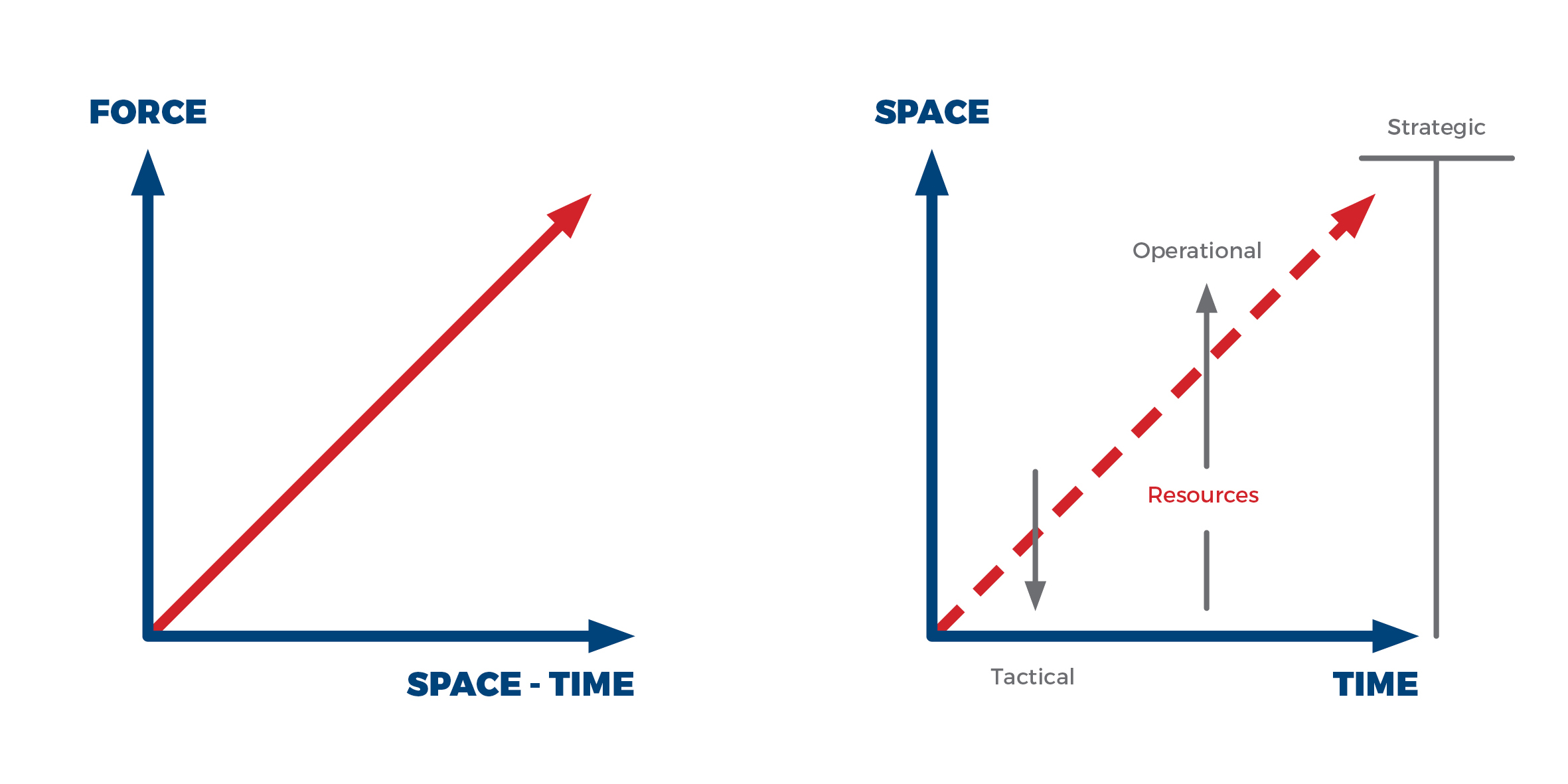
For this reason, strategic intelligence is more hypothesis than tactical or operational intelligence. Tactical thinking is more based on current events (space, time and resources ) for immediate decision making.


How does strategic intelligence and strategic thinking relate to “leaders”?

According to (Anon., n.d.), the word ‘Strategy’ comes name from the Greek word strategos, the name of an Athenian general officer. This is derived in turn from stratos, ‘an army’ and therefore, ‘I lead’. The secondary meaning of this term being a board or council of ten Athenians chosen annually to conduct their war department.

The strategic war game, Strategos, invented by Leut Totten 4th US Artillery, brings together six parts:

(1) The “minor tactical game,” which embraces all the details of the tactics of each of the three arms.

(2) “Grand tactics,” embracing the topographical and strategical game, for the general elucidation of the grand principles of this branch of military science.

(3) The “historical game,” for the study of historical battles and campaigns.

(4) “Text-book illustration.”

(5) A “battle game,” based upon military principles and precepts, which is calculated to instruct as well as interest without fatiguing that large class of students whose patience would not stand the close application required in a more advanced game.

(6) The “advanced game”


For organisations looking to utilise tactical, operational or strategic ascendency on a market by applying intelligence processes, I would like you to visualise this as 3-dimensional operation of:

1. Time

2. Space

3. Force or Resources


For example, tactical thinking or tactical intelligence requires less time, less resources and less space to reach a key objective, for example, your local competitor would represent the space component)

For operational thinking and operational control of your market, it requires more time, more space and more resources. In short it is the bridge between tactics and strategies.

So, what about strategies and strategic intelligence?

This discipline requires a lot of time and more resources for one simple reason, it requires thinking about events beyond the horizon and providing decision making information on the premise of, ‘what will happen, how and why’ along with ‘what is the end game – the desirable result?’

Nevertheless, there are a plenty of documents, books and manuals which explain strategic intelligence in detail and how to apply strategic thinking.

Strategic intelligence in the corporate world will typically be related to competitive intelligence, business intelligence or operational activities and rely on historical data – which is only part of the answer.

Strategic intelligence should be seen as extended arm of decision or policy making to equip leaders with conceptual tools to help them create better results for the organisation. It is the planning and processing or even ‘leading’ the decision-making agenda.

Seeing beyond the horizon is what most corporations wish they could do, to know how competitors will perform and the services or products they will offer.

Strategic intelligence is as much about the corporate and commercial landscape as it is about understanding future fraudulent and criminal behaviour. It assists in understanding future possibilities or capabilities.

In saying this, strategic intelligence is to be considered as a higher form of intelligence research. The reports created are more in depth than tactical or operational intelligence assessments and analysis.

Strategic intelligence addresses issues in detail, such as weaknesses, threats, opportunities and risks. It assists decision makers in determining what procedures are to be implemented and what steps are to be taken in the future. It is based on the relationship between strategic thinking (the leader/decision maker) and strategic intelligence.

Strategic intelligence is an excellent way of test your hypotheses before over committing resources and finances into certain business ventures.


The informant management plan

Descriptions and definitions of who an informant is goes back centuries. In the past 100 years informants have become a necessity to the government sector to help solve cases which may never have been solved through applying conventional investigative methodologies and techniques.

It is imperative to understand that informants are part of human intelligence operations and a proven method of collecting information. The training and development of those who manage informants is a very important skill.

The word informant in society is perceived in a very negative context. Most people who are revealed to be an informant become isolated from society and in some cases are victims of severe retribution.

There are several motives as to “why” someone will become informant in the first place and the methodology used to recruitment them is often known as MICE – Money, Ideology, Coercion, Ego.

Ensuring the control and accountability of informants is important and proves a true physical and psychological challenge.
In the corporate world, some investigations, particularly where well organised fraudulent activities are involved, have been so well organised and executed that companies need to use informants to obtain information about them. In this example, informants would typically be identified as “confidential informants”.

The difference between an “Informant” and “whistleblower” in corporate world needs to noted.

Most commonly informants will be used as a starting point for an investigation, commonly known as AD REMborrowed from the Latin ad rem (“pertinent, relevant”), from ad (“to”) + rem, accusative of res (“matter”).

If you have just a suspicion, little or just circumstantial evidence then that is the moment where you, as an investigator, should put your Informant Management Plan into action.

It is important to understand three key elements of who an informant can be and how they need to be managed.

1. Accessibility – Informants need to be people who have access to information. As an investigator, you must have some indication, idea or confirmation that the person about to become your informant actually has access to useful information.

2. Motivation – Informants will have some type of motivation that encourages them to obtain and pass on information.

3. Control – Prior to engaging the informant, the need for accountability must be explained and the fact they will be directed as per the needs of investigation as well as being subject to control through other means.


To obtain a competitive edge, as well as aid the fight against crime, the use of informants plays a crucial role in the gathering and collecting of information.

It is the way the information provided by informants is gathered, managed and used which brings into play the privacy issues and the legal responsibilities which must be considered by any organisation engaging in this form of information collection.
When people think of informants, they usually associate them with government departments and law enforcement bodies, which are primarily concerned with the prevention of crime, terrorist attacks and other unfavourable events.

However, the use of informants is far more widespread. They are also associated with industries where valuable information is sought for many reasons — most of which can be encapsulated in the desire for a competitive edge through industrial espionage and economic espionage.

The information sought, and therefore the informants used, can be from both within the organisation and/or from competing organisations.

On the surface, the use of informants within organisations may seem unethical, but in today’s competitive world, this has become a normal part of the business environment and their benefits are well explained in the Fraud Magazine article by (Martin T. Biegelman,, 2014).

If you choose to use an informant for the first time. Making sure you are clear why you need them, the scope of their activity as well as who will develop and run the informant management plan must be decided up front.

Mario Bekes has extensive experience of managing informants in a range of circumstances. Contact Mario for a confidential discussion to ensure your objectives are achieved and risks minimised.


Who is the corporate informant?

How often have we watched blockbuster movies where some of the main characters are labelled “informants”. Our thirst for information is insatiable, despite how easily we can access material at the click of a mouse. There is a big difference between accessing information on the net and getting information directly from an individual.

Perhaps you will ask yourself, “I can read and see what’s on internet, what more do I need? Correct, however an informant will usually have access to more than just information, but an extensive circle of other people, informant observers and interact on social level which we cannot do on internet. They add colour and movement to the picture.

Even today, there is no exact definition for the term ‘informant’. However, every government department has its own definition, basically it is the human being who provides information.

Looking at historical data, East Germany had almost 180K informants, mostly recruited by domestic intelligence agencies such as the Stasi (official name Ministerium für Staatsicherheit (German: “Ministry for State Security” due the fact that Stasi performed work outside of Eastern Germany borders).

Western government agencies also use informants extensively. According to Forbes (Adam Andrzejewski, 2021) United States agencies paid over 500 million US Dollars to informants while the Drug Enforcement Association (DEA) still has over 18,000 active informants.

Utilising informants is not only the preserve of government agencies, they have been used by corporations around the world, particularly those in highly competitive industries such as military contracts, chemical or pharmaceutical, to name but a few.

Corporate informants are not only people who are working on behalf of competitor, they may also choose to provide information to the media as in Goodwin v United Kingdom (Savla, 1997).


Informants are often categorised with respect to their nature and motivation into:

Informant — anyone who provides and supplies information without the consent of the other party with the intent of malicious, personal or financial gain.

The recruitment of informants in this category by government agencies is usually regulated by legislation and acts of parliament.


Informer — any informant (except a person without any criminal record, background or association) who supplies information, whether for reward or not, on actual or anticipated criminal activities or those involved either directly or indirectly in such activities, where it is anticipated that the informant will provide information more than once.

Informants who work for some government bodies are usually registered under a pseudonym or nickname.


Working on planes is not smart – here’s why

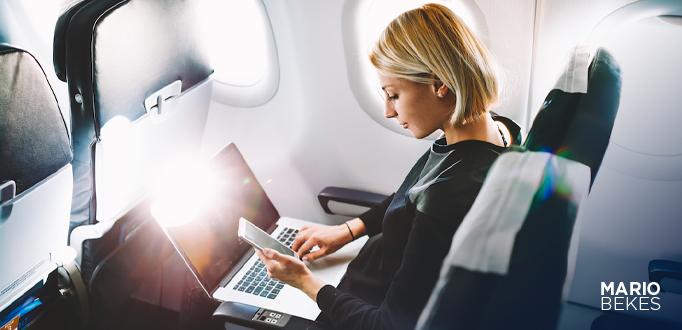
We are all dependent on portable devices for our work and our social lives. Using them in public settings, especially airports, planes and trains provides the perfect opportunity for criminals to access your information – and they don’t even need your passwords. Recent trips of mine have confirmed how the best cyber security arrangements count for once employees leave their taxis and enter airports to get on planes.

As restrictions are starting to relax, we are seeing commuting for both work and personal reasons start to increase again. After two years of working from home, people are seizing the opportunity for face-to-face meetings with clients, peers and employees.

Working from home has seen its own privacy challenges with more people using their own networks and devices that are typically outside the company’s firewall. We saw an increased number of fraudulent activities from identity theft, hacking accounts and phishing – the list goes on.

The restart of business travel brings with it the privacy challenges of using portable devices on the move.

It is important to know the modus operandi for how perpetrators access your information.

Information theft usually occurs out of sight. It will happen outside of your peripheral view. Due to most people’s lack of interest in the environment around them, for example on a plane, they can be particularly vulnerable.

As soon as businesspeople start traveling, perpetrators have easier access to you and the information you are carrying. One method is via social engineering (malicious activities accomplished through human interactions) and another is from observing your screen and perhaps utilising some type of surveillance method (video, imagery, eavesdropping).

Things become more interesting as soon as two or more people from a company travel together. They inevitably openly discuss work, share documents and other information in the cabin. For those sitting close, it is almost impossible not to learn sensitive information. Just think of your last flight, I bet you inadvertently found yourself listening to a work conversation or watching someone working on a laptop.

I see corporations spend tremendous amounts of money on the technical and mechanical protection of company information (cyber security), while neglecting one of oldest and best field-tested form of intelligence gathering operations – human intelligence.

If you couple social engineering, which occurs way more than you realise, together with a lack of employee training, education and preventative methods, there is no doubt in my mind that working at an airport, on a plane, train or bus will be a heightened focus for perpetrators.

After all, if information theft occurs on plane or at an airport, it is most likely to never be discovered or investigated. Most importantly corporations will not know how to implement processes to

protect data when they do not know how it has been compromised. In these environments, perpetrators do not need your password, after all you are willingly sharing your screen and having conversations/calls about sensitive information.

Recent trips of mine just confirmed how few prevention techniques are being followed once employees happily leave their taxis at the airport and move through onto the aeroplane. The investigation of information theft is a difficult and costly process. You should be your own strongest link by being more aware of your environment and being your own human firewall to prevent information theft.


Social Media Platforms and Information Response

Many of you will remember December 2010, when a Tunisian produce vendor set himself on fire and sparked what became known as the Arab Spring. The name stemmed from the ‘People’s Spring’ and ‘Prague Spring’ that described movements towards democracy, rather than the time of year per se.

The success of the Arab uprising is often put down to the social media platforms used by the citizens of Tunisia, Egypt and other countries, to share their experiences of tyranny and turmoil. However, social media was just a one of many tools which inspired millions to revolt against their governments.

On 28 January 2011, the Egyptian government shut down social media platforms and later the entire internet, but the revolution and uprising continued to spread like wildfire.

So, how did the uprising continue despite the shutting down of social media platforms and the internet taking away the major tools of the uprising?

To answer this question, we can go further into history and analyse how the Prague Spring developed in Czechoslovakia, despite the absence of social media and with the State’s tight control of media and newspapers.

The answer is simple, today we depend on social media platforms to be educated, informed and to share our opinions or disagreements. What social media platforms miss are the true opinion of the populous. For example, few of us would consider a social media poll to be 100% truthful, so, you never know exactly what people are thinking.

Both the Prague and Arab uprisings shared common information dissemination. That is ‘analogue’ intelligence, the discussions between humans at places and times where people gather over drinks or social engagements. That is how information was disseminated without the assistance of social media platforms. Word of mouth is also more powerful for one reason.

Words are converted into information and when spoken from person to person they can be weaponised by adding emotions.

I remember as a kid in what was then communist Yugoslavia, my father used to hide in the bath, under blankets, to listen to the Voice of America to learn what was happening in Poland during its martial law in 1981. He would then quietly speak with a few neighbours during the

day, to discuss how to get rid of communism in Yugoslavia. That is how information was transferred from one person to another.

Even today, the power of information is not only on social media platforms. Every information has a source which is human. Regardless of how it is positioned on social media, the question needs to be what is the value of that information, the validity of its source validity and its reliability?

In recent history, we saw how the social media platforms that helped start the Red Shirt movement in Thailand, become a threat. They ended up building their own electronic logistical network for sharing and disseminating information to their followers.

If you compare the world 30 or 40 years ago when social media platforms literally didn’t exist, much information would have been passed from person to person in social environments such a workplace, homes, family gatherings, making it hard for communist countries, like the one I was brought up in, to monitor what and who said what.

Information that was placed into the broader public with intent was the most damaging, which was why communist states intelligence was inaccurate or misleading.

Decision making should be based on the elements of validity and the reliability of the source and to take into consideration the fact that every source is human. Social media platforms are only a tool for information distribution.

Those looking to understand public sentiment for corporate or government use, through the recording of information, its sources, validity and reliability should always include field intelligence methods and not simply rely on electronic media.

It is also important to understand that information collected today may not be valid tomorrow.

The success of this information collation to organisations depends on how you collect and analyse the source and reliability, to drive strategic planning and inform the tactical response of your organisation.


Disinformation and Misinformation – the dark sides of information

Mainstream media and social channels are awash with conversations and disagreements about misinformation and disinformation and what they are. The pandemic and Trump’s presidency have added considerable fuel to these debates.

Definitions of disinformation and misinformation are easy to find. The important distinction between the two is the intent that sits behind them.

Misinformation is the sharing or publishing of information that is more or less accurate. It can be spread by anyone, by any means and without the intent to deceive. We see this daily on our social media platforms, through the continuous arguments and counter arguments, which may even include some facts.

Disinformation, on the other hand, is created deliberately with the intent to deceive. Its deceptive nature is designed to cause problems within countries, organisations and the general public. It is often directed against prominent members of society and is a common tactic employed by foreign countries and their intelligence agencies, who use friendly, reliable supporters to help distribute disinformation on large scale.

We can look back in history at some of the origins of disinformation. One of most famous examples of disinformation is Grigory Potemkin (1739-1791) who orchestrated the building of fake villages to impress his former lover, Empress Catherine the Great, when she visited newly conquered territories in 1787.

It is a beautiful story, but a fake one. The idea of Potemkin villages was designed to disinform the Ottoman Empire into believing that Russia Empire was weak and that they just built wooden facades. It encouraged the Ottoman Empire to go to war with Russia over Crimea and they lost, resulting in the Treaty of Jassy that confirmed Crimea as a part of the Russian Empire.

There are many examples of disinformation from both sides during World War II. Both set up fake airfields and model planes to trick the enemy. The allies even dropped fake paratroopers the night before the D-Day invasion to make the Germans think the invasion was in a different location.

Modern age disinformation was widely adopted by the USSR under the term, dezinformatsiya. According to Ion Mihai Pacepa, a high-ranking official in Romania’s secret police, who defected in 1978, there were many examples of how USSR utilised disinformation against West.

Misinformation, particularly online, is all around us. It has shown how vulnerable we are as a society, particularly during the Covid19 pandemic, where truthful and fact checked information has in some cases become a rare commodity.

Disinformation is usually based on true event, so, it will include facts around which a false story will be built. These typically use sources, like social media platforms, where misinformation is flowing.

Disinformation is part of daily life, alongside misinformation. It is important for corporations to understand the modus operandi of both in order to protect their brands and reputations by maximising trust and confidence within their consumer and supplier communities.

Organisations invest heavily in their IT risk management frameworks, while the weakest link and potentially the best firewall, humans, are often forgotten.

Information risk management must include employees and policies around information risk management should be implemented for employees to help them understand what information is, how to access, analyse and record information for decision making.


Key Drivers influencing industrial and economic espionage

During the Covid19 crisis, the typical workplace is no longer a company office, protected by technical, mechanical and physical security with access controls and an IT/cyber security manager physically sitting next to employees.

In contrast, the workplace has become the kitchen table or spare room, with many of IT devices also being used by household family members, partners or kids. Companies who were already set up for home working will typically have stronger security protocols than those who were forced to respond rapidly to home working and have kept utilising the same approach they did from day one.

With this transition of the workplace from offices to home set-ups, it is much easier for industrial or economic espionage operations to be performed successfully. The world has suddenly become flat.

Flat in sense that access to information can be done via an internet cable, Wi-Fi or email. There is no longer the need for an operative to be present in person, however that does not mean an existing intelligence operative may not be in the vicinity of your staff member or executive etc.

It is important to acknowledge that even if you decide to investigate a breach in your corporation due industrial or economic espionage type activity, it will be difficult to successfully complete your investigations for one simple reason – the perpetrators will be hundreds or thousands of kilometres away having learned and explored your organisation’s weaknesses.


So, what are most common drivers for successful industrial or economic espionage?


Human Factors:

Recruitment of informants or insiders to perform industrial or economic espionage is nothing new, however the Money, Ideology, Coercion, Ego (MICE) methodology for recruitment during Covid19 will be on rise due to these two key indicators:

• Money – Covid19 lockdowns have caused distress on many families, employees and business owners who will seek a way to continue the lifestyle they had prior to pandemic or even to enhance a lavish lifestyle. Uncertain economic recovery and limited markets will drive individuals to seek monetary remedies based on previous work, R&D and current exposure to defence, government and other valuable information.

• Ideology – all modern western society is blend of many different cultures, often firmly embedded into society. It is certain that many unknown individuals are part of larger overseas intelligence networks, sent to the host country either as an immigrants, students or workers and patriotism will always prevail over lifestyle – patriotism was favourite model for recruiting informants in the socialist communist countries of the Eastern Bloc.


Technical Factors:

Access to classified information via technology and cyber espionage is the main modus operandi of industrial and economic espionage.

Most of the technology devices used in the day-to-day life of corporations and households are built-in third-party countries, including components of the telecommunications, PC’s, laptops and electric vehicles.

Importantly, this technology purchased from other countries could be possibly manufactured in a way to collect information without the consumer suspecting. (Samantha Hoffman and Elsa Kania, 2018)

Adding to the weight of the technical factor driver, is the possibility of easier access to information via hacking. Social engineering, the art of manipulating people to obtain confidential information, is made easier with corporate employees preferring to work from home. When you add the challenges of securing information in a home environment, this makes hacking more straightforward.

Despite legislations and various actions by countries to prevent cyber espionage and sanction those who commit it, there are strong drivers for foreign countries to utilise their existing ideology-based, informant network and recruit individuals from different corporations.

(Rowel.B.I., 2020) stated in her article that the danger of State-sponsored cyber espionage is that that any foreign intelligence agency will not prosecute or extradite those who are organised and financially supported to perform cyber espionage, instead they will deny, to minimise the exposure that anything happened.

(Samantha Hoffman and Elsa Kania, 2018) stated, “Any organisation and citizen shall, in accordance with the law, support, provide assistance, and cooperate in national intelligence work, and guard the secrecy of any national intelligence work that they are aware of,” concluding that the Chinese intelligence agencies will support and demand Chinese telecommunication companies to assist in cyber espionage when requested.

To summarise, Covid19 has increased the vulnerability of organisations to industrial and economic espionage. With espionage activities becoming increasingly sophisticated, organisations need to address both the human and technology factors that are increasing the risk of damaging infiltrations.


Revising our Understanding of Industrial and Economic Espionage

Economic and industrial espionage come from a different base, but their activities are similar.

(Button, 2020) in his article quoted definitions from Wagner’ (Wagner, E.R., 2011) to explain and distinguish the differences between economic and industrial espionage:

• “Economic espionage refers to targeting or acquiring trade secrets from domestic companies or government entities to knowingly benefit a foreign state’”.

• “Industrial espionage is the same as economic espionage, except that rather than benefiting a foreign government, it benefits another private entity’.”


Industrial and economic espionage are clearly interrelated.

In previous pieces, I have discussed industrial and economic espionage along with the purpose and examples of those activities. However, here I want to examine two key elements of why industrial or economic espionage is successful and how competitors or foreign countries exploit them.


1. Human Factor – by nature this is either the strongest or simultaneously the weakest link in preventing espionage activities

2. Technical Factor – which explores vulnerabilities of IT and Cyber Security


Globalisation has enabled the world to evolve at an incredible speed, with new technologies emerging on a daily basis. Right now, we can divide our way of living and working in two main categories. Firstly, Pre-Covid and a new category, Covid WFH (working from home). Going forward, there is likely to be a third category, that of Post-Covid. I’m going to focus on the two known categories.

The reason for dividing the world into these two main categories is that technology, particularly IT technology, has evolved tremendously in the past two decades, leading to information being scattered around the globe in different locations and in different types of protective environments. This is a major factor, that according to (AUSTLII, 2000) means, “Criminals will organise themselves, adopting all those strategic information technologies useful in order to retrieve, manage and communicate important information.”

In other words, perpetrators of industrial or economic espionage will adopt and learn new emerging technologies to obtain information. This activity also needs the human factor to substantiate the validity and usefulness of the data.

If we take into consideration that in Pre-Covid era employees primarily worked in offices and the security around information management was more easily monitored and controlled. The massive increase in working from home has led to a corresponding reduction in the effectiveness of risk management and information security.

A logical conclusion is that the Covid WFH category has increased the opportunities for organisations to be the target of industrial and economic espionage. Organisations need to adopt human and technology-based intelligence processes to prevent damaging impact from these activities.