
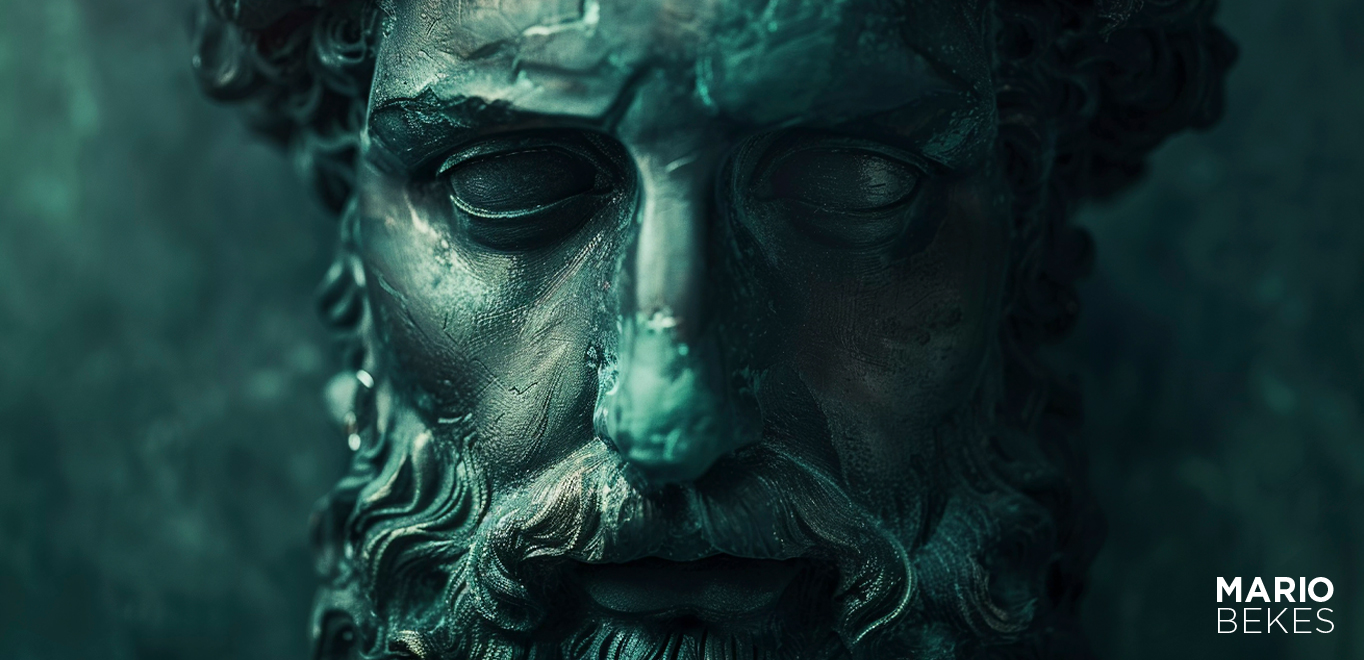
In recent months, I have noticed something curious.
Stoicism has become fashionable.
On social media, there is no shortage of men speaking calmly into microphones about discipline, emotional control, and indifference to pain.
Quotes from Marcus Aurelius are placed over slow-motion gym footage. Lines from Epictetus are repackaged into captions promising mental invincibility. Even Seneca—a statesman who faced exile and forced death—has become a branding tool.
But Stoicism was never branding.
It was survival.
And before I knew its vocabulary, I lived its weight.
Stoicism began in Athens around 300 BCE with Zeno of Citium. It was not a self-help movement. It was a moral framework for navigating instability, power, injustice, and personal suffering.
At its core stand four virtues:
Wisdom—practical judgment in complex situations
Courage—moral and physical resilience
Justice—duty toward others
Temperance—restraint and moderation
Contrary to modern misunderstanding, Stoicism does not advocate emotional numbness. As contemporary scholar Pierre Hadot argued, it is a “way of life,” a disciplined practice of aligning thought and action with reason and virtue (Hadot, 1995).
Psychologist Donald Robertson similarly frames Stoicism as a training system for emotional regulation and ethical leadership, not detachment from humanity (Robertson, 2019).
The argument today is simple: Stoicism is about not caring.
The counterargument, grounded in history, is stronger: Stoicism is about caring correctly—about what is within your control and accepting with dignity what is not.
I grew up under communism. Options were limited. Fear was ambient. Later came war—1,800 consecutive days of conflict. In those conditions, philosophy was not discussed. It was embodied.
Wisdom was not abstract reasoning; it was situational awareness.
Courage was not chest-beating masculinity; it was moving forward despite trembling hands.
Justice meant protecting those who could not protect themselves.
Temperance meant not allowing hatred to consume judgment.
I did not wake each morning quoting Stoic texts. I woke to uncertainty.
And yet, without naming it, I was practicing its structure.
Stoicism is often described as the discipline of distinguishing what is within one’s control from what is not. In war, that distinction becomes painfully clear. You cannot control artillery. You cannot control political decisions. You can control your conduct.
That is where character is forged.
Today, Stoicism is frequently presented as aesthetic minimalism: cold showers, early alarms, gym discipline, and detachment from critics.
There is nothing wrong with discipline. I wake at 4 a.m. to train. I box. I prepare my body because I respect it.
But discipline without virtue becomes performance.
The danger is not that people read Stoic philosophy. The danger is that they selectively extract its language while ignoring its moral obligations. Marcus Aurelius governed during plague and war. Epictetus was born enslaved. Seneca lost status, wealth, and ultimately life itself.
Their Stoicism was tested under consequence.
On social media, Stoicism is rarely tested. It is declared.
Argument: Modern influencers promote resilience while living insulated from real adversity.
Counterargument: Some contemporary practitioners genuinely apply Stoic exercises—journaling, voluntary discomfort, and ethical leadership—to cultivate resilience in modern settings.
The distinction lies in conduct, not captions.
Stoicism cannot be claimed; it can only be demonstrated.
Recently, while walking in Byron Bay and preparing for the Camino, I reflected on something unusual. In war, discomfort was imposed. On Camino, discomfort is chosen.
That difference matters.
Seneca advised periodically embracing voluntary poverty—eating little, sleeping roughly—to prepare the mind for adversity. Modern psychology confirms that controlled exposure to stress strengthens resilience (Meichenbaum, 2007). Voluntary discomfort builds adaptability.
Camino is not an escape for me. It is confrontation—without enemies.
Fatigue. Silence. Uncertainty. Simplicity.
In war, hardship arrived uninvited. On Camino, I walk toward it deliberately.
Why?
Comfort, if left unchecked, can turn into sedation.
I have seen what happens when people avoid discomfort. In intelligence work, in corporate investigations, in boardrooms—leaders who seek only comfort compromise judgment. Avoidance erodes clarity.
Stoicism is not about seeking pain. It’s about not fearing it.
When I look back, the four virtues were not theoretical pillars. They were daily requirements.
Wisdom now means strategic restraint—knowing when to speak and when silence serves better.
Courage means challenging deception publicly, even when it costs comfort.
Justice means exposing fraud, protecting victims, and holding narratives accountable.
Temperance means refusing excess—of ego, anger, or indulgence.
These virtues apply equally in war, business, and pilgrimage.
And here is the uncomfortable truth: many who preach Stoicism online do not demonstrate justice or temperance. They speak of detachment but thrive on attention. They speak of control but react to criticism. They speak of courage but avoid exposure to real vulnerability.
Stoicism is not ascetic masculinity. It is ethical masculinity.
It is not about suppressing emotion. It is about a governing response.
Camino will not make me Stoic.
It will reveal whether I am.
Walking long distances with fatigue and uncertainty does not create character. It exposes it.
In intelligence work, we often say that pressure does not build character—it reveals it. Philosophy operates similarly.
On Camino, there is no audience. No studio lights. No applause. Only steps.
And that is why it matters.
Because if Stoicism is real, it must exist when no one is watching.
I have lived enough seasons to know that suffering is not romantic. War taught me that. Loss taught me that. Responsibility taught me that.
Stoicism is not about glorifying hardship. It is about standing upright within.
Today, as I prepare for Camino, I do not quote Marcus Aurelius to appear profound. I walk because voluntary hardship keeps complacency away. Because discipline protects clarity. Because comfort, without challenge, erodes strength.
“Stoicism” is not a hashtag.
It is a posture.
It is not indifference.
It is moral steadiness.
And it cannot be sold.
It can only be lived.