
Every day, millions of people voluntarily walk into an interrogation room.
The only difference is that they carry it in their pocket.
Across the screen sits someone smiling, confident and persuasive. Not a detective. Not a prosecutor. An influencer.
Without realising it, we begin answering questions they never actually asked.
What should I buy?
Who should I trust?
What does success really look like?
After decades working in military environments, diplomatic intelligence and corporate investigations, I have reached one uncomfortable conclusion.
The most dangerous lies are rarely shouted.
They are carefully edited.
Picture this: you’re sitting in a dimly lit interrogation room. Across the table is a suspect accused of fraud. He’s tight-lipped, weighing every word, and his eyes widen ever so slightly each time you present another piece of evidence.
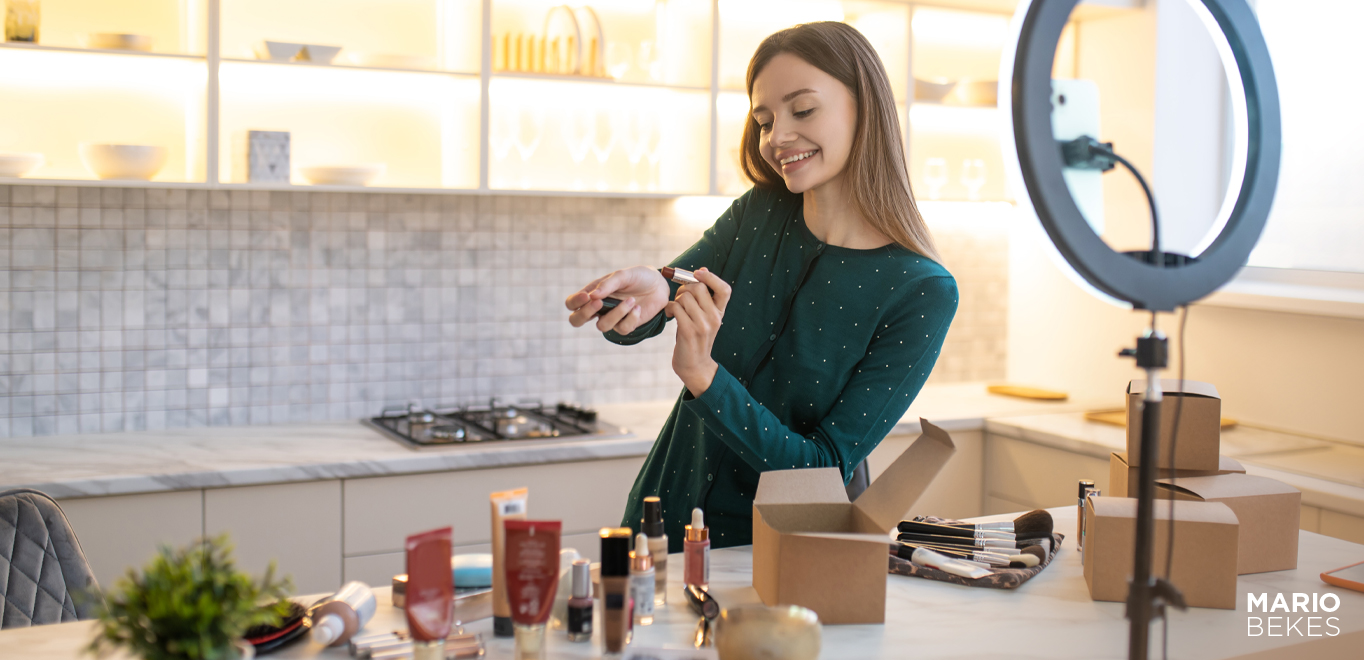
Now replace the interrogation room with a ring light.
Swap the silence for upbeat music.
Instead of denying a fraud, the suspect is enthusiastically explaining how a fifty-dollar tub of powder transformed his body in two weeks.
Welcome to modern digital forensics.
After years of working in Insight Intelligence, analysing influence networks and understanding how information travels, I have learned one universal truth.
People become remarkably adept at lying to themselves long before they lie to anyone else.
Today, your smartphone has become the world’s largest interrogation room.
The difference is that very few people realise they are being questioned.
Not long ago, while travelling through Sicily, I found myself standing on a balcony in Taormina.
It’s one of those places that reminds you how small we really are.
The ancient Greek theatre overlooks the Ionian Sea, while Mount Etna rises in the distance—a landscape shaped by thousands of years of history, conquest and civilisation.
While taking in the view, I noticed two influencers nearby.
For almost an hour they adjusted lighting, repositioned themselves, changed outfits and repeated the same sip from a colourful drink dozens of times in search of the perfect photograph.
Then something unexpected happened.
An elderly local gentleman wandered over and politely asked whether they knew anything about Taormina’s history, the ancient theatre, or the generations of people who had built the walls against which they were posing.
Silence.
Blank expressions.
The conversation lasted less than thirty seconds.
To them, thousands of years of human history had become nothing more than an aesthetic background.
That was the moment something became crystal clear.
You cannot pass genuine knowledge to an audience if you never sought it yourself.
Many people today aren’t selling experience.
They’re selling the appearance of experience.
And that distinction matters.
During my military service there was one routine that never changed.
Before anyone entered the field, the commanding officer asked one simple question:
“Is anyone injured? Is anyone unfit for duty?”
If a soldier raised a hand, there was no debate.
They saw a doctor.
No pressure.
No ridicule.
There was no effort to “push through.”
Because responsibility was never measured by toughness.
It was measured by accountability.
In high-risk environments, ignoring a medical issue can cost lives.
Now compare that with today’s online world.
Overnight fitness experts confidently prescribe aggressive training programmes, extreme dieting protocols and questionable supplements to millions of strangers they have never met.
Nobody asks the obvious questions.
Do you have high blood pressure?
Heart disease?
Previous injuries?
Joint degeneration?
Underlying medical conditions?
Those questions don’t generate clicks.
Affiliate commissions do.
Military life taught me that genuine leadership means accepting responsibility for the people who trust your judgement.
Much of today’s influencer economy rewards precisely the opposite.
Profitable irresponsibility.
The Small Signals Most People Miss
Professional investigators rarely catch deception because someone suddenly confesses.
They identify inconsistencies.
Tiny behavioural clues.
On social media those clues often appear in surprisingly predictable ways.
Watch someone enthusiastically promoting a “life-changing” supplement.
If their words overflow with excitement while their eyes remain emotionally flat, your instincts often recognise something your conscious mind hasn’t yet processed.
Real emotion activates the entire face.
Memorised sales scripts usually activate only the mouth.
That said, behavioural signals alone never prove deception. They simply encourage us to look more carefully before accepting a claim as fact.
The genuine experts I’ve met throughout my career rarely speak in absolutes.
Doctors acknowledge uncertainty.
Experienced investigators consider alternative explanations.
Professional trainers adapt advice to the individual.
Influencers chasing commissions often promise certainty.
“This works for everyone.”
“These changes everything.”
“You’ll never need anything else.”
Whenever someone eliminates all nuance, they’re no longer educating.
They’re selling.
Endless Jump Cuts
Rapid editing isn’t always about keeping short attention spans entertained.
Occasionally it conveniently removes hesitation, uncertainty and moments where authenticity slips.
The performance becomes smoother.
The truth becomes harder to recognise.
One of the strongest psychological biases affecting human judgement is authority bias.
We naturally assume someone must be knowledgeable simply because they appear successful.
A verified account.
Professional lighting.
Luxury travel.
The account boasts hundreds of thousands of followers.
Our brains often mistake popularity for credibility.
But influence has never been evidence.
And confidence has never been proof of competence.
The camera creates familiarity.
Familiarity creates trust.
Trust creates influence.
The question of whether that influence is justified remains open.
Why They Do It
It would be comforting to believe every misleading influencer is deliberately trying to deceive people.
Reality is usually more complicated.
In my experience, most deception falls into one of four categories.
Cold Calculation
They know the product is poor, but the financial reward outweighs their conscience.
Sponsor-Induced Self-Deception
Brands provide free products, luxury travel and exclusive experiences.
Gradually, the influencer convinces themself that the product is genuinely outstanding, as admitting otherwise would create psychological discomfort.
Algorithm Panic
Social media rewards constant visibility.
Disappear for a few weeks and engagement drops.
Faced with that pressure, some creators accept almost any sponsorship simply to remain relevant.
Simple Ignorance
Like the pair I met in Taormina, some genuinely don’t know enough to recognise the consequences of what they’re promoting.
Surface knowledge creates surface advice.
Unfortunately, shallow advice can produce very real harm.
Online deception has become significantly more sophisticated.
Artificial intelligence can now clone voices, generate realistic video, fabricate testimonials and create people who never existed.
Technology has dramatically reduced the cost of deception.
But despite these advances, the underlying tactic remains unchanged.
Manipulate trust.
Exploit emotion.
Create urgency.
Whether the deception comes from a con artist knocking on your front door or an AI-generated advertisement appearing in your social media feed, the psychology is identical.
Only the tools have changed.
Perhaps the cleverest strategy online today isn’t pretending everything is perfect.
It’s pretending to be brutally honest.
The scene is familiar.
Someone sits in a parked car or on a gym floor.
They sigh.
“Honestly, most supplements are a complete waste of money.”
Immediately your scepticism disappears.
Finally, someone seems genuine.
Then comes the pivot.
“That’s exactly why I was shocked when I discovered this one brand…”
The sale has already begun.
By agreeing with your scepticism first, they’ve earned your trust.
Then they spend it.
The most effective advertising no longer feels like advertising.
It feels like honesty.
Trust remains one of humanity’s greatest strengths.
Communities cannot exist without it.
The danger begins when trust is given automatically rather than earned.
Before accepting advice from anyone online, ask yourself four questions.
What does this person lose by telling me the complete truth?
If honesty threatens a lucrative sponsorship, adjust your expectations accordingly.
Is there genuine expertise behind these words, or merely rehearsed talking points?
Would this recommendation still exist if there were no camera, no affiliate link and no commission?
Would they recommend exactly the same product if nobody paid them?
Those four questions alone will filter out a remarkable amount of digital noise.
Social media has never suffered from a shortage of opinions.
It suffers from a shortage of credibility.
The challenge isn’t becoming cynical.
It’s becoming discerning.
The people worth listening to are rarely those shouting the loudest.
They are the ones whose knowledge exists long before the camera starts recording.
Learn to recognise that difference and you won’t simply protect your wallet.
You’ll protect something far more valuable.
Your judgement.